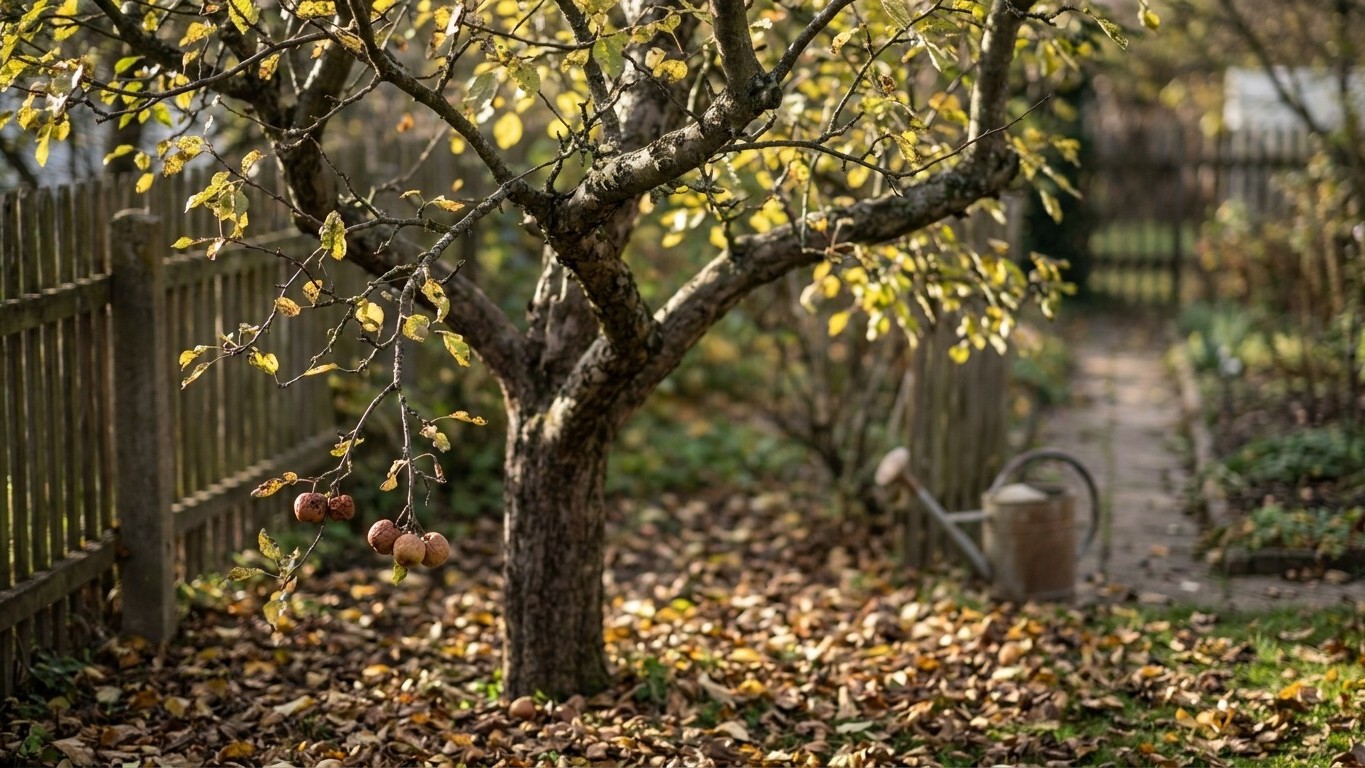

Apples in British Columbia are picked by stage, not date: early varieties come off the tree from mid-August, mid-season types through September, and the long-keeping late varieties into October, sometimes brushing up against the first fall frost. Once picked, a firm late-season apple stored cold and humid can hold three to six months; a soft early one is done within two or three weeks.
When apples are ready to pick in British Columbia
The calendar is a rough guide at best. What actually decides picking day is the fruit itself: background skin color shifting from green to yellow or the variety’s mature color, seeds turning brown instead of white, and the apple separating from the branch with a gentle twist rather than a tug. A taste test settles any doubt a color chart leaves open.
That stage is anchored to two dates that frame the growing season here. Environment and Climate Change Canada’s 1981-2010 climate normals, recorded at station VANCOUVER INT’L A, put the average last spring frost at March 18 and the average first fall frost at November 10. Both are averages, not guarantees. In roughly one year out of two, frost arrives later than either date. Treat them as the midpoint of a window, not a safe line to plan around.
Coastal versus interior timing
That station sits on the coast, and the coast is not where most of the province’s commercial apple production actually happens. The Okanagan Valley, running through Kelowna, Vernon, and Penticton, carries a continental climate with colder winters and hotter, drier summers than Vancouver ever sees. No figure in the available climate normals for this page covers an Okanagan station specifically, so treat the coastal dates as a starting reference for the wetter, milder parts of the province and expect the interior to run on a different clock, with its own frost timing that a coastal reading cannot substitute for.
Late frost pushes bloom later and compresses the whole season; an early fall frost can catch late varieties still hanging. Growers watching a specific block should track local conditions rather than lean on a single reference date, especially away from the coast.
Which ones keep, and which must be eaten
Two separate questions get confused constantly, and they matter for different reasons. Hardiness is whether the tree survives winter cold at all. Winter chill is whether it flowers properly once it does survive. A tree can be perfectly hardy for a mild coastal winter and still bloom poorly if it never banks enough accumulated cold hours to break dormancy evenly.
The coldest month at the Vancouver reference station averages a daily minimum of just 0.8 °C (33.5 °F). That is barely below freezing, and it tells you two things at once. Tree survival is rarely the limiting factor on the coast; the wood almost never faces serious cold stress. But that same mildness means high-chill varieties bred for harsher winters may not accumulate enough cold to flower reliably in a coastal garden, leading to patchy, staggered bloom and uneven fruit set.
The frost trade-off, resolved
Low-chill varieties solve the flowering problem by needing less accumulated cold, but they break dormancy sooner. Earlier bloom means blossoms open closer to, or even before, that March 18 average last frost date, which is exactly the exposure a high-chill variety avoids by flowering later. On the coast, that trade-off leans toward accepting the frost risk. Coastal frosts tend to be short and mild rather than the deep, prolonged freezes of a continental winter, so a light frost event during early bloom is a manageable setback, while going the other direction and planting a high-chill variety that flowers unevenly, or barely at all, is the more consistent failure. In colder interior districts, where winter cold is not in short supply, the calculation runs the other way, but no local frost data for those stations is included here.
Keeping ability comes down to flesh density and acidity, not the calendar. Dense, tart, late-picked varieties store for months. Soft, early, low-acid varieties are an eating apple for the week you pick them, not a pantry staple.
Storing them through a British Columbia winter
Good apple storage sits close to freezing, humid, and dark, roughly 0-4 °C with humidity high enough to keep the skin from wrinkling. On the coast, that mild coldest-month average of 0.8 °C works in the grower’s favor: an unheated garage, porch, or shed often lands in that range through the winter without any added refrigeration, making a coastal outbuilding a genuinely usable cold room for several months.
That advantage does not travel to every part of the province. Interior districts with colder, drier winters risk the opposite problem, an unheated structure dropping well below freezing and turning stored fruit to mush from the inside out. Where winter lows run harder than the coastal figure, insulation or a thermometer check becomes necessary rather than optional.
Practical handling
- Wrap each apple loosely in paper or store in perforated plastic bags to hold humidity without trapping condensation.
- Keep apples away from potatoes, onions, and other produce; apples give off ethylene gas that speeds ripening and rot in whatever sits nearby.
- Check the stored batch every couple of weeks and pull any apple showing soft spots. One spoiling apple spreads rot to its neighbors quickly.
- Only long-keeping late-season varieties are worth this effort; early varieties should simply be eaten or processed within a few weeks of picking.
What goes wrong here
Coastal British Columbia’s wet, mild climate creates its own pressure. Persistent moisture through the growing season raises fungal disease pressure, apple scab in particular, and fruit picked during a stretch of damp weather is more likely to carry the spores into storage, where they show up weeks later as spots the picker never saw at harvest. Picking in a dry window when possible, and letting the skin dry before boxing, cuts down on that carryover.
Wildlife pressure is routine rather than exceptional here. Deer browse low branches, birds take early fruit, and unharvested drops left on the ground draw both back for repeat visits, so cleaning up windfall promptly is less about tidiness than about not running a buffet.
The chill-deficiency problem described above is the other recurring complaint from coastal gardeners: a tree that blooms weakly or unevenly some years is often not diseased or damaged, just under-chilled for the variety planted. Swapping to a lower-chill selection, rather than treating the tree, usually solves it.
On the timing side, the real risk with late varieties is delaying harvest past that November 10 average first frost in hopes of extra ripening. Since frost arrives later than average in roughly half of all years, that gamble sometimes pays off, but a hard freeze on fruit still on the branch can turn flesh mealy overnight. For growers who want region-specific guidance beyond these general climate figures, the British Columbia Ministry of Agriculture and Food’s industry resources are the relevant provincial reference point, though the specific frost and chill figures cited on this page come only from Environment and Climate Change Canada’s climate normals.
Common questions
What’s the earliest and latest you can pick apples in British Columbia?
Early varieties come off from mid-August; late, long-storing varieties often hang into October. The upper end of that window is bounded by the average first fall frost of November 10 at the Vancouver reference station, though frost arrives later than that in about half of all years.
Do apple trees need cold winters to fruit on the coast?
They need some accumulated winter chill to flower evenly, but the coldest month here averages a daily minimum of only 0.8 °C, mild enough that high-chill varieties can struggle to flower reliably. Lower-chill varieties generally perform more consistently in this climate.
How long do British Columbia apples keep in storage?
It depends entirely on the variety, not the region. Dense, tart, late-picked apples can keep for months in cold, humid storage; soft early varieties are best eaten within a few weeks of picking.
Is fall frost dangerous to apples still on the tree?
Yes, once a hard freeze hits ripening fruit the flesh can turn mealy. The average first frost date of November 10 is a useful planning marker, but since it is a mean date, frost can arrive earlier or later than that in any given year.