
The mild, wet coastal climate around Vancouver, where the coldest month still averages a minimum of 33.5°F, favors woody Mediterranean perennials like rosemary, thyme, sage, oregano, and lavender over tender heat lovers. With a frost-free season stretching roughly 237 days, most herbs have plenty of time here. The catch is heat, not cold: coastal summers rarely get hot enough for herbs like basil to thrive without help.
The short answer for British Columbia
Start with the two numbers that matter most for the reference station at Vancouver Int’l A: an average last spring frost on March 18 and an average first fall frost on November 10. That gap works out to about 237 days without frost in an average year, one of the longer growing windows covered on this site. Combine that with a coldest-month mean minimum of 33.5°F and a Canadian hardiness zone of 9a for the reference city, and the herb list writes itself around one theme: mild, not hot, and rarely brutally cold.
Perennial Mediterranean herbs
Rosemary, thyme, sage, oregano, and lavender are the standout choices for the coastal strip this 9a figure describes. Their native range runs through dry, mild-winter hillsides, and a coldest-month minimum sitting just above freezing means they can often stay in the ground through winter rather than coming indoors. That is the real payoff of zone 9a: fewer container-hauling chores, more permanent herb beds.
Annual and fast-growing herbs
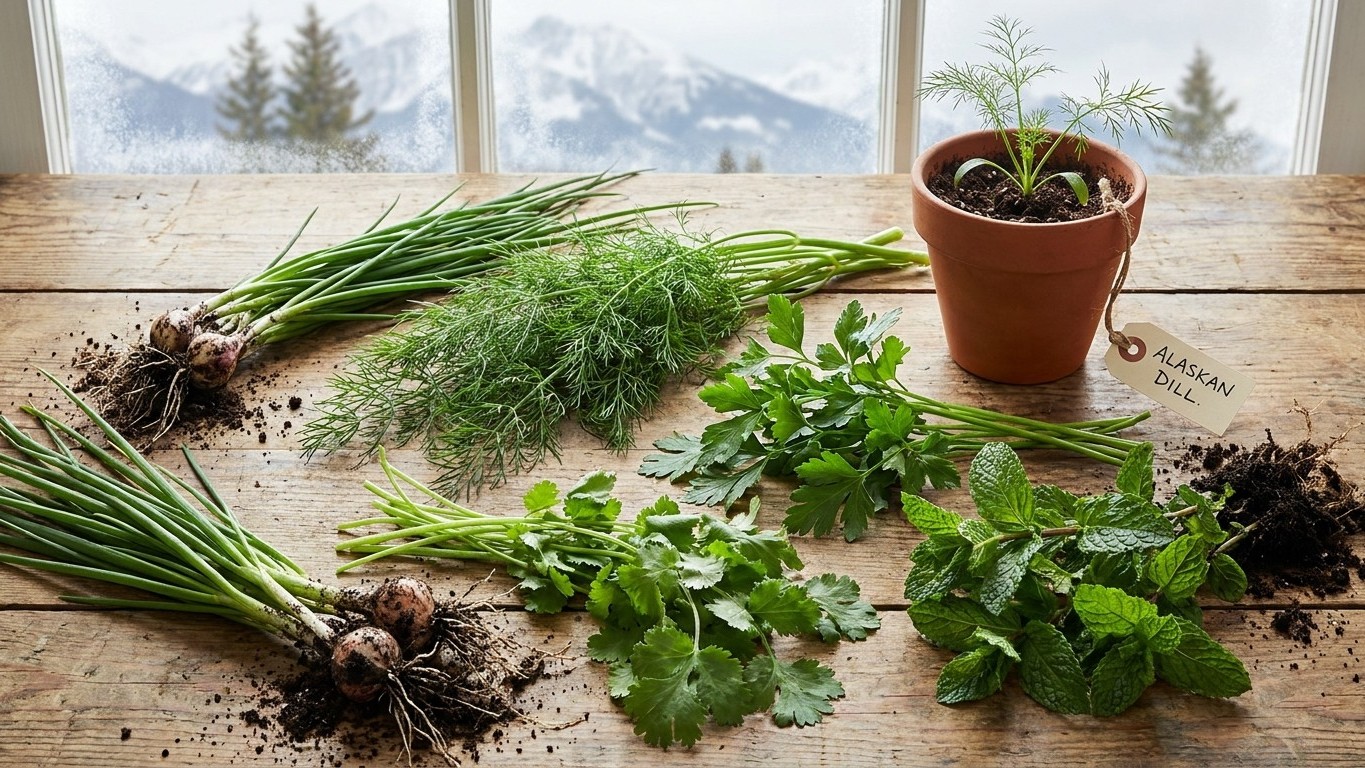
Parsley, cilantro, dill, and chives all fit comfortably inside a 237-day window, with room left over for a second or third sowing of the fastest ones. Mint, technically perennial and famously invasive, spreads readily in this cool, damp climate and rarely needs replanting. Basil sits in its own category: it grows here, but it wants the warmest microsite a yard has, because the season is long enough for it, just not consistently hot enough. A south-facing wall, a raised bed, or a spot against pavement that holds afternoon warmth makes the difference between a basil plant that sulks and one that actually produces.
What will not work here

The herbs that struggle in this climate are not victims of a short season. At 237 frost-free days on average, there is time for nearly anything. What defeats plants here is the combination of mild temperatures with persistent moisture, plus summers that stay cooler than these herbs’ native ranges.
Heat lovers without heat
Basil is the clearest example, but it is not alone. Herbs bred for hot, dry summers, think of some rosemary cultivars selected for Mediterranean or California conditions, put on noticeably less growth here simply because nighttime and daytime temperatures rarely climb into the range that triggers their fastest growth. A coldest-month minimum of 33.5°F tells you winters are gentle; it says nothing about summer heat, and coastal BC summers are famously moderate rather than scorching. Gardeners expecting a South Carolina or Texas basil harvest from a BC bed are working against the climate, not the calendar.
Wet winters, not cold winters
The bigger threat to Mediterranean perennials in this region is not frost, it is root rot. A 33.5°F average minimum in the coldest month means these plants can survive winter temperatures, but coastal BC also delivers heavy winter rainfall, and rosemary, lavender, and sage all evolved in dry-summer, well-drained soil. Planted in heavy clay or a low spot that holds water, they can rot at the crown even in a winter that never approaches a hard freeze. Raised beds, gravel mulch, and avoiding low-lying planting sites matter more here than any cold-hardiness rating. Humid, damp air around densely planted herbs like oregano or bee balm also invites powdery mildew; wider spacing than a seed packet suggests, to let air move through the foliage, heads off a lot of that trouble.
What changes across British Columbia
Every figure above comes from one station, Vancouver Int’l A, and describes a coastal reference point, not the province. British Columbia is enormous and mountainous, and a single hardiness zone or frost date cannot stand in for the whole territory. There is no single answer for “British Columbia” as a whole; there is an answer for the mild coastal belt, and a very different set of conditions once you move inland or upward.
Coastal mild pocket vs. everywhere else
The Canadian hardiness system behind that 9a figure is built from seven climate variables, not one, which is part of why it cannot simply be matched to a USDA zone number readers might know from other states. What it does capture well is how much milder a coastal, ocean-moderated site is compared with an interior valley or a mountain slope even a short drive away. Interior regions of BC see colder winter minimums than 33.5°F, and both spring and fall frosts arrive on a different schedule than March 18 and November 10, generally a later last frost and an earlier first one, which shortens that 237-day window considerably. Elevation compounds this: gaining a few thousand feet can shift a garden into a noticeably harsher zone even within the same valley. None of the specific figures above should be assumed to hold once you leave the coastal lowlands.
| Location type | Winter severity vs. coastal reference | Frost-free season vs. 237 days |
|---|---|---|
| Coastal lowlands (near reference station) | Mildest; rarely hard freezes | Longest window on this page |
| Interior valleys | Colder winter minimums | Shorter, later start, earlier end |
| Higher elevation / northern districts | Coldest; snow cover common | Shortest, most variable |
Where to check this for your own county
The provincial resource for growers in British Columbia is the Ministry of Agriculture and Food. That is the right place to go looking for anything more specific than the coastal figures, because a regional district recommendation will always beat a provincewide one.
What to look for on the site
Two things are worth hunting for once there. First, any regional planting calendar that narrows the frost dates down from the Vancouver-area averages used here to whatever station sits closest to a given county or regional district. Second, variety trial results or extension bulletins naming which cultivars of rosemary, thyme, sage, or basil have actually performed well in local trial gardens, since cultivar choice matters as much as species choice in a climate this varied. Pairing that provincial information with Natural Resources Canada’s Plant Hardiness Site is a sound way to pin down an actual zone for a specific municipality, rather than relying on the 9a figure for the reference station alone.
Checking this against your own garden
Averages and normals describe a typical year, not this year, and a garden’s own signals usually beat a calendar date. Three things are worth watching before trusting any planting schedule, including this one.
Soil warmth, felt by hand a few inches down, tells you more than a frost date ever will; cold, wet soil stalls root growth in transplanted rosemary or sage even after the air has warmed. The timing of new growth breaking on an established perennial herb, a sage or thyme that overwintered outdoors, marks the real start of the local growing season better than any provincial average, since it reflects the specific microclimate of that one bed. First true leaves on direct-sown annuals like cilantro or dill confirm the soil has held steady warmth long enough to support growth, not just a brief warm spell. A yard with a south-facing wall, a slope that drains fast, or a low frost pocket where cold air settles will run ahead of or behind the Vancouver-area figures by days or weeks, and watching these signs over a season or two builds a far more reliable local calendar than any single date.