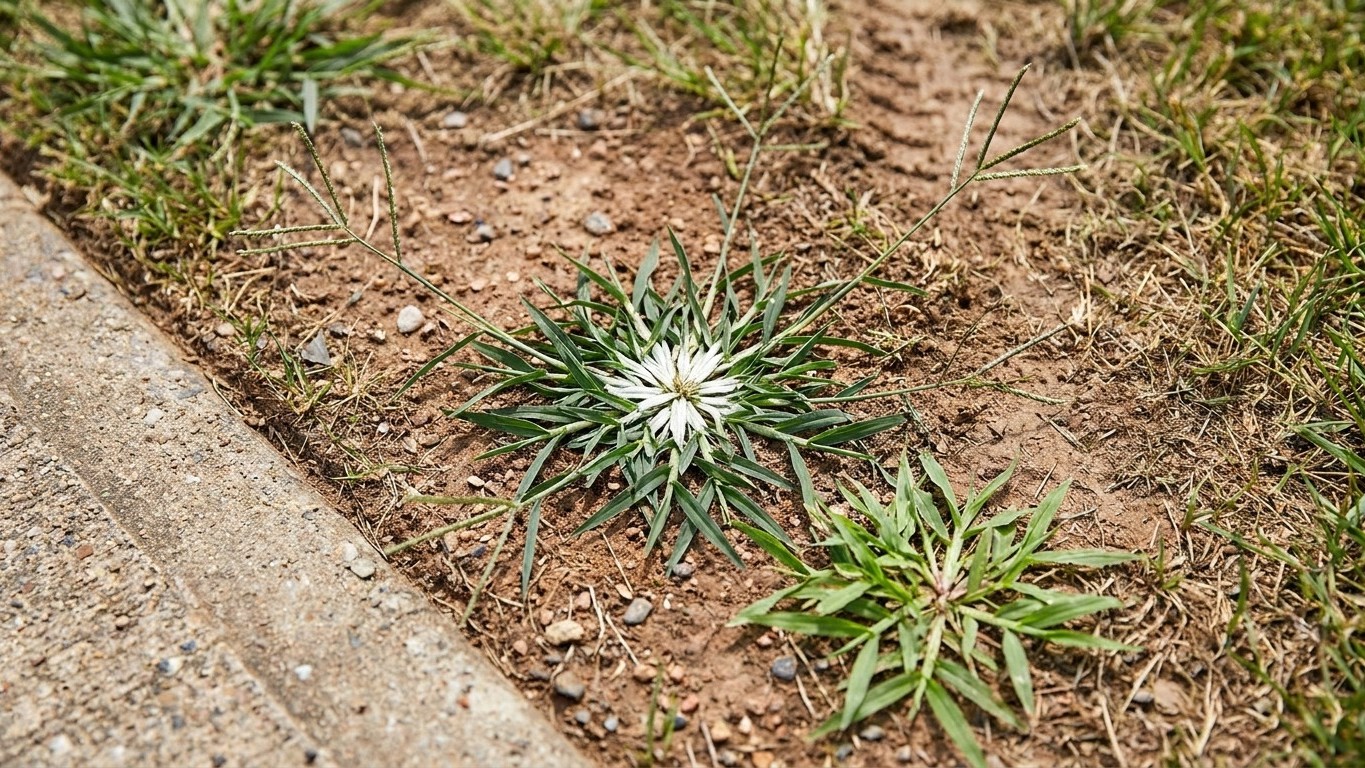

Most California lawns never need dethatching. Cut a wedge out of the turf with a spade and measure the brown, spongy layer between the green blades and the soil. Under 0.5 inch is healthy, and action starts above 0.75 inch. If yours crosses that line, wait until your warm-season grass is actively growing, then dethatch so it can heal quickly. Coastal and southern California has no frost to wait out, so growth, heat and water rules set the calendar.
Do you need to dethatch at all?
Thatch is a mat of dead and living stems, runners and roots that piles up faster than soil microbes can break it down. Grass clippings get blamed for it, but they decompose quickly and rarely cause it. The usual culprits are heavy nitrogen feeding, frequent shallow watering, and vigorous spreading grasses that produce more runner tissue than the soil can digest.
The test takes two minutes. Push a spade in, lift out a wedge of turf, and look at the cut face. The thatch is the brown, fibrous, spongy band sitting between the green growth and the dark soil below. Measure its thickness with a ruler. Under 0.5 inch, leave the lawn alone. A thin layer does no harm and cushions foot traffic. Between 0.5 and 0.75 inch is a watch zone, where you adjust watering and fertilizing and test again next season. Above 0.75 inch, it’s time to act.
Test a few spots, not one. Thatch builds unevenly, thicker along sunny edges and in areas that get extra water from a leaky sprinkler head. If only one corner fails, treat that corner.
Thick thatch gives itself away. The lawn feels like a mattress underfoot, the mower scalps high spots, and water beads up or runs off instead of soaking in. In a state where irrigation is rationed and expensive, that last symptom is the costly one. A lawn that looks tired in July is more often thirsty, compacted or stressed by heat than choked by thatch. Dethatching a healthy lawn rips out living runners in the very season it can least afford the damage. For the general method, see Dethatching a Lawn.
The season to do it in California
Most states build a dethatching calendar around frost. California doesn’t get to, at least not everywhere. NOAA’s 1991-2020 Climate Normals for Los Angeles carry no computable freeze date, and daily records show zero days at or below 32°F in 30 years. The frost-free season is listed as 365 days. Coastal and southern California gardeners have no first or last frost to plan around. Their limits are heat, drought and local water restrictions.
That is not true of the whole state. Northern California, the Central Valley and the Sierra do freeze, and a Los Angeles figure says nothing about them. This page holds no frost dates for those regions, so check local records before you plan.
| Region | Frost | What sets the dethatching window |
|---|---|---|
| Coastal and southern California | None in an average year | Active growth, mild weather, water rules |
| Northern California, Central Valley, Sierra | Freezes occur | Spring green-up after the last freeze, with the lawn growing again |
Where frost is absent, watch the grass instead of the calendar. Warm-season turf recovers fastest when it is actively growing, so dethatch from late spring into early summer, once the lawn has been mowed a few times and is filling in. Skip heat waves and any stretch when the lawn is drought-stressed. A scorched lawn can’t regrow quickly, and thatch removal opens the canopy to sun. Where winters do freeze, wait for full green-up after the last freeze rather than raking a dormant lawn.
All of this assumes a warm-season grass, and the species that suit California lawns are Bahiagrass, Bermudagrass, Carpetgrass, Centipedegrass, Seashore Paspalum, St. Augustinegrass and Zoysiagrass. Cool-season species generally slow down and thin out in long, hot summers, and keeping them green takes the kind of irrigation that drought rules limit. A cool-season lawn would follow a different calendar, so this timing doesn’t apply to it. The states with cool, frosty calendars are covered in When to Dethatch a Lawn in Georgia and When to Dethatch a Lawn in North Carolina.
Rake, power rake, or core aeration
Match the tool to the thatch depth and the yard size. A thatch that barely passes 0.75 inch doesn’t call for the same machine as a thick one across a half-acre.
Dethatching rake
A hand dethatching rake has curved, sharp tines that pull up the mat. It suits small lawns and spot repairs, such as that one thick corner. It is slow and hard on the shoulders, but it is gentle, and it gives you direct feedback: if you are pulling up green runners along with brown debris, ease off.
Power rake or vertical mower
A power rake, also called a vertical mower, uses spinning blades or tines to slice into the thatch layer, and rental yards stock them. It is the practical choice for a large yard or a lawn well over the 0.75-inch line. Set the blades to skim into the thatch layer, not gouge the soil, and make one pass before deciding whether you need a second at a right angle. Expect the lawn to look rough afterward, with a pile of debris to rake up and haul off. Stoloniferous grasses like Bermudagrass can lose a lot of runners to an aggressive pass, which is another reason to do it when growth is strong.
Core aeration
Core aeration pulls plugs of soil out of the turf. It addresses compaction and helps water and air reach the roots, and the soil cores left on the surface can mix into the thatch and help it break down. It is not a thatch remover. If your wedge test shows a thick brown layer, aeration alone won’t fix it. If the test shows thin thatch but the lawn sheds water or feels hard, compaction is the likelier problem, and aeration is the right call. Many California soils run heavy clay, which makes compaction a common companion complaint.
What the lawn needs afterwards
A freshly dethatched lawn looks thin, and that is normal. Rake up and remove the debris, since leaving it undermines the whole job. Then give the lawn what it needs to fill in: moisture and time.
Water is the sticking point in California. Check your city or water district’s current rules before you change a schedule, because restrictions on days and hours vary by location and over time. Within those rules, water lightly and often enough to keep the surface from drying out while the grass recovers, then return to deeper, less frequent irrigation once new growth appears. The shallow-watering habit is one of the things that built the thatch in the first place.
Thin spots can be overseeded, but seed rates are not interchangeable between species. The figures below are for a new lawn, in pounds per 1,000 square feet. Overseeding an existing lawn uses half these rates, and extra seed won’t insure anything, because crowded seedlings compete and thin themselves out.
| Grass | New lawn, per 1,000 sq ft |
|---|---|
| Bahiagrass | 5 to 10 lb |
| Bermudagrass | 1 to 4 lb |
| Zoysiagrass | 1 to 2 lb |
| Carpetgrass | 1 lb |
| Centipedegrass | 0.25 to 1 lb |
| Seashore Paspalum | Sod, sprigs or plugs only, not seed |
| St. Augustinegrass | Sod, sprigs or plugs only, not seed |
If you grow Seashore Paspalum or St. Augustinegrass, patch bare areas with sod, sprigs or plugs, because no seed rate exists for them. For advice tuned to your county’s soil and climate, University of California Cooperative Extension is the place to start.
Common questions
Is there a best month to dethatch in California?
Not one for the whole state. For warm-season lawns, aim for the active growing season, from late spring into early summer, when the grass can recover quickly. The cue is growth, not a date on the calendar.
Do I have to wait for the last frost?
Only where frost happens. NOAA’s 1991-2020 normals for Los Angeles show no freeze in an average year, so coastal and southern California has no frost date to wait for. Northern California, the Central Valley and the Sierra do freeze, so wait for full green-up there.
How do I know the lawn really has a thatch problem?
Cut a wedge with a spade and measure the brown, spongy layer above the soil. Under 0.5 inch is healthy and you should act only above 0.75 inch. A lawn that merely looks thin or dry usually has a watering, compaction or heat problem instead.
Can I overseed right after dethatching?
Yes, with the right species and the right amount. Use half the new-lawn rate, such as 0.5 to 2 lb of Bermudagrass seed per 1,000 square feet. St. Augustinegrass and Seashore Paspalum can’t be seeded at all, so patch them with sod, sprigs or plugs.