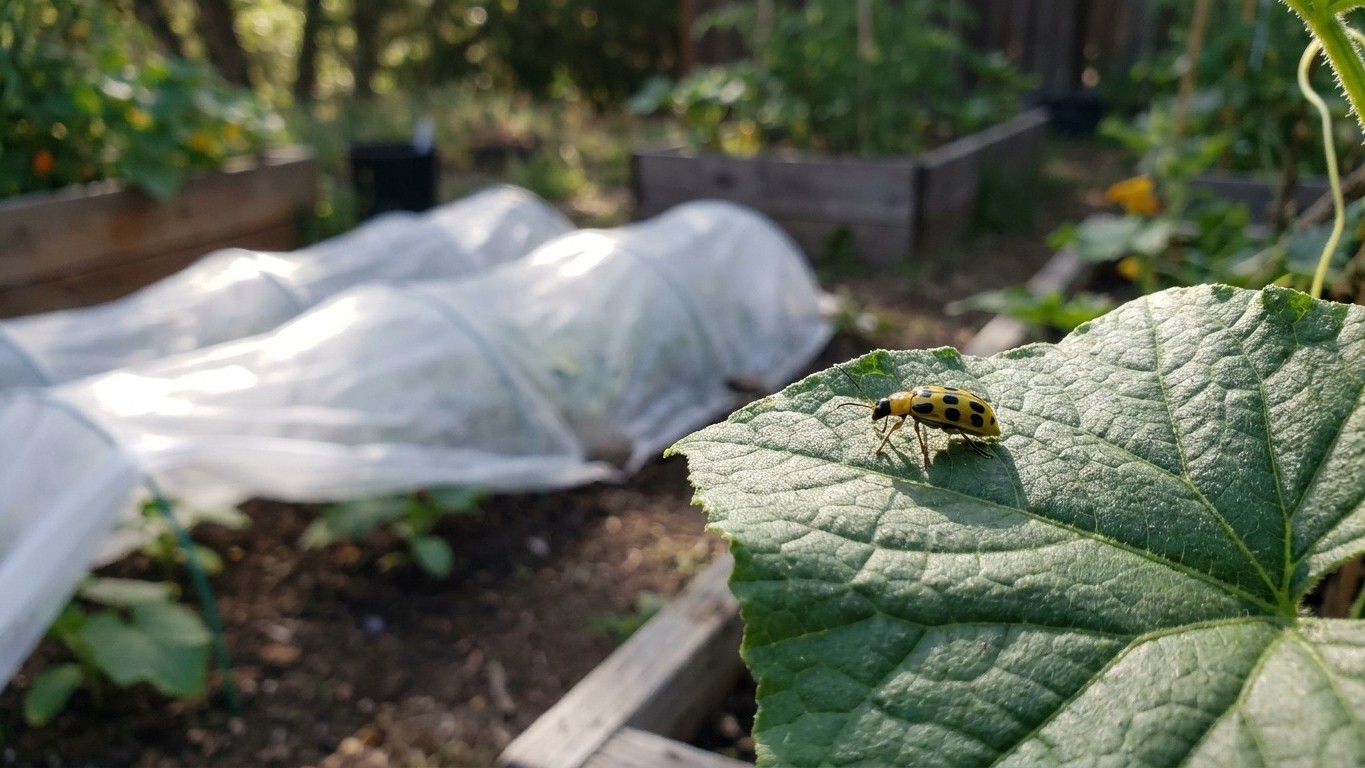

Cucumber beetles show up in California as early as March in the low desert regions and as late as May in the northern coastal valleys, with the western spotted cucumber beetle (Diabrotica undecimpunctata undecimpunctata) and the western striped cucumber beetle (Acalymma trivittatum) both active across the state’s cucurbit-growing regions. What stops them isn’t one product but a stacked approach: floating row covers during seedling stage, timed planting to dodge peak emergence, and cleanup of overwintering sites in fall. Chemical controls work, but timing and physical barriers do more of the heavy lifting for home growers.
When Cucumber Beetles Show Up, Region by Region

California’s size means there’s no single “beetle season.” In the Imperial and Coachella valleys, where winters barely register as cold, adult beetles can be active nearly year-round, with population spikes tracking the spring cucurbit planting window in February and March. Growers in these desert zones often see beetles on emerging squash and melon seedlings within days of germination.
The Central Valley, from Bakersfield up through Sacramento, runs on a different clock. Beetles overwinter as adults in leaf litter, weedy field margins, and crop debris, then emerge as soil temperatures climb past 55 degrees Fahrenheit, typically mid-April to early May. That timing lines up almost exactly with when most home gardeners are setting out cucumber and squash transplants, which is why Central Valley gardens tend to report the heaviest early-season feeding damage of any region in the state.
Coastal areas, think Salinas, Santa Barbara, or the Bay Area, run cooler and later. Fog and marine influence delay soil warming, pushing beetle activity into May or even June. The tradeoff is a longer beetle season overall, since cool coastal summers don’t produce the sharp die-off that Central Valley heat sometimes does by August.
Northern California, including the Sacramento Valley foothills and areas near Redding, sees a compressed but intense window. Beetles emerge later than the Central Valley proper but face a shorter growing season, so pressure on young plants tends to concentrate into a few critical weeks rather than spreading out.
A Second Wave in Late Summer
Most California regions see a second generation of beetles in July and August, when the offspring of spring adults reach maturity. This second wave often targets flowering and fruiting cucurbits rather than seedlings, feeding on blossoms and young fruit rinds. Gardeners who successfully protected spring transplants sometimes get caught off guard by this later flush, since attention naturally shifts away from pest watch once plants are established and producing.
Why California’s Beetle Problem Looks Different From the Rest of the Country
Midwest and East Coast gardeners deal with bacterial wilt as the headline concern with cucumber beetles, since the striped cucumber beetle common in those regions (Acalymma vittatum) is an efficient vector for the wilt-causing bacterium Erwinia tracheiphila. California’s climate and beetle species mix work differently. The bacterium that causes wilt doesn’t survive California’s drier, hotter conditions as readily, and the western striped and western spotted beetles found here are less consistent vectors than their eastern relatives.
That doesn’t mean California gardeners are off the hook. According to University of California Agriculture and Natural Resources Integrated Pest Management guidance, the bigger practical threats in the state are direct feeding damage to seedlings, scarring on fruit rinds that reduces marketability, and transmission of cucumber mosaic virus, a separate pathogen that beetles can spread as they move between plants.
The western spotted cucumber beetle also has a broader diet than its eastern counterpart. It feeds on beans, corn silk, and a range of flowering ornamentals in addition to cucurbits, which means a garden with mixed plantings can host beetle populations even when squash and cucumbers aren’t in the ground yet. That habit lets numbers build quietly on other crops before cucurbits get planted, then beetles converge on the new seedlings almost immediately.
What Actually Stops Cucumber Beetles in a California Garden
Timing beats almost everything else. Beetles target tender seedlings and young transplants far more aggressively than mature plants with tougher foliage. Delaying planting by even two to three weeks past the typical regional start date, so seedlings emerge after the first beetle wave peaks, cuts damage significantly in Central Valley and coastal gardens. It’s a tradeoff against a slightly shorter harvest window, but for gardeners who’ve lost seedlings to beetle feeding before, it’s usually worth it.
Physical exclusion is the next layer, and it’s the one UC IPM recommends most consistently for home gardens. Floating row covers or fine mesh netting placed over seedlings immediately after planting or transplanting block adult beetles from reaching the plants during the most vulnerable stage. Covers need to come off once flowers appear, since cucurbits generally require insect pollination to set fruit, and covered plants can’t be visited by bees. That creates a narrow but effective window, roughly three to five weeks depending on the variety, when covers do nearly all the protective work.
Yellow sticky traps placed near cucurbit beds help with monitoring more than control. Cucumber beetles are drawn to yellow, and traps let gardeners track when adults first arrive in a given season and region, which then informs when to deploy covers or apply other measures. Waiting until visible feeding damage appears usually means the population is already established.
Cultural Controls That Reduce Overwintering Populations
Because adult beetles overwinter in plant debris and weedy borders, fall cleanup matters more than most gardeners assume. Removing spent cucurbit vines, tilling under crop residue, and clearing weedy field edges near garden beds reduces the number of sheltered sites available heading into winter. In the Central Valley and coastal regions, where mild winters let beetles survive in relatively exposed locations, this single practice can measurably reduce the size of the following spring’s population.
Crop rotation helps too, though it works better on a farm scale than in a small backyard bed. Moving cucurbit plantings to a different part of the garden each year, ideally with at least 100 feet of separation from the previous year’s location, makes it harder for emerging beetles to find host plants immediately. For gardeners with limited space, rotating with non-cucurbit crops like tomatoes or peppers for a season still offers some benefit, even if the physical distance is modest.
Reflective mulch, typically silver or aluminum-coated plastic laid under young plants, has shown some effect in disrupting beetle orientation toward host plants, since the beetles appear to navigate partly by visual cues from foliage color and light patterns. It’s a secondary tactic rather than a primary defense, but it stacks reasonably well with row covers and timed planting.
When Chemical or Biological Controls Make Sense
For home gardens, UC IPM guidance generally recommends reserving insecticide use for situations where physical and cultural controls haven’t kept damage below acceptable thresholds, particularly once plants are flowering and covers have come off. Pyrethrin-based products offer a shorter-persistence option that’s less disruptive to pollinators if applied in early morning or evening when bees aren’t actively foraging. Spinosad, derived from a naturally occurring soil bacterium, is another option with a lower impact on beneficial insects compared to broad-spectrum products.
Kaolin clay, applied as a spray that leaves a fine white film on leaves and fruit, works by making the plant surface unattractive and difficult for beetles to feed on rather than killing them outright. It needs reapplication after rain or heavy irrigation, but for gardeners trying to avoid insecticides altogether, it’s a workable middle option.
Beneficial nematodes applied to soil around the base of plants target beetle larvae rather than adults, disrupting the pest at an earlier life stage before adults emerge to feed on foliage and fruit. This approach takes patience, since results show up over a season or two rather than immediately, but it addresses the population at its source rather than just managing the visible adult beetles.
Broad-spectrum insecticides remain available and effective against adult beetles, but California’s IPM guidance flags a real tradeoff: these products also kill the natural predators, including certain ground beetles and parasitic wasps, that otherwise help keep beetle populations in check over time. Heavy reliance on broad-spectrum sprays can end up trading a short-term win for a longer-term dependency, since natural predator populations take time to rebuild once knocked down.
For detailed, region-specific guidance, the University of California’s Statewide Integrated Pest Management Program maintains pest notes on cucumber beetles that are updated with current research and are worth checking before planting each season, available through UC IPM’s official site.