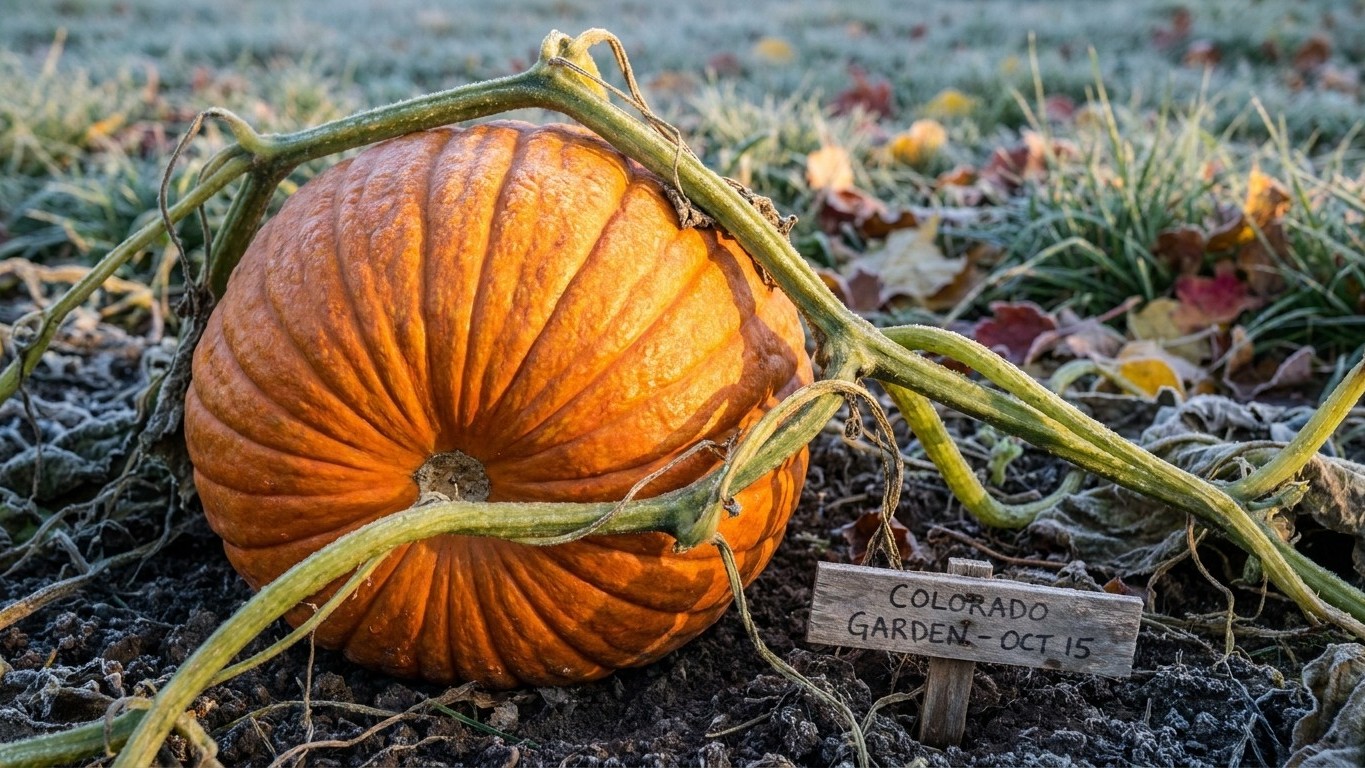

Will Pumpkins Ripen Before Frost in Colorado? Colorado’s growing season isn’t long enough to gamble on a late-blooming vine. With first fall frost landing anywhere from September 30 to October 12 depending on where you garden, and pumpkins needing 45 to 55 days after a flower opens (not after seeding) to size up and harden off, the math only works if those flowers open by early-to-late August. Miss that window and you’re left with green pumpkins on a dying vine.
The short answer
Start with the frost date, because everything else in this calculation flows backward from it. NOAA’s climate normals for the region put the first fall frost between September 30 and October 12, a two-week spread that depends on your exact location and the year’s weather pattern. That’s the hard stop. Once temperatures drop to 32 degrees, an unripe pumpkin sitting on the vine won’t finish ripening. It’ll just sit there, green and soft, waiting for a hard freeze to turn it to mush.
Now subtract the maturation window. Pumpkins need 45 to 55 days from the moment a female flower opens and gets pollinated to the moment that fruit is fully sized, fully colored, and hard-skinned enough to store. Not from the day you drop the seed in the ground. Not from transplant date. From flowering. That distinction trips up a lot of first-time growers who count backward from seeding and end up a month short.
Run the subtraction across the whole frost range and you get a window, not a single date. If your area frosts on the early end (September 30) and your variety needs the full 55 days, the flower has to open by around August 6. If your area frosts later (October 12) and the fruit only needs 45 days, you can get away with a flower opening as late as August 28. Most Colorado gardens fall somewhere in between, which means the safe target is flowers open no later than the middle of August, with growers at higher elevation or in shorter-season pockets aiming for the earlier end of that range rather than the later one.
That’s the whole calculation in miniature: frost date, minus 45 to 55 days, equals your last acceptable flowering date. Everything about when you sow, when you might need row covers, and when you should stop letting new flowers set fruit flows from that one subtraction. It’s also why “when should I plant pumpkins in Colorado” is really the wrong question. The right question is “when do my flowers need to open,” and then working backward from there to a sowing date—see When to Sow Pumpkins in Colorado for that calculation.
When to sow here
Sowing date in Colorado isn’t set by the calendar square that says “last frost.” It’s set by soil temperature, and the soil takes its time warming up here. The air can be frost-free while the ground a few inches down is still cold enough to rot a pumpkin seed before it germinates. Pumpkins need soil at 65 degrees to sprout reliably, and that threshold arrives well after the last spring frost window of May 1 to May 11, not alongside it. Treat those as two separate dates, because conflating them is the single most common timing mistake gardeners make with this crop.
- Track the last frost window first. May 1 to May 11 is when the air stops freezing on the plains. That date matters for tender transplants and for knowing when it’s safe to remove any protective covers, but it does not mean the soil is ready.
- Check soil temperature with an actual thermometer, not a guess. Push it a few inches into the bed at the same time each morning. In Colorado’s dry climate and at elevation, soil lags behind air temperature by real time, not by days. Don’t sow the day after the last frost expecting warm ground; check the number instead.
- Use row covers if you want to push the date earlier. A row cover traps heat near the soil surface and can effectively buy about two weeks compared to bare, uncovered ground. That’s the difference between waiting on the calendar and giving the bed a head start.
- Sow once the soil reads 65 degrees, not before. Seeds sown into cold soil either rot outright or sit dormant for so long that they lose the head start you were counting on. A week’s patience here almost always beats a rushed sowing.
- Count forward from that sowing date to your latest safe flowering date. If sowing lands in late May or early June because of soil lag, and flowers need to open by mid-August at the latest, you’ve got roughly ten to eleven weeks for the plant to grow, vine out, and set its first female flowers. That’s workable for most varieties, but it’s not a wide margin, which is exactly why soil temperature checks matter more here than in longer-season states.
What goes wrong here
Colorado’s compressed season doesn’t leave much room for error, and the same handful of failures show up every year in gardens that misjudged the clock.
- A late flower that never colors up. If a female flower opens in early September instead of August, the fruit behind it is racing a frost date it can’t win. It’ll size up some, but it stays green or pale and never hardens. The remedy is to stop letting new flowers set fruit once you’ve passed your area’s safe flowering cutoff; pinch off new blooms so the plant’s remaining energy goes into fruit that’s already sized instead of starting one that can’t finish.
- A fruit caught by frost before it’s done. Even a pumpkin that started on time can get nipped if an early frost arrives at the front edge of the September 30 to October 12 window. Watch the forecast in late September and be ready to cover vines overnight with a blanket or tarp on cold nights, buying the fruit a few more days to finish coloring.
- A vine that dies back before the skin hardens. Squash bugs and cucumber beetles both weaken vines fast enough to end the season early, well before the fruit’s rind has thickened enough to store. If foliage is collapsing in late summer, the problem is often insect damage rather than the calendar; see our dedicated guides on identifying and managing squash bugs and cucumber beetles for how to catch an infestation before it takes the whole vine down.
- Sowing too early into cold soil. Seeds planted before the soil hits 65 degrees often rot or germinate so unevenly that half the patch is weeks behind the other half by midsummer. The fix isn’t sowing earlier next year, it’s checking the soil thermometer instead of the calendar.
Checking this against your own county
Every number here is a regional average, and Colorado’s terrain makes averages shakier than usual. A garden on the Front Range plains near Denver’s 5,280-foot elevation runs a very different clock than a mountain town that can see frost in July, or a Western Slope valley with its own microclimate entirely. Before you commit to a sowing date, check your own conditions against Colorado State University Extension, which runs county offices across the state with local frost data, soil test services, and staff who can tell you how your specific elevation and exposure shift the numbers above. A five-minute call to your county extension office is worth more than any statewide estimate, especially in a state where growing seasons can vary by a month or more between two towns fifty miles apart.
Common questions
Can I still get ripe pumpkins if I live at high elevation in Colorado?
Mountain towns run shorter seasons than the plains and can see frost in July, so the flowering cutoff calculated above shifts earlier the higher you go. Check your specific area’s frost history through your county extension office rather than relying on the Front Range dates.
What happens if my pumpkin is still green when frost hits?
A green, unfinished pumpkin caught by frost won’t continue ripening off the vine the way a tomato might. The source material for this guide doesn’t cover storage temperatures or keeping times, only that fruit should be kept where it won’t freeze once harvested.
How do I know when soil has actually hit 65 degrees?
Use a soil thermometer pushed a few inches into the bed, checked at the same time each morning for several consecutive days. Don’t rely on air temperature or the calendar date of your last frost, since soil warms on its own slower timeline.
Does variety choice change the flowering deadline?
Different varieties mature at different points inside that 45 to 55 day range, which shifts your safe flowering cutoff by up to ten days in either direction. Since no days-to-maturity figures are attached to specific named varieties in the sourced data here, check the seed packet for your variety’s stated maturation time and use that alongside the frost window above.