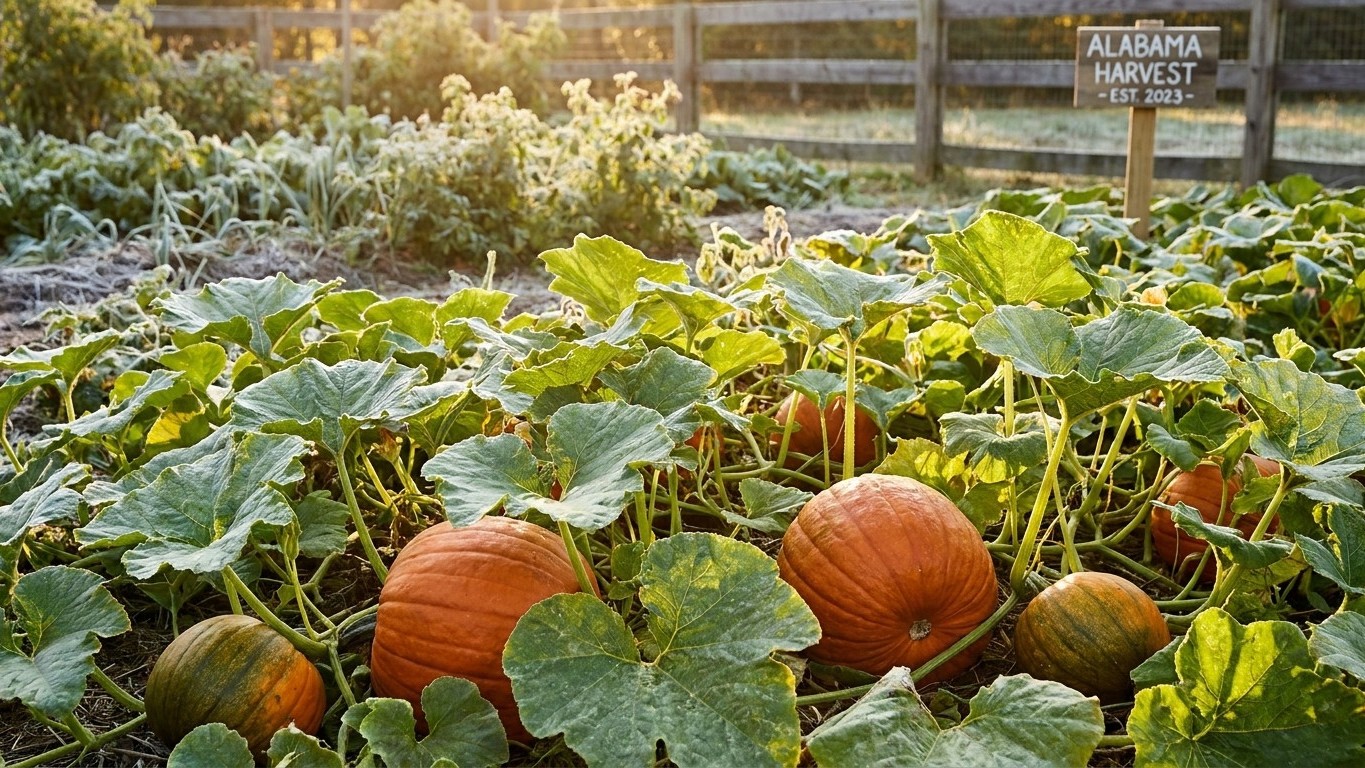

Pumpkins can ripen before frost in Colorado, but only if the flower that made that fruit opened by roughly mid-August. The Denver area’s first fall frost typically lands between September 30 and October 12, and a pumpkin needs 45 to 55 days after flowering to finish. That leaves a tight window, and it gets even tighter in a mountain town or on the western slope, where frost can arrive weeks ahead of the plains.
The short answer
Counting backward from frost
Start with the frost date. Along the Front Range, near station USW00003017, the first fall freeze falls somewhere between September 30 and October 12, based on NOAA NCEI’s 1991-2020 Climate Normals. That’s not a single day; it’s a probability band, and any given year can land on either end of it, or occasionally outside it altogether.
Now subtract the maturation window. Utah State University Extension puts pumpkin development at 45 to 55 days after the flower opens, not after the seed goes into the ground. Run the math from the early end of the frost window: September 30 minus 55 days lands you at August 6, and minus 45 days lands you at August 16. Run it from the late end of the frost window instead: October 12 minus 55 days is August 18, and minus 45 days is August 28.
Put those together and the last flowers with a real shot at finishing need to open somewhere between early and late August, depending on how long that particular pumpkin takes to mature and how early frost decides to show up that year. A flower that opens in the first half of August is playing it safe. One that opens after Labor Day is almost certainly making a jack-o’-lantern that never turns orange.
That’s the calculation for the Denver-area plains. Mountain towns run a much shorter season and can see frost in July, and the western slope follows its own pattern entirely. If you garden outside the immediate Front Range, treat this window as a starting point, not a guarantee.
When to sow here
Getting the timing right
The last spring frost along the Front Range falls between May 1 and May 11, according to the same NOAA NCEI normals. That date matters for frost risk, but it is not the signal to plant pumpkin seed. Utah State University Extension is specific on this point: pumpkins go in once the soil itself reaches 65°F, and soil temperature lags air temperature by weeks in spring. A calendar that says frost is over doesn’t mean the ground has caught up.
- Track soil temperature, not the frost date. Air can clear 32°F by mid-May while the soil sits well below the 65°F pumpkin seed needs to germinate reliably. Waiting for the thermometer in the ground, rather than the one on the porch, avoids seed that rots before it sprouts.
- Expect the wait to run into late spring. Because soil warms weeks behind the air, a last-frost date in early May doesn’t translate into a same-week planting date. Growers who sow the moment frost risk passes are usually sowing into soil that isn’t there yet.
- Use row covers to close the gap. Row covers trap heat at the soil surface and can buy about two weeks, letting seed go in earlier than bare, uncovered ground would allow. That two-week head start matters directly: it shifts everything downstream, including the flowering deadline calculated above, two weeks earlier as well.
- Work backward from the August flowering cutoff. Since the last useful flower needs to open sometime between early and late August, sowing needs to happen early enough that the plant has time to grow, set blossoms, and still land inside that window. Sowing late in the soil-warming period leaves less room for error if a cool August slows things down.
What goes wrong here
Three ways the season runs out
- A late flower that never colors. When a blossom opens after the safe mid-to-late-August cutoff, the fruit is still counting down its 45 to 55 days when frost shows up. The remedy is to sow early enough in the soil-warming window, or use row covers to shift the whole timeline two weeks earlier, so the last useful flowers open well before the danger zone.
- A fruit caught by frost while still on the vine. Even a pumpkin that started coloring can get caught if the September 30 to October 12 frost window arrives on its early side. Utah State University Extension’s guidance is to harvest with the stem attached before frost hits, rather than gambling on a few extra days of vine ripening.
- A vine that dies back before the skin hardens. Foliage often collapses under cold nights before the pumpkin’s rind has fully toughened, leaving a fruit that looks orange but bruises and spoils easily. If frost is forecast and the skin still feels soft, cut the pumpkin now and move it somewhere it will not freeze; that’s the only storage guidance the source provides, with no specific temperature or keeping time attached.
- Late-season insect pressure shortens the effective growing window. Vines already racing the calendar have less room to recover from stress. Squash bugs and cucumber beetles both have dedicated state pages on this site covering identification and control in Colorado, worth checking if vines look weakened heading into August.
Common questions
Can I still get ripe pumpkins if I planted late in Colorado?
It depends on when the vine actually flowers, not when it went into the ground. If blossoms are opening by roughly mid-August, there’s still a realistic 45-to-55-day path to an orange pumpkin before the earliest frost date of September 30. Flowers opening past late August are working against the calendar.
What if my area frosts earlier than the Denver dates listed here?
The September 30 to October 12 window comes from a Front Range station on the plains. Mountain towns run far shorter seasons and can see frost in July, and the western slope follows its own separate pattern. Gardeners outside the immediate Denver area should treat this window as a reference point and build in extra margin.
Does covering pumpkins help them survive frost?
Utah State University Extension’s guidance centers on harvesting before frost rather than relying on covers to save fruit in place. Once a hard freeze is forecast, cutting the pumpkin with its stem attached and moving it somewhere it will not freeze is the documented approach, not a race to protect it on the vine.
Should I remove new flowers appearing in late summer?
Any flower opening after the safe window calculated above, roughly the second half of August depending on that year’s frost timing, is unlikely to produce a fruit that finishes its 45-to-55-day cycle before frost. Pinching those late blossoms redirects the plant’s energy toward fruit that already has a chance of ripening.