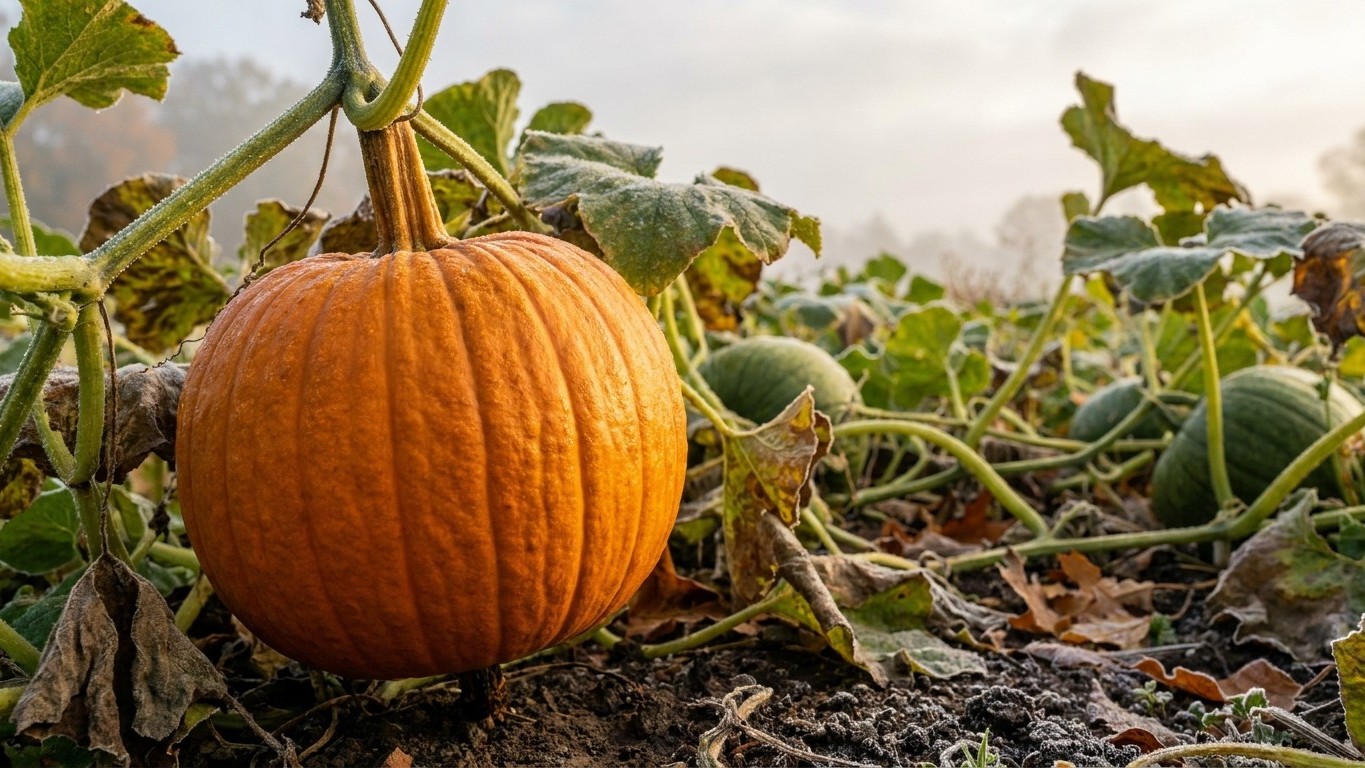

North Dakota gardeners can grow pumpkins successfully, but the margin is thin. Between the state’s short frost-free stretch and the 45 to 55 days pumpkins need after flowering, not from seeding, only fruit that sets by late summer has a real shot at turning orange before the cold arrives. Knowing When to Sow Pumpkins in North Dakota is what decides the outcome, since timing the flower, not the seed packet, is the real key.
The short answer
Start with the frost, because everything else in this calculation works backward from it. Around the reference weather station used by NOAA for North Dakota’s climate normals, the first fall frost lands somewhere between September 25 and October 5. That’s a ten-day window, not a fixed date, and it’s the hard stop for this whole exercise.
Now count backward. Pumpkins need 45 to 55 days after a flower opens to finish ripening, according to Utah State University Extension. If you take the earliest frost date, September 25, and the longer end of that maturity window, 55 days, you land on a flower needing to open by around August 1. If you take the later frost date, October 5, and the shorter 45-day window, the deadline slides to roughly August 21. Put those two calculations together and you get the real answer: the last flower with a fighting chance of producing a ripe pumpkin needs to open somewhere between early August and the third week of August.
Flowers that open after that window don’t necessarily die on the vine. Fruit can still set, still swell, still look like a pumpkin. What it won’t do reliably is finish coloring before a hard freeze knocks the plant down, which raises the practical question of Will Pumpkins Ripen Before Frost in North Dakota? A green pumpkin picked ahead of frost is edible in a pinch, but it isn’t the orange, cured, stem-on jack-o’-lantern most gardeners are after.
This is why the sowing date matters so much more in North Dakota than in states with a longer season. There’s very little slack. A plant that flowers two weeks later than expected, because of a cool June or a slow transplant, can miss that August window entirely. Everything upstream, seed timing, soil warmth, even variety choice, exists to protect that flowering deadline.
When to sow here
- Start with the last spring frost. Around the same reference station, that date falls between May 4 and May 15. That’s the earliest point air temperatures are reliably safe for tender seedlings, but it is not when the ground is ready.
- Wait for the soil, not the calendar. Pumpkin seed needs soil at 65 F to germinate well, per Utah State University Extension, and soil lags behind air temperature by weeks, not days. In North Dakota, that threshold typically isn’t reached until well into late May or even early June, three to four weeks past the last frost date. Planting into cold soil doesn’t kill the seed outright as often as it just stalls it, and a stalled seed pushes flowering later, which is exactly what this state’s short season can’t absorb.
- Use row covers or dark mulch to buy time. Clear or black plastic mulch, and floating row covers over the planting area, trap daytime heat in the soil and can shave roughly two weeks off that wait. That’s often the difference between a flower opening in early August and one opening in late August, which is the difference between ripe and green.
- Count forward from your real sow date. Once the soil hits 65 F, seedlings typically need several weeks of vegetative growth before the first female flowers open. Add that stretch to your sowing date and check where it lands against the August 1 to August 21 flowering deadline established above.
- Lean on transplants if the math is tight. Starting seed indoors two to three weeks ahead of the soil-warmth date, then transplanting into warmed, covered soil, effectively moves the flowering date earlier without forcing seed into ground that’s still too cold to use.
- Pick a shorter-season variety if you’re sowing late. Varieties differ in how quickly they reach flowering, though this page won’t attach specific day counts to named varieties since that data isn’t standardized across sources. A local nursery or the extension office can point to which types have a track record of flowering earlier in short-season gardens.
What goes wrong here
- A late flower that never colors. This is the single most common failure tied directly to North Dakota’s frost timing. A fruit that sets from a flower opening after the mid-to-late August cutoff simply runs out of days. The remedy is upstream: get soil warmed early with covers or mulch, and don’t delay sowing past the point where the 65 F threshold is met.
- A fruit caught by frost before it finishes. Even a well-timed flower can get caught if an early frost arrives on the front edge of the September 25 to October 5 window rather than the back edge. Watching the forecast in mid-September and having row cover or old blankets ready to throw over vines on a predicted cold night can buy a few extra ripening days.
- A vine that dies back before the skin hardens. Pumpkin skin needs to cure and harden on the vine to store well; a vine that collapses early, from disease, stress, or an early cold snap, leaves fruit with soft, thin skin even if the color has turned. Harvesting with the stem attached and moving fruit somewhere it won’t freeze, as Utah State University Extension advises, protects what ripening has already happened, even if full hardening didn’t finish in the field.
- Insect pressure slowing the plant down mid-season. Squash bugs and cucumber beetles can stress vines enough to delay flowering, which in a short-season state has an outsized effect on the final harvest date. This site’s dedicated pages on squash bugs in North Dakota and cucumber beetles in North Dakota cover identification and control in detail.
Checking this against your own county
The frost dates and soil-warming timeline above come from a single reference weather station, and gardens away from that station, especially rural properties, low spots, or anywhere at higher elevation, often see frost arrive earlier in fall and linger later in spring, sometimes by one to two weeks. That gap can shift the flowering deadline enough to matter.
Before locking in a sowing date, check current conditions and local frost guidance with the North Dakota State University Extension, which tracks county-level growing conditions across the state.
Common questions
Can I still plant pumpkins in June in North Dakota?
It depends on how quickly the plant reaches flowering. Given the August 1 to August 21 flowering deadline established by working backward from the fall frost window, a June sowing leaves little room for delay. It can work with a fast start under row cover, but it’s a tighter calculation than an early-May soil-warmed planting.
Does a light frost kill pumpkin vines outright?
The facts available here cover only the first fall frost window from NOAA climate normals, not a separate light-frost threshold. Treat any predicted frost in that September 25 to October 5 window as a signal to protect or harvest what’s on the vine.
How do I know if my soil has hit 65 F?
A basic soil thermometer pushed a few inches into the planting bed, checked in the morning over a few consecutive days, gives a reliable reading. Guessing from air temperature alone tends to underestimate how long the soil actually takes to warm.
Should I pick pumpkins before frost even if they’re not fully orange?
Utah State University Extension’s guidance is to harvest with the stem attached and keep fruit somewhere it won’t freeze. A pumpkin caught by a hard freeze on the vine is a bigger loss than one picked slightly early and allowed to continue coloring in storage.