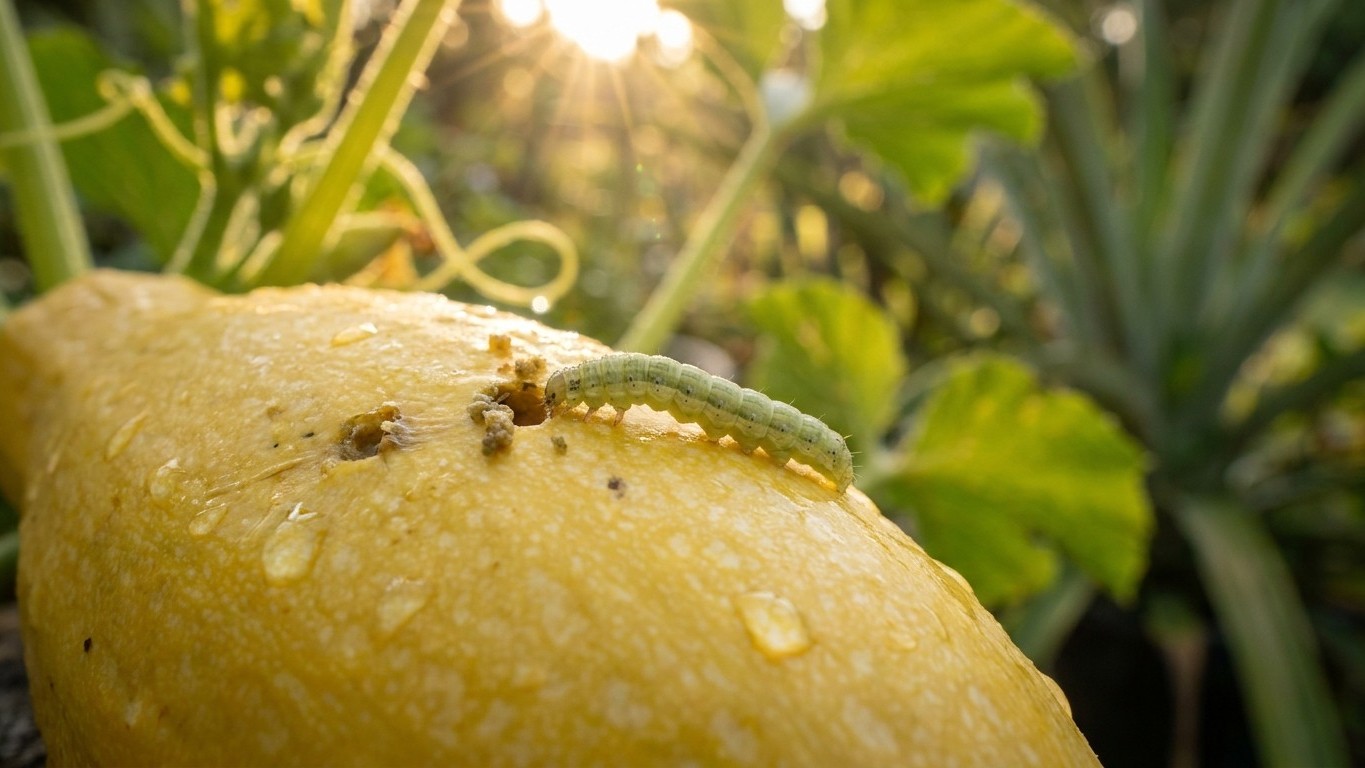

Pickleworm shows up in Florida gardens the moment squash and cucumber vines start flowering, usually by late spring in the southern part of the state and stretching into fall across the peninsula. The insect never truly leaves Florida because it can’t survive freezing winters anywhere else in the country, which makes the state its year-round home base and the launching pad for infestations that spread north each summer. Stopping it means acting before the larvae tunnel into fruit, since once they’re inside, almost nothing short of removing the damaged squash will save it.
The weeks to watch

South Florida, from Miami-Dade down through the Keys and up into the central peninsula, hosts pickleworm populations essentially all year. Winters there rarely get cold enough to kill off the moths or their pupae, so gardeners in Fort Myers, Naples, or Homestead can find damage on a squash planting almost any month. That’s different from the northern half of the state, where a hard freeze wipes the population out each winter.
North Florida and the Panhandle see pickleworm arrive later, typically once temperatures warm consistently in May or June, because the moths have to migrate up from the southern reservoir population. That migration explains why damage in Tallahassee or Jacksonville tends to peak in August and September rather than earlier in the season. Home gardeners in those areas often get a clean first planting of squash in spring, only to watch a second or third planting get hammered by midsummer.
The moth itself is easy to overlook. It’s brownish yellow with a purple sheen on the wings and a distinctive tuft of scales at the tip of the abdomen, and it flies at dusk and after dark. Because adults are nocturnal and larvae hide inside buds and fruit, most gardeners never see the actual insect doing the damage. They just find the aftermath.
Spotting Pickleworm Damage Before It’s Too Late
Female moths lay eggs on flower buds, blossoms, and young leaf terminals rather than directly on fruit. That single detail matters more than almost anything else for control, because it means the window to intervene is before the larvae ever bore into the squash itself. Once eggs hatch, tiny caterpillars feed briefly on blossoms and then move into stems, buds, or developing fruit within a day or two.
Inside the fruit, larvae chew tunnels packed with wet, greenish frass, that sawdust-like castings mixed with plant juice. A squash that looks fine on the outside can be riddled with tunnels underneath the skin, and by the time you notice a small entry hole with dark residue around it, the interior damage is usually already extensive. Cantaloupe and other melons show similar entry wounds near the stem end or wherever the fruit rests against soil.
Squash blossoms that never open properly, or that show ragged holes and blackened tissue, often mean larvae have already been feeding inside the bud. Checking flowers daily during warm months, especially any that look wilted or discolored before they’ve had a chance to fully bloom, catches the problem at the stage when treatment still works.
Which Crops Take the Hit
Not every cucurbit is equally vulnerable. Summer squash, especially yellow varieties and pattypan types, along with cantaloupe, rank as the most heavily attacked crops in Florida gardens and commercial fields. Cucumbers get damaged too, but generally less severely. Winter squash varieties like butternut show noticeably less injury, largely because their tougher, harder rind and denser flesh make it more difficult for young larvae to bore in successfully. Watermelon tends to escape serious damage almost entirely, which is one reason it stays a more forgiving crop for Florida gardeners battling this pest.
What Actually Stops Pickleworm
Because larvae spend almost their entire life cycle hidden inside plant tissue, spraying after damage appears rarely helps. Effective control depends on timing treatments to catch the insect during the brief window when eggs hatch and young caterpillars are still exposed on blossoms, before they tunnel in.
Bacillus thuringiensis (Bt), a naturally occurring bacterium sold as a biological insecticide, works well against pickleworm larvae but only if it’s applied directly to open blossoms where newly hatched caterpillars are feeding. Because Bt breaks down in sunlight within a day or so, applications in late afternoon or early evening tend to hold up long enough to reach moths that lay eggs and larvae that hatch overnight. Spraying blossoms in the evening also protects bees and other pollinators that visit flowers during daylight hours, which matters since squash and cantaloupe depend heavily on insect pollination to set fruit.
Spinosad, another biologically derived insecticide, offers similar timing advantages and is commonly used by home gardeners who want an option with lower toxicity to beneficial insects than older synthetic pyrethroids. Pyrethroid insecticides do work against pickleworm, but they carry a bigger risk of harming bees and natural predators, so evening applications targeted at blossoms rather than blanket coverage of the whole plant reduce collateral damage.
Repeated applications matter more than any single spray. University of Florida entomologists studying pickleworm management have found that once populations build up in late summer, a single treatment rarely provides lasting protection, because moths continue laying eggs on newly opening blossoms for weeks. A realistic spray schedule during peak pressure means checking plants every few days and reapplying as new flowers open.
Cultural Practices That Reduce Pressure
Timing plantings to avoid peak pickleworm months offers one of the simplest, lowest-cost defenses available to Florida gardeners. In north Florida, an early spring planting that matures and gets harvested before the pest migrates up from the south often escapes serious damage altogether, while a midsummer planting in the same spot runs straight into peak moth activity.
Floating row covers placed over young plants keep egg-laying moths away entirely, but they have to come off once flowers open so bees can reach them for pollination. That creates a narrow but useful window: cover plants during early vegetative growth, then remove covers right as blooming starts and switch to blossom-targeted spraying if pressure is high.
Destroying old cucurbit vines and fallen fruit right after harvest removes overwintering and breeding sites, denying the next generation of moths a place to develop. Crop debris left in the field or garden bed through fall and winter, especially in the southern half of the state where freezes don’t reliably kill pupae, lets populations rebuild faster the following season.
A few practical steps make a measurable difference over a season:
- Rotate squash and melon plantings away from the previous year’s cucurbit bed to reduce carryover populations
- Choose butternut or other hard-rind winter squash where pickleworm pressure has historically been heavy
- Inspect blossoms every two to three days once vines start flowering
- Remove and dispose of any fruit showing entry holes rather than leaving it on the vine
- Clear and destroy vines immediately after the last harvest instead of letting them decompose in place
Living With a Pest That Won’t Fully Disappear
Pickleworm isn’t something Florida gardeners eliminate for good, given the state’s year-round southern reservoir population and its habit of riding warm air currents north each summer. What changes the outcome is treating the blossom stage as the real battleground rather than waiting for damaged fruit to show up. A gardener who checks flowers regularly starting in late spring and reacts within a day or two of spotting the first signs, rather than after finding tunneled squash on the counter, typically salvages far more of the harvest than one relying on spraying after the fact.
Commercial growers in Florida’s major vegetable-producing counties, including areas around Palm Beach and Manatee, deal with the same biology on a larger scale, which is part of why cantaloupe and squash growers there build blossom-stage scouting into their weekly routines rather than treating it as an occasional check. Home gardeners facing the same insect on a few backyard hills of squash can apply the identical logic at a smaller scale, and it works just as well.