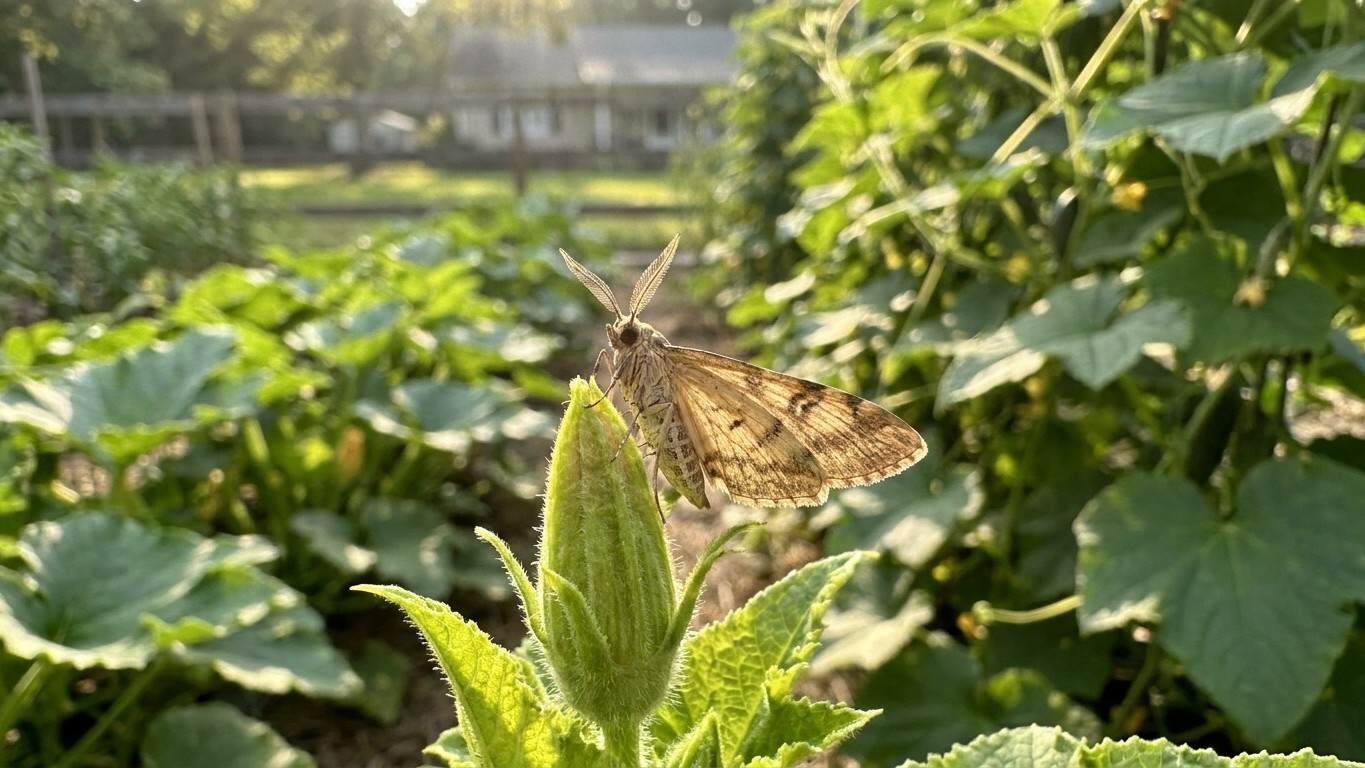

Pickleworm shows up in Georgia gardens and farm fields from roughly mid-June through the first frost, with damage peaking in August and September when populations build to their highest numbers. This insect doesn’t survive Georgia winters on its own; it migrates north each year from Florida and the Gulf Coast, which means the risk window shifts depending on how early spring warms up and how the moths move. What stops it comes down to timing your planting, scouting blossoms before larvae bore into fruit, and choosing squash varieties the moth doesn’t prefer.
When Pickleworm Actually Arrives in Georgia

Pickleworm (Diaphania nitidalis) can’t survive a hard freeze. South Florida and parts of the Caribbean are about the only places in the continental U.S. where it overwinters successfully. Every spring, adult moths fly north as temperatures rise, working their way through the Southeast one generation at a time. By the time they reach Georgia, it’s usually already summer.
That migration pattern explains why spring-planted squash and cucumbers in Georgia often escape serious damage while the same crops planted in July or August get hammered. Early-season plantings mature and get harvested before pickleworm populations have built up enough to matter. Late plantings, especially fall squash and cantaloupe, sit right in the moth’s peak activity window.
South Georgia growers typically see pickleworm pressure a few weeks earlier than gardeners in the Piedmont or mountain counties, simply because the moths reach the southern part of the state first. A backyard gardener in Albany might be dealing with damaged squash blossoms while someone in Gainesville still has a clean crop. That gap narrows as summer goes on and moth numbers climb statewide.
How to Recognize Pickleworm Damage Before It’s Too Late
The adult moth is easy to overlook. It has dark brown, slightly iridescent purple wings with a yellowish-tan patch across the middle of the forewings, and it flies mostly at dusk and after dark. Most gardeners never see the adult at all. What they notice is the damage left by the larvae, and by then the insect has already done the expensive part of its work.
Female moths lay eggs on buds, blossoms, and young fruit. The larvae that hatch are pale yellow-white when small, turning greenish with dark spots as they grow, and eventually shifting to a coppery color just before pupation. They start out feeding on flowers, which alone can cut yield by preventing pollination. Once fruit is available, the larvae bore straight into it.
That boring behavior is the real problem. A larva tunnels into a squash or cantaloupe and keeps feeding inside, leaving a small entry hole plugged with greenish-black frass. The fruit looks fine from a few feet away. Cut it open and there’s a hollowed-out tunnel, sometimes with the larva still inside. Once pickleworm larvae are inside the fruit, no insecticide sprayed on the plant will reach them. That single fact drives almost every piece of practical advice about controlling this pest.
Which Crops Take the Worst Hit
Not every cucurbit is equally attractive to pickleworm. Summer squash, especially yellow varieties, and cantaloupe rank among the most heavily damaged crops in Georgia gardens. Cucumber gets attacked but tends to suffer less. Watermelon is the least preferred host by a wide margin, which is one reason watermelon growers in South Georgia rarely list pickleworm among their top concerns even during peak moth season.
Butternut and other hard-rind winter squash varieties also tend to hold up better than soft-skinned summer squash, partly because the thicker rind is harder for young larvae to penetrate. That difference matters when deciding what to plant if a garden or field has a history of pickleworm pressure late in the season.
What Actually Stops Pickleworm in Georgia
Because larvae inside fruit are untouchable, every effective strategy against pickleworm focuses on either avoiding the pest’s peak window or killing it before it bores in. There’s no single fix. Combining a few of these approaches works better than relying on one.
Plant Timing Does More Than Most People Think
Since pickleworm numbers build through summer, one of the simplest ways to dodge serious damage in Georgia is planting squash and cucumbers as early in spring as the local frost date allows, then harvesting before moth populations peak in August. Fall plantings intended for a second harvest are the riskiest, since they mature right when pickleworm pressure is highest. Gardeners set on a fall squash crop should plan on active management rather than hoping to skip it.
Scouting Blossoms Beats Scouting Fruit
Checking fruit for damage is too late. The window that matters is the flower stage, before larvae move from blossom to fruit. Pulling open a few male and female blossoms every few days during peak season and looking for small caterpillars or chewed petal tissue gives an early warning that insecticide timing needs to start. Once holes with frass show up on the fruit itself, that crop is already lost.
Insecticide Timing Matters More Than the Product
Insecticides labeled for pickleworm on cucurbits work when applied to blossoms and young fruit before larvae bore in, not after. Because the moth is most active at dusk and overnight, and because bees are working these same flowers during the day, growers who spray typically time applications for late afternoon or evening to reduce harm to pollinators while still targeting the pest during its active egg-laying period. Rotating between different insecticide classes also helps slow resistance buildup, since pickleworm has shown reduced sensitivity to some older chemistries in parts of the Southeast.
Sanitation and Host Removal
Pickleworm larvae pupate in folded leaves or plant debris near the base of the plant. Clearing old cucurbit vines, dropped fruit, and crop debris at the end of the season removes some of the pupation sites and reduces the local population feeding into the next generation, even though the bigger driver of Georgia’s pickleworm numbers is still the annual migration from farther south. Wild and volunteer cucurbits growing at field edges or in compost piles can also host the pest, so pulling those up during the growing season removes an easy stepping-stone population.
Choosing Less Preferred Varieties
Given the choice, pickleworm goes after yellow summer squash and cantaloupe first. Gardeners who’ve had repeated problems with those crops sometimes shift toward watermelon or hard-rind winter squash for late-season plantings, accepting a different harvest instead of fighting the moth head-on. It’s not a universal fix, since a heavy enough moth population will still lay eggs on less preferred hosts, but it shifts the odds.
What This Means for a Georgia Growing Season
Georgia’s position puts it right in the path of pickleworm’s annual northward push, which is why the state’s Cooperative Extension System lists it among the more persistent late-summer cucurbit pests, particularly for growers who push a fall crop. The pest doesn’t establish a permanent year-round population here the way some soil-dwelling insects do. Every season starts over with a fresh wave of moths arriving from the south, which means the calendar, not just the calendar of pest sprays, is one of the most useful tools a Georgia gardener has.
A cucumber patch planted in April and harvested by late June in most of Georgia will likely finish before pickleworm becomes a serious threat. The same crop planted in late July faces a very different set of odds. Knowing that difference changes how a lot of home gardeners and small-scale growers plan their cucurbit season, sometimes more than any spray schedule could.