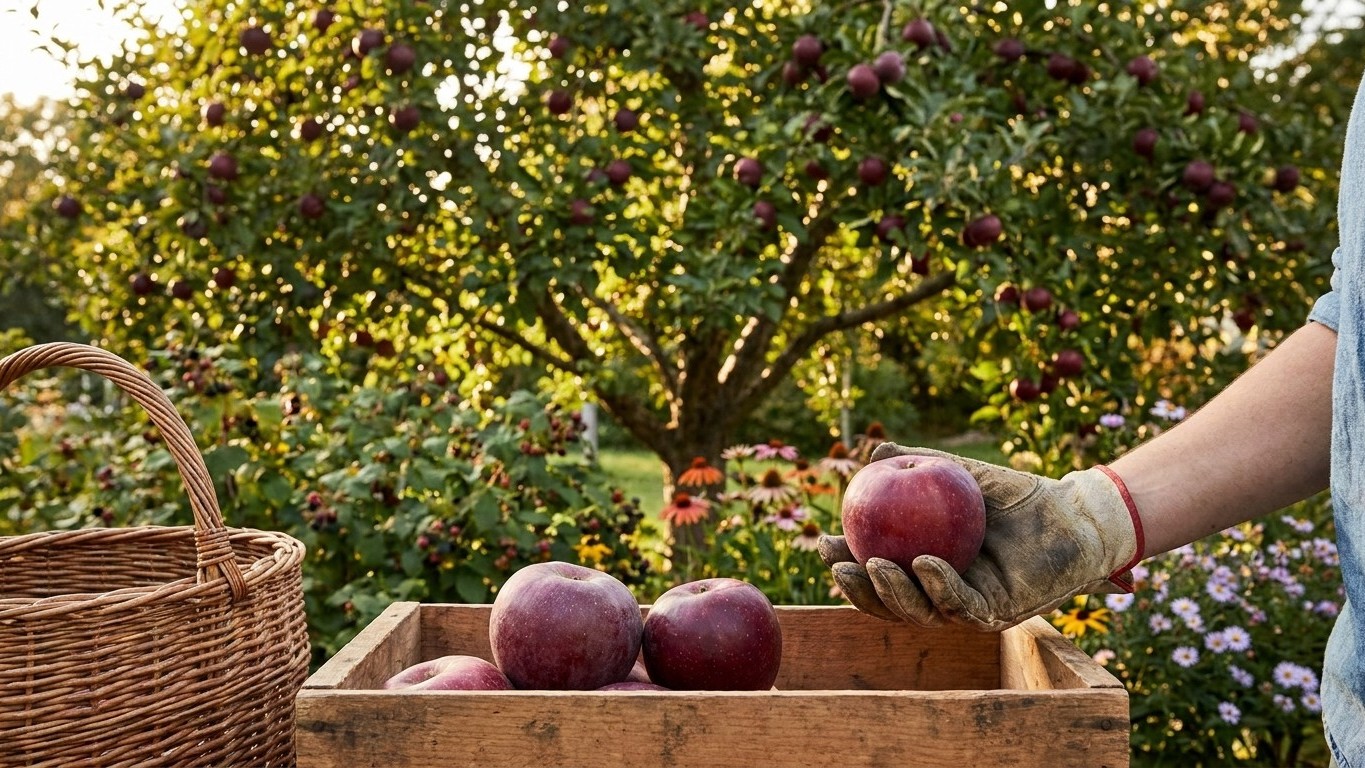

Acey Mac is an early-blooming, late-season apple that ripens from late September into mid-October, hardy across USDA zones 4 through 8. It carries a mild, sweet flavor with soft McIntosh-style flesh and almost no acid bite, which makes it a fresh-eating apple rather than a baking one. Here’s what a grower actually needs to know before planting it.
What Acey Mac actually is

Before anything else, here’s what you’re signing up for with this variety:
- Ripens: late September to mid-October
- Tastes like: mild and sweet, low acidity, soft McIntosh-type flesh
- Good for: fresh eating, not baking
- Keeps: best used within a few weeks of picking
Acey Mac sits in the late-harvest window, coming off the tree well after the early-season varieties are gone but before the last frost-hardy apples finish up in most regions. According to USU Extension’s guide on apple production for the Utah home garden, this timing puts it squarely in the “put up preserves or eat it now” category rather than the long-storage bin.
The flavor is where this apple earns its keep at the table. It’s mild and sweet with the soft flesh and low acidity that McIntosh eaters recognize immediately, a texture that dissolves rather than crunches. That’s a plus for kids, for applesauce that needs almost no added sugar, and for anyone who finds tart apples hard on the teeth. It’s a minus for anyone hoping to slice it into a tart, because soft flesh collapses under heat and low acid means the fruit turns to mush without the structure a baking apple needs to hold its shape.
Keeping quality follows directly from that softness. This isn’t a variety bred for the root cellar. Eat it fresh within weeks of picking, because the same texture that makes it pleasant off the tree also makes it prone to going mealy or bruised if it sits around. If you’ve grown McIntosh before and been frustrated by how fast the fruit turns, expect the same pattern here.
Will it grow where you are
Hardiness zones 4 through 8
USU Extension lists Acey Mac as hardy across USDA zones 4 through 8, which is a wide band. It covers everything from the cold winters of the northern Great Plains and interior New England down through the mid-Atlantic and into the warmer parts of the Southeast and the inland West. If you’re gardening in zone 3 or colder, this variety is likely to suffer winter injury on its own roots or graft union in a hard year. On the other end, zone 9 and up starts to push into territory where the tree may not get the cold it needs to grow and fruit normally, which brings up the second filter.
Winter chill isn’t published for this variety
Hardiness zone tells you whether the tree survives winter. Winter chill, the number of hours spent between roughly 32 and 45 degrees Fahrenheit each winter, tells you whether it actually blooms and fruits well the following spring. Apples in general need a meaningful chill accumulation to break dormancy evenly; too little chill and you get straggly, uneven bloom that hurts the whole season’s crop.
For Acey Mac specifically, a chill-hour figure isn’t published in the sources available for this variety. Rather than guess, the honest answer is that this number simply isn’t documented here. What that means practically: growers in the classic apple belt, the northern and mountain states where winters reliably deliver hundreds of chill hours, are on safe ground. Growers in the warm-winter South or in mild coastal California, where chill accumulation is the limiting factor for many apple varieties, should treat this one as unproven and check with a local extension office before committing an orchard slot to it.
What to Plant Beside It
This is usually the question that brought you here, and it deserves a straight answer: a specific list of pollination partners for Acey Mac isn’t published in the sources used for this page. That’s worth taking seriously rather than skipping past, because nearly all apple varieties crop better with a compatible partner nearby, and planting a single tree alone is a common way to end up with a beautiful bloom and almost no fruit.
Since no named partner list exists here, the practical move is to lean on Acey Mac’s own bloom timing. USU Extension records its bloom season as early, which narrows the search considerably. You want another apple variety, or a crabapple, that also blooms early in your region and isn’t the parent variety of Acey Mac itself, since a seedling generally can’t be pollinated by its own parent tree. Early-blooming apples and flowering crabapples are widely available and are the standard fix nurseries recommend when a specific chart doesn’t exist for a given variety.
A few things to keep in mind while you shop for a companion tree:
- Choose a variety with an early to mid-season bloom window, not a late bloomer, so the flowering periods actually overlap
- A crabapple with heavy, reliable bloom works as a pollinizer even if you have no interest in eating its fruit
- Plant the partner within about 50 feet for good bee traffic between the two trees
- Avoid relying on a single other tree three properties away; bees don’t reliably travel that far in cool, wet spring weather
For a full breakdown of which apple varieties bloom together and which combinations are known to fail, check a dedicated apple pollination chart before you buy. It’s a five-minute check that saves a season of disappointing harvests.
Growing it well
Fire blight: moderately susceptible
USU Extension rates Acey Mac as moderately susceptible to fire blight, a bacterial disease that spreads fastest in warm, wet spring weather right around bloom time. In the garden, that rating translates into blackened, wilted shoot tips that look scorched, sometimes with a shepherd’s-crook curl at the end of a branch. It’s not the worst rating an apple can carry, but it’s not resistant either. Prune out infected wood well below the visible damage, disinfect pruning tools between cuts, and avoid heavy nitrogen fertilizer that pushes soft, vulnerable new growth right when blight pressure is highest.
Habit and bearing pattern
Details on Acey Mac’s specific tree habit and biennial bearing tendency aren’t spelled out in the sources used here, so it’s worth watching your own tree in its first few bearing years rather than assuming. Many McIntosh-type apples do show some tendency toward biennial bearing, alternating a heavy crop one year with a light one the next, so if you notice that pattern developing, thinning the young fruit in the heavy year is the standard fix.
Thinning
Because the fruit has soft flesh and can crowd on the branch, thin developing apples to one fruit per cluster, spaced roughly 6 inches apart, once they’re about the size of a marble. This isn’t unique to Acey Mac, but it matters more here than with a firmer apple, since crowded, undersized fruit on a soft-fleshed variety tends to bruise and rot in storage faster than a firmer apple would.
Picking it and keeping it
USU Extension puts the harvest window for Acey Mac at late September to mid-October, but a calendar date is only a starting point. Weather shifts the actual ripening by a week or two either direction, so check the fruit itself using this sequence:
- Lift and twist a sample apple gently upward. If it separates from the spur with a light twist, it’s ready; if you have to yank or tear it off, give it more time.
- Cut one apple open and check the seeds. Ripe apples generally show brown to dark brown seeds; pale or greenish seeds mean the fruit needs another week or so.
- Check the ground color, the background color behind any red blush. As Acey Mac ripens, that background shifts from green toward a yellow-green undertone.
Storage
Given the soft, low-acid flesh, plan to eat this apple within a few weeks of picking rather than banking on long-term storage. A refrigerator crisper drawer, kept as cold and humid as possible, will buy you a bit more time than a countertop bowl, but this isn’t a variety that holds through winter like a firmer, higher-acid apple would. If you end up with more than you can eat fresh, applesauce and cider are better uses of the harvest than trying to store the whole crop whole.
Common questions
Is Acey Mac the same as McIntosh?
No, though it shares the soft flesh and mild sweetness that McIntosh is known for. It’s a distinct variety with its own harvest window and hardiness range.
Can I bake with Acey Mac apples?
It’s not recommended. The flesh is too soft to hold its shape in a tart or pie, and the low acidity means it won’t balance sugar the way a tart baking apple does. Save it for fresh eating, sauce, or cider.
Does Acey Mac need a second tree to produce fruit?
A published partner list isn’t available for this variety, but nearly all apple varieties crop better with a compatible pollinizer nearby. Planting an early-blooming apple or crabapple within about 50 feet is the safe default.
How long can I store Acey Mac apples?
Plan on a few weeks, not months. The soft flesh and low acid content mean it doesn’t hold up in long-term storage the way firmer, tart varieties do.
Will Acey Mac grow in a warm climate with mild winters?
Possibly, but proceed carefully. Its winter chill requirement isn’t published, and warm-winter regions sometimes struggle to give apple trees enough cold hours for even bloom. Check with a local extension office before planting in zone 9 or warmer.