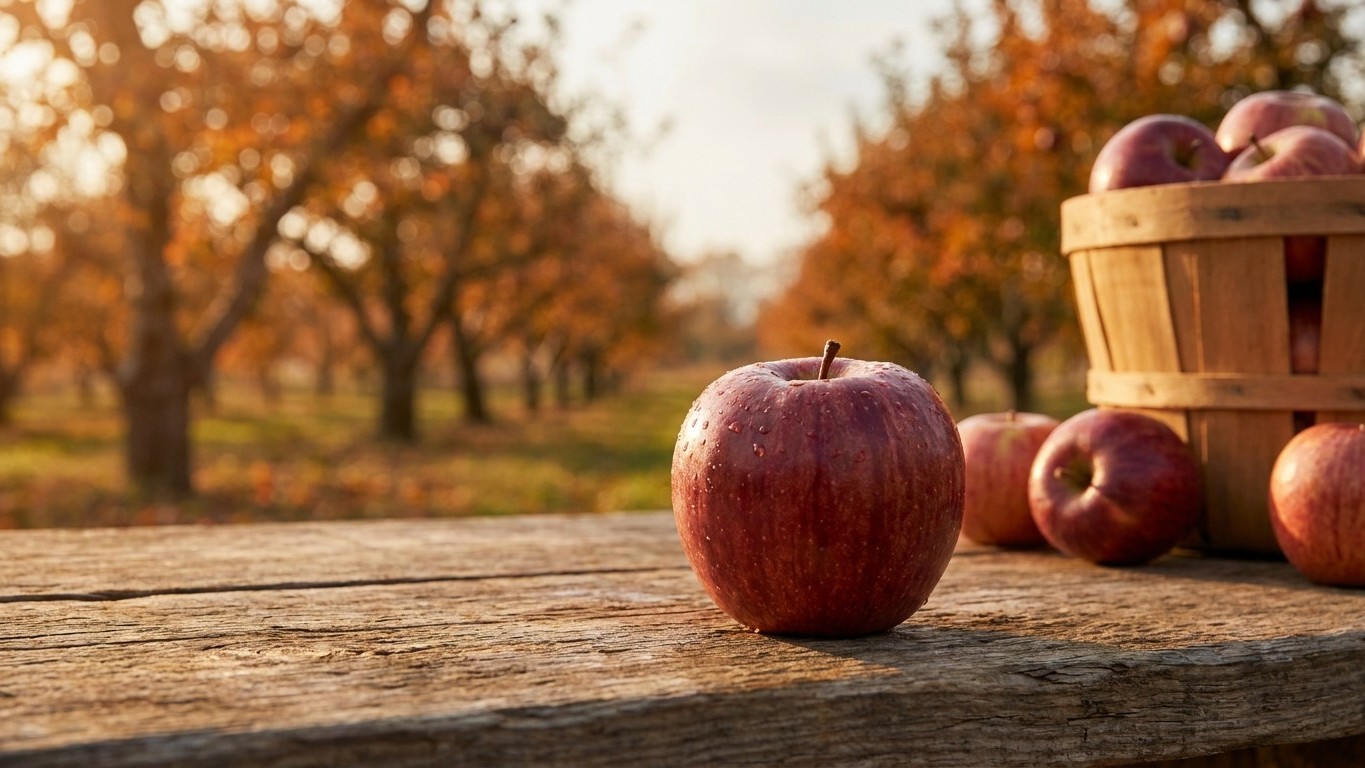

Fuji earns its space in a home orchard on flavor and storage alone, but it comes with one serious catch: a fire blight rating that punishes gardeners in warm, humid regions. If you can manage that risk, and pair it with the right pollinizer, it’s one of the more rewarding dessert apples you can plant.
What Fuji actually is

- When it ripens: October into Early November
- What it tastes like: Very sweet and low in acid, with dense, exceptionally crisp flesh
- What it is good for: Cooking, eating and baking
- How Long It Keeps: Good keeping in ordinary storage, with a long shelf life once out of store, and very good results under controlled atmosphere
Those four facts come from two land-grant extension sources, Clemson Cooperative Extension’s HGIC 1350 variety table and Utah State University Extension’s guide to apple production for the home garden, and together they tell you most of what matters before you dig a hole. The harvest window lands late in the season, October into Early November, which puts Fuji among the later-picking dessert apples rather than an early-fall variety.
On the plate, Fuji’s identity is built on sugar and texture rather than sharpness. Clemson describes it as very sweet and low in acid, with flesh that stays dense and exceptionally crisp, which is exactly why it holds up in a lunch box for days without going mealy. That same density is what makes it flexible in the kitchen: Clemson lists it for cooking, eating and baking, a rare three-way rating that comes down to flesh that keeps its structure under heat and sugar levels that don’t need much help from added sweetener in a pie filling.
Storage is the other reason growers keep coming back to it. In a cool cellar or a root cellar setup, Fuji is described as a good keeper with a long shelf life once it comes out of storage, meaning it doesn’t collapse quickly once you start pulling apples out for the week. The very good rating under controlled atmosphere refers to something different: a commercial packhouse holding fruit in a sealed room with regulated oxygen and temperature. That’s not a figure a home grower with a garage shelf or a spare fridge will ever replicate, so treat the two numbers as separate promises, not one.
Will it grow where you are
Hardiness zones
USU Extension lists Fuji at hardiness zones (4)5-8, written as a range rather than a single number because that’s how the tree actually behaves across the country. Zone 4 sits in parentheses because it’s the marginal edge, a zone where the tree can survive but where a hard winter carries real risk to buds and young wood. Zones 5 through 8 are where Fuji is planted with confidence, from the mountain West through the mid-Atlantic and into the warmer parts of the South. Zone 8 is the ceiling in this range, and gardeners near or past that line should factor in the second filter below before ordering a tree.
Winter chill requirements
Hardiness zone tells you about surviving cold. Winter chill tells you about waking up on schedule, and it’s a separate question the zone map doesn’t answer. Apple varieties need a minimum number of hours below roughly 45°F each winter to break dormancy evenly and bloom on time; too little chill and a tree flowers late, unevenly, or not at all in a mild year. The sources used for this page don’t publish a specific chill-hour figure for Fuji, so rather than attach a number that isn’t backed by either extension source, the honest answer is that it isn’t published here. Gardeners in the milder end of the zone 8 range, particularly in the Southeast and parts of the Southwest, should check with a state or county extension office before planting, since chill accumulation varies by local climate in ways a national hardiness map can’t capture.
What to plant beside it
Fuji falls into Bloom Group B, a mid to late bloomer according to USU Extension. Bloom group is a relative ranking, not a calendar date: it tells you the order varieties open their flowers relative to each other in a given spring, and that order holds even though the actual dates shift earlier or later depending on your climate and the year. What doesn’t shift is the need for a compatible partner. Nearly all apple varieties crop better with a partner nearby, since a tree relying entirely on its own pollen typically sets a thin, unreliable crop.
The varieties known to pollinate Fuji, based on the same source data, are:
- Gala
- Ginger Gold
- Granny Smith
- Jerseymac
- Mollie’s Delicious
- Red Delicious
- Yates
Any one of those, planted within bee range and blooming at an overlapping time, should supply the pollen Fuji needs to set a full crop. Where growers get tripped up is Mutsu. It flowers at the same time as Fuji, which on paper looks like a match, but Mutsu carries sterile pollen. It can accept pollen from Fuji or another compatible variety and still fruit well itself, but it cannot return the favor. Planting only Fuji and Mutsu together, despite the matching bloom window, leaves both trees short on fruit. If Mutsu is already in the yard, a third variety from the list above needs to go in as well to close the loop for both trees.
For a fuller explanation of bloom groups, self-fertility, and how to plan a small orchard around these overlaps, see our apple pollination guide.
Growing it well
Fire blight
USU Extension rates Fuji as Very Susceptible to fire blight, and that rating translates into a specific set of symptoms rather than an abstract warning. In a warm, wet spring, expect blossom clusters to blacken and die back first, followed by young shoots wilting into the classic shepherd’s-crook curl. Left unchecked, the bacteria move into larger limbs and the trunk, where sunken, oozing cankers can eventually girdle and kill the tree. Growers in humid regions, especially the Southeast and mid-Atlantic, see this pressure most, and the standard response is to prune out infected wood well below the visible damage, sterilize tools between cuts, and avoid heavy nitrogen fertilizer that pushes soft, vulnerable new growth right when blight pressure peaks.
Bearing habit
Fuji tends to set a heavy crop of small, densely clustered apples, a habit that shows up as thin, whippy branches loaded past what they can comfortably hold. Left unthinned, that weight leads to broken limbs and undersized fruit the following year, and many home growers find the tree swings between a bumper crop one season and a light one the next if it isn’t managed. Thinning the young fruit down to one or two apples per cluster, done a few weeks after bloom, evens out that swing, improves fruit size, and takes pressure off the limbs before harvest weight sets in.
Picking it and keeping it
USU Extension places Fuji’s harvest window at October into Early November, later than most dessert apples in the home orchard lineup. A calendar date is a starting point, not proof the fruit is ready, so the fruit itself needs to confirm it. Check in this order:
- Lift and twist a sample apple gently in your palm; if it separates from the spur with a slight twist and doesn’t need to be pulled or torn off, the crop is coming ready.
- Cut one open and look at the seeds; pale or green seeds mean more time is needed, while brown, fully colored seeds signal the fruit is mature.
- Check the ground color, the background shade under any red blush; a shift from green toward yellow or cream indicates the apple has finished ripening on the tree.
Storage
Once picked, Fuji rewards patience. In a cool, humid spot like a root cellar or an unheated garage refrigerator, it holds as a good keeper with a long shelf life once it’s out of that storage, meaning it stays crisp and sweet on the counter far longer than a variety meant for quick use. The very good rating under controlled atmosphere belongs to commercial storage rooms with sealed, regulated oxygen and temperature levels a home setup can’t match, so don’t expect a garage fridge to stretch a Fuji crop as far as a packhouse can. For a home grower, the practical takeaway is simple: pick at the right moment using the three checks above, store cool and slightly humid, and expect this variety to outlast most other apples in the bin.
Common questions
Is Fuji self-fertile enough to skip a second tree?
No. Nearly all apple varieties, Fuji included, crop far better with a compatible partner nearby. Planting a single Fuji tree alone typically means a light, unreliable harvest rather than no fruit at all.
Can I plant Fuji next to Mutsu and expect a crop from both?
Not from that pairing alone. Mutsu blooms at the same time as Fuji but carries sterile pollen, so it can’t pollinate Fuji or itself. A third variety from Fuji’s compatible list, such as Gala or Granny Smith, needs to be added so both trees get pollinated.
Why is Fuji fire blight rating a bigger deal than for other apples?
USU Extension rates it Very Susceptible, the higher end of the risk scale. In humid regions with warm, wet springs, that means faster blossom and shoot infection and a real risk of cankers reaching into permanent wood if pruning and sanitation aren’t kept up.
Does Fuji keep as long as commercial stores suggest?
The long-storage claims for Fuji assume controlled atmosphere storage, a sealed commercial room with regulated oxygen and temperature. A home grower using a cool cellar or fridge should expect good keeping with a long shelf life once removed, not the packhouse-level duration.
How do I know Fuji is ready to pick without a calendar?
Use the fruit itself: lift and twist a sample apple to see if it separates easily, cut one open to check for brown seeds, and look at the ground color for a shift from green toward yellow. Together those three checks are more reliable than the October into Early November window alone.