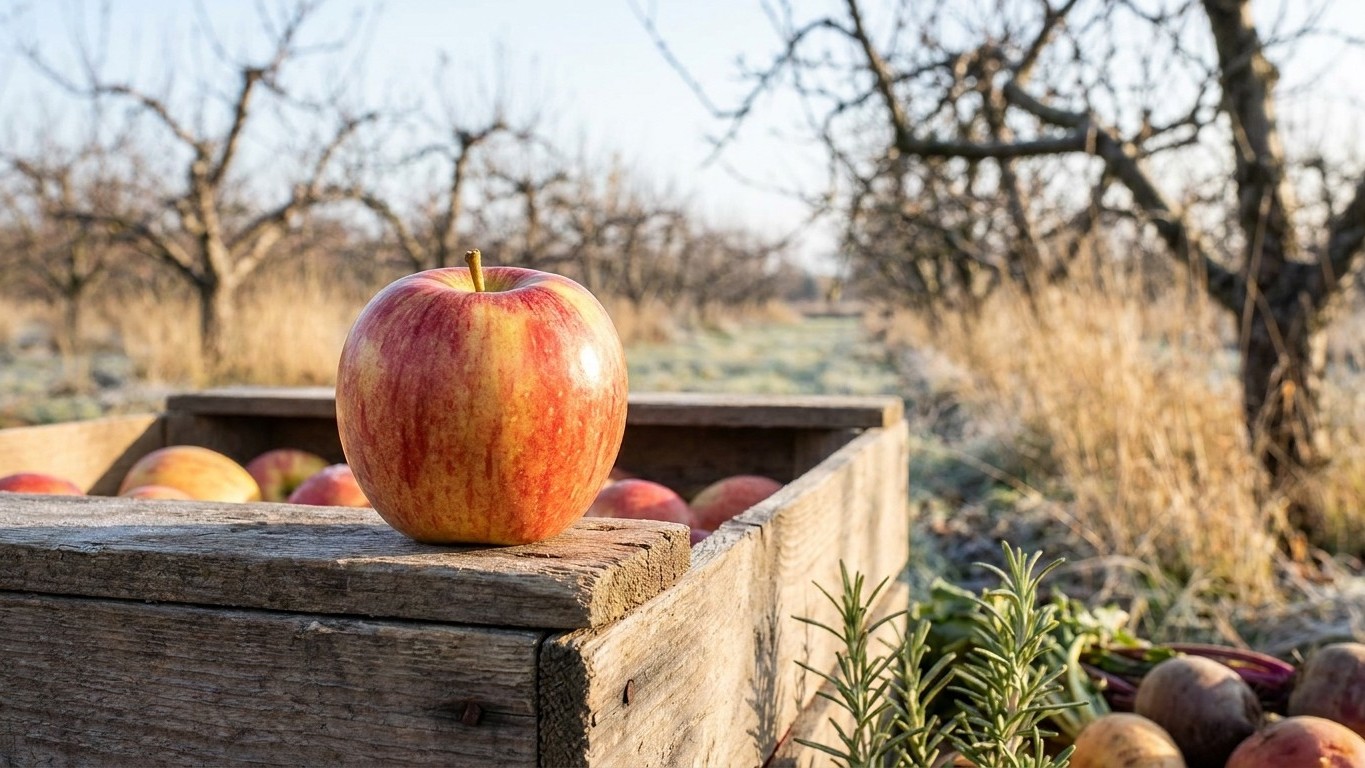

SnowSweet is a cold-hardy apple that ripens in October, carries a sweet, slightly tart flavor, and works equally well eaten out of hand or baked into a pie. It’s rated for USDA zones 4 through 6, which tells you a lot about who should be planting it and who shouldn’t. Here’s what a grower actually needs to know before ordering a tree.
What SnowSweet actually is

Before anything else, four things decide whether this variety belongs in your yard:
- When it ripens: October, according to Utah State University Extension’s guide to home apple production.
- What it tastes like: sweet with a noticeable tart edge, per North Dakota State University Extension (FN1847, Table 1).
- What it’s good for: snacks, fruit salads, fruit trays, and baking, also from the NDSU table.
- How long it keeps: not specified with a duration in either source consulted for this page, though it’s grown as a fresh-eating and general-purpose apple rather than one bred for months of cold storage.
The flavor profile matters more than it might seem at first glance. A “sweet, slightly tart” apple sits in a different category than a purely sugary snacking apple or a sharply acidic pie apple. That balance is exactly why NDSU lists it across such a wide range of kitchen uses. Snack apples need to taste good raw, with no cooking to soften harsh acid or mask blandness. Baking apples need flesh that holds together under heat and enough acidity to keep the filling from tasting flat once sugar is added. SnowSweet checks both boxes without you needing two separate trees for two separate jobs.
That flexibility is the real selling point here. A lot of home orchards end up with one tree for eating and one for pie, mostly because most varieties are lopsided one way or the other. This one is built to do both, which matters if you’ve only got room for a single tree.
Will it grow where you are
Hardiness zones 4-6
USU Extension places SnowSweet in USDA hardiness zones 4 through 6. That’s a range, not a single number, and the range itself tells you something: this tree is built for cold winters, not for the Gulf Coast or the low desert Southwest. Zone 4 covers places like northern Minnesota and much of Maine. Zone 6 stretches through the mid-Atlantic and into parts of the Midwest. If you garden in zone 7 or warmer, this isn’t your apple. If you’re in zone 3, it’s not either, at least not without serious site selection to buy a bit of extra warmth.
Winter chill
Hardiness zone is only half the equation. The other half is winter chill, the number of cold hours an apple tree needs each winter to break dormancy properly and flower on schedule. Our sources don’t publish a chill-hour figure for SnowSweet, so no number is given here rather than a guess. What the hardiness range does tell you is which end of the country this variety belongs to. Zones 4 through 6 are cold-winter territory, the Upper Midwest, the Northeast, and the Intermountain West, places that accumulate plenty of chill without anyone having to worry about a shortfall. Growers in mild-winter regions, where chill hours run short even in nominally suitable zones, should treat the absence of a published chill requirement as a reason to check with a local extension office before planting, not as a green light.
What to plant beside it
This is the section most people come here for, and the honest answer is that our sources don’t publish named pollination partners for SnowSweet. Neither USU Extension’s guide nor the NDSU variety table lists compatible cultivars for this apple specifically, so no list appears here rather than a guessed one.
What we do know is the bloom timing: USU Extension rates SnowSweet as a mid-season bloomer. That’s useful information even without named partners, because pollination depends on overlapping bloom windows. A tree that flowers in early April can’t pollinate one that flowers three weeks later; the bees have nothing to carry between them. Nearly all apple varieties crop better with a compatible partner nearby, even ones described as partly self-fertile, so planting a second variety with a mid-season bloom time is the safest general approach here.
A few practical points worth keeping in mind while you shop for a partner tree:
- Look for another mid-season-blooming apple variety rated for the same hardiness zones, so the two trees are likely to flower together.
- A flowering crabapple with a matching bloom window can serve as a pollen source even if you don’t want to plant a second full-size apple tree.
- Confirm compatibility with a local nursery or extension office before buying, since documented partner lists for SnowSweet specifically aren’t available in the sources used here.
For the broader rules on which varieties pollinate which, including timing charts and the parent-seedling exclusions that trip up a lot of first-time buyers, see our full apple pollination guide.
Growing it well
Fire blight
USU Extension rates SnowSweet as moderately resistant to fire blight. In practical terms, that means you’ll see fewer blackened, shepherd’s-crook shoot tips than you would on a highly susceptible variety, but the tree isn’t immune. Fire blight still spreads fastest during warm, wet weather at bloom time, so the usual precautions still apply: prune out infected wood well below the visible damage, disinfect tools between cuts, and avoid heavy nitrogen fertilizer that pushes soft, vulnerable new growth right when infection risk is highest.
Habit and bearing
Our sources don’t detail SnowSweet’s growth habit or whether it leans toward biennial bearing, the pattern where a tree produces a heavy crop one year and almost nothing the next. Since that tendency isn’t documented here one way or the other, the safe default is standard practice: thin the young fruit to one apple per cluster, spaced several inches apart, in any year the tree sets a heavy load. Thinning reduces the strain on the tree’s energy reserves and is one of the few interventions that helps prevent biennial bearing from taking hold, regardless of a variety’s natural tendency.
Picking it and keeping it
USU Extension puts SnowSweet’s harvest window in October. But a calendar date is only a starting point, weather shifts ripening earlier or later by a couple of weeks depending on the season. The tree itself gives better signals than the calendar does. Work through these checks in order:
- Lift and twist: cup a fruit in your hand, lift it gently upward, and give it a slight twist. A ripe apple separates from the spur easily. If it resists and you have to tug, it needs more time.
- Seed color: cut one test apple open. Seeds in a ripe apple have turned dark brown. Pale or greenish seeds mean it’s still too early to pick the rest of the tree.
- Ground color: check the background skin color, the shade underneath any red blush. As the apple ripens, that background shifts from green toward yellow or cream.
Storage
Neither source used for this page publishes a specific storage duration for SnowSweet, so no number is given here. General cold-storage practice for fresh-eating apples applies: keep them near 32 degrees Fahrenheit with high humidity, in a refrigerator crisper drawer or a root cellar that stays consistently cold. Storing apples away from other produce also helps, since apples give off ethylene gas that speeds ripening, and can shorten the storage life of nearby vegetables.
Common questions
Is SnowSweet a good apple for eating fresh?
Yes. NDSU Extension rates its eating quality as sweet with a slightly tart edge, and lists it as suited to snacking along with fruit salads and fruit trays.
Can SnowSweet be used for pies and baking?
NDSU Extension includes baking among its recommended kitchen uses. Its sweet-tart balance holds up well once sugar is added and the flesh cooked down, which is what separates a good pie apple from one that turns mushy or flat-tasting in the oven.
What zones can grow SnowSweet apples?
USU Extension places it in USDA hardiness zones 4 through 6, which covers much of the northern United States, from the Upper Midwest through the mid-Atlantic.
Does SnowSweet need another apple tree nearby to produce fruit?
Nearly all apple varieties, including this one, crop better with a compatible pollinator nearby. Named partner varieties for SnowSweet aren’t published in the sources used for this page, but its mid-season bloom time is a useful starting point when choosing a companion tree.
Is SnowSweet resistant to fire blight?
USU Extension rates it moderately resistant, meaning it’s less prone to fire blight damage than highly susceptible varieties, though standard pruning and sanitation precautions are still worth following.