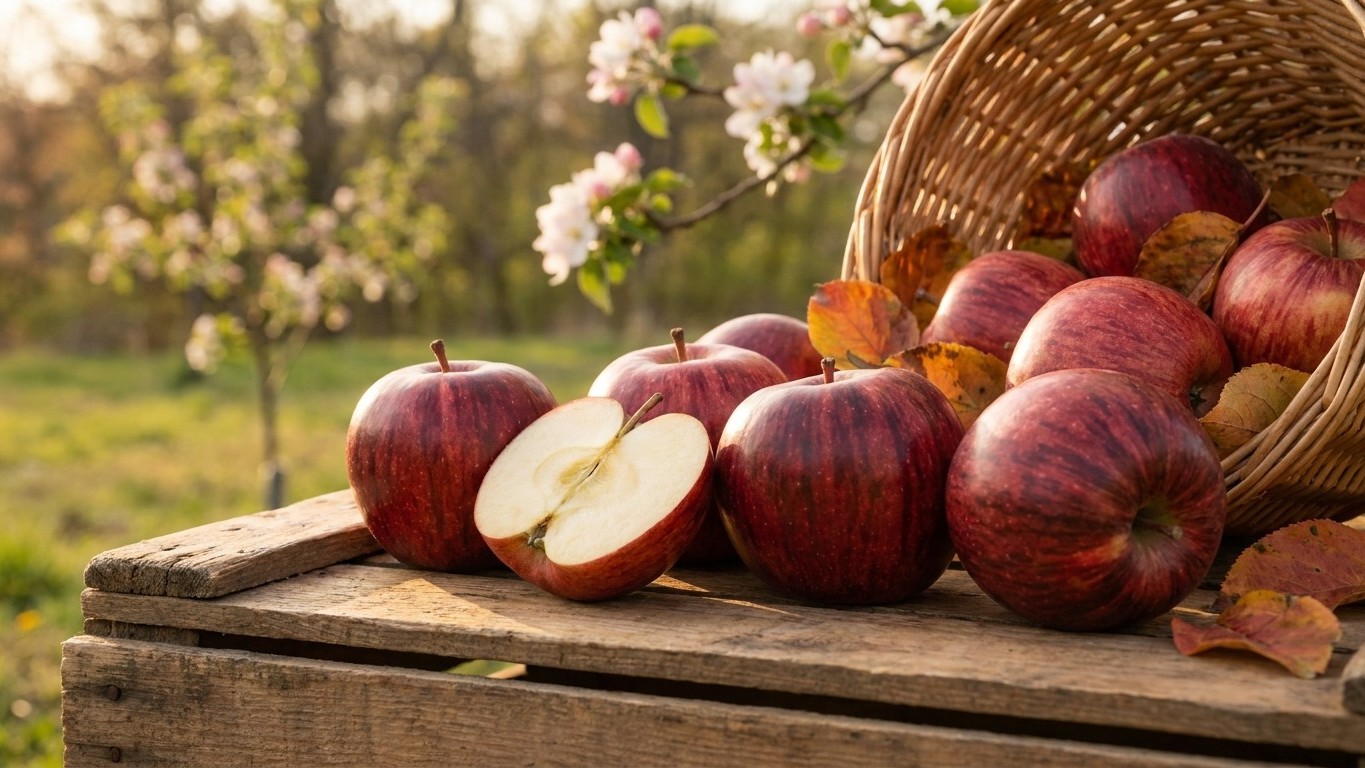

Jerseymac is a tart, aromatic apple with soft McIntosh-type flesh, best known as a fresh-eating and pie apple rather than a long-keeper. It flowers in bloom group B and needs a genuinely compatible partner nearby, because a tree standing next to another with matching bloom timing but the wrong genetics still won’t set fruit. Here’s what the fact sheets actually say about growing and pairing it.
What Jerseymac actually is

- When it ripens: Not given as a calendar date in the sourced material; use the ripeness signs described below rather than a fixed date.
- What it tastes like: Tart and aromatic, with soft McIntosh-type flesh.
- What it’s good for: Fresh eating, sauce, and pies.
- How long it keeps: Not published as a specific duration in the cited fact sheet; the texture gives a strong clue, addressed further down.
The taste profile comes straight from Clemson Cooperative Extension’s HGIC 1350 variety table: tart, aromatic, and softer-textured than a firm, crisp apple like Granny Smith. That softness is the reason Jerseymac shows up on both the fresh-eating list and the baking list. A dessert apple that stays crunchy and one that collapses into sauce are doing two different physical things, and Jerseymac’s flesh leans toward the second behavior. It breaks down readily under heat, which is exactly what you want in a pie filling or a pot of stovetop sauce, but it also means the apple doesn’t hold a crisp bite for weeks in a fruit bowl the way a dense-fleshed variety would.
None of this makes Jerseymac a lesser apple, it just narrows what it’s for. If your kitchen goal is a from-scratch pie or a batch of unsweetened sauce, the soft flesh and built-in tartness mean less added sugar and less added acid to get the flavor right. If you’re after a crisp lunchbox apple that survives a week of bruising in a backpack, this isn’t that variety, and no amount of storage trickery changes the flesh structure it was bred with.
Will it grow where you are
Hardiness zones
The sourced fact sheet for Jerseymac doesn’t publish a specific USDA hardiness zone range for this variety, so no number should be attached to it here. What the sheet does confirm is the bloom group: B, per Clemson HGIC 1350 and UGA C740. Bloom group tells you where Jerseymac sits in the flowering sequence relative to other apples in a given location, not which zones it survives in. Before planting, check with your county extension office or a regional apple grower, since that’s the reliable way to confirm cold hardiness for your specific site rather than relying on a generic figure.
Winter chill
Winter chill, the number of cold hours a tree needs over winter to break dormancy properly, isn’t given in the sourced material for Jerseymac either. This matters because apples in general are cold-climate fruit: gardeners in the Deep South or coastal Southern California often struggle with varieties that need more chill hours than a mild winter supplies, resulting in patchy bloom and weak fruit set even when the tree looks otherwise healthy. Since no chill figure is published for this variety, the safest move is asking a local nursery or extension agent whether Jerseymac performs reliably in your specific winter pattern, rather than assuming it behaves like a better-documented variety.
What to plant beside it
Nearly all apple varieties crop better with a compatible partner nearby, and Jerseymac is no exception. According to Clemson HGIC 1350, Jerseymac can be pollinated by the following varieties:
- Fuji
- Gala
- Ginger Gold
- Granny Smith
- Mollie’s Delicious
- Red Delicious
- Yates
One exclusion deserves a straight warning. Mutsu flowers at the same time as Jerseymac, matching its bloom group, but Mutsu has sterile pollen. That means Mutsu can receive pollen from other varieties and still fruit, but it cannot supply usable pollen to Jerseymac or to anything else in the orchard. Plant only these two together and you’ll get blossoms on both trees and fruit on neither, despite the timing looking perfect on paper. If Mutsu is already in your yard, it still needs one of the varieties above (or another proven partner) to fruit itself, and Jerseymac still needs a separate, functional pollen source of its own.
The practical takeaway: pick at least one name from the list above, confirm its bloom timing overlaps with Jerseymac’s in your climate, and plant it within normal bee-flight range, generally within 50 feet for reliable cross-pollination in a home orchard. For a broader look at how bloom groups and pollen compatibility work across apple varieties, see our apple pollination guide.
Growing it well
Fire blight
A specific fire blight susceptibility rating for Jerseymac isn’t published in the cited fact sheet, so no rating should be assigned here. Fire blight is a bacterial disease that shows up as blackened, wilted shoot tips that look scorched, sometimes with a shepherd’s-crook curl at the tip, and it spreads fastest during warm, wet bloom periods. Regardless of a variety’s specific susceptibility, the standard response is the same: prune out infected wood well below the visible damage, disinfect pruning tools between cuts, and avoid heavy nitrogen fertilization that pushes soft, vulnerable new growth right when bacteria are most active.
Growth habit
Mature tree size depends on rootstock, not on the Jerseymac variety itself. A tree grafted onto a dwarfing rootstock stays small and manageable in a backyard; the same variety on a semi-standard or standard rootstock grows considerably larger and takes longer to bear its first crop. When buying, ask the nursery specifically which rootstock the Jerseymac scion is grafted onto, since that answer determines eventual height and spacing far more than anything about the variety’s own genetics.
Biennial bearing and thinning
Specific data on whether Jerseymac tends toward biennial bearing, alternating a heavy crop one year with a light one the next, isn’t given in the sourced material. As a general practice with early, soft-fleshed apples, thinning the young fruit down to one apple per cluster in a heavy-set year helps even out production and reduces limb stress, since a branch loaded with too much fruit can also break under weight during summer storms.
Picking it and keeping it
A precise harvest date for Jerseymac isn’t published in the cited source, so lean on physical signs rather than the calendar. Check for readiness in this order:
- Lift and twist a sample apple gently upward. If it separates from the spur with little resistance, it’s likely ready; if it clings and resists, give it more time.
- Cut one open and check the seeds. Brown or dark seeds signal ripeness; pale green or white seeds mean the apple needs more days on the tree.
- Look at the ground color, the background shade behind any red blush. A shift from green toward yellow or cream typically confirms the fruit has matured.
Storage
No specific storage duration is given in the sourced fact sheet for Jerseymac. Given the soft McIntosh-type flesh described in that same source, this isn’t a variety built for months of cold-storage life the way a firmer, late-season apple can be. Soft-fleshed apples tend to lose crispness and develop mealiness faster in storage because their cell walls break down more readily, whether in a refrigerator drawer or a root cellar. Practically, that points toward eating or processing Jerseymac within a few weeks of harvest rather than banking on long-term storage, and toward the fresh-eating and baking uses the fact sheet already points to.
Common questions
Can one Jerseymac tree produce apples on its own?
Nearly all apple varieties, Jerseymac included, crop far better with a compatible pollen partner nearby. Relying on a single tree alone typically means little to no fruit, even in a good bloom year.
Does planting Mutsu next to Jerseymac solve the pollination problem?
No. Mutsu blooms at the same time as Jerseymac, which looks convenient, but Mutsu has sterile pollen and cannot pollinate Jerseymac or any other variety. Mutsu also needs its own separate pollen source to fruit.
Is Jerseymac better for eating fresh or for baking?
Both, according to the sourced variety table, which lists it for fresh eating, sauce, and pies. Its soft flesh breaks down readily when cooked, which suits sauce and pie fillings, while its tart, aromatic flavor also holds up well eaten out of hand.
How long does Jerseymac keep after picking?
No specific storage window is published in the cited source. Given its soft McIntosh-type flesh, it behaves more like a short-term keeper best used within a few weeks rather than a long-storage apple.
Which apple varieties pollinate Jerseymac?
Fuji, Gala, Ginger Gold, Granny Smith, Mollie’s Delicious, Red Delicious, and Yates are named as compatible pollinators in Clemson HGIC 1350. Mutsu, despite matching bloom timing, is excluded because its pollen is sterile.