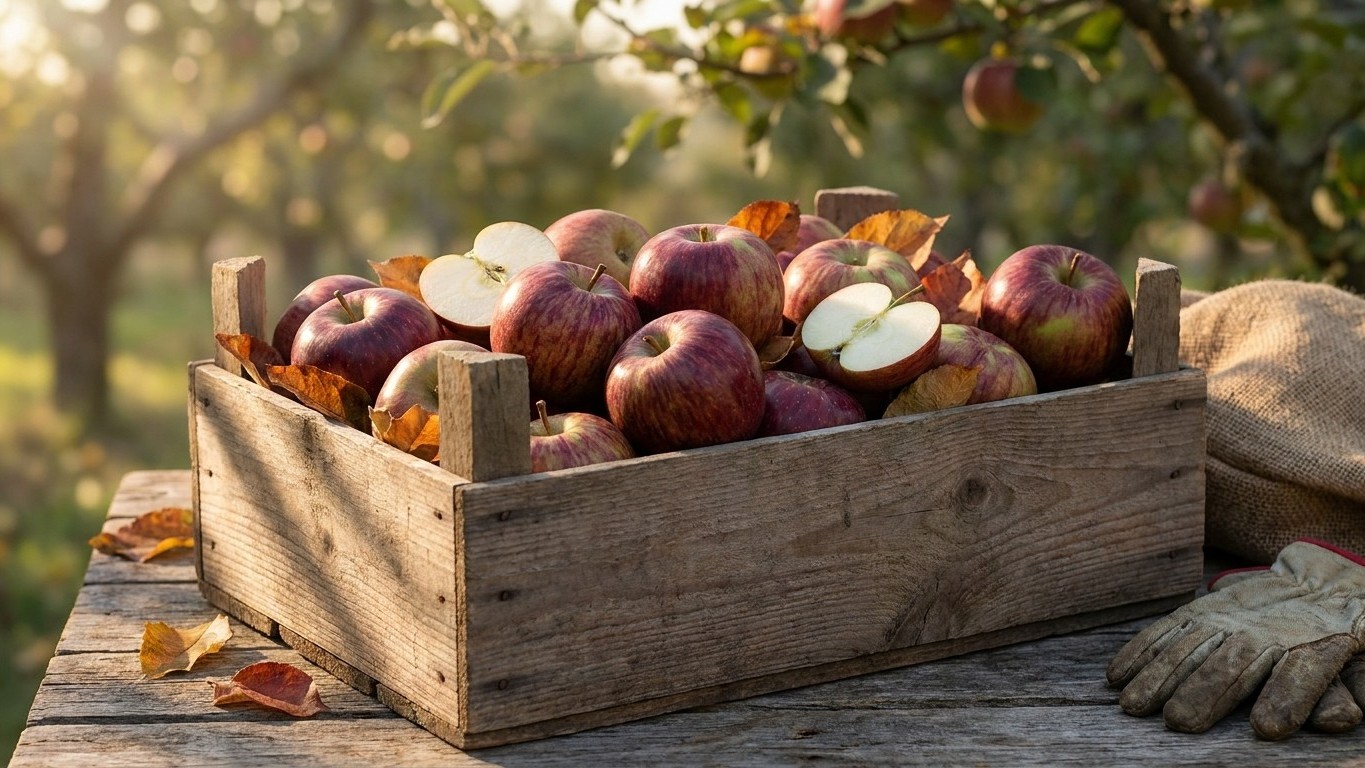

Northern Spy is a late-season apple, ripening in October, prized for its tart bite and its unmatched reputation as a pie apple in the Northeast. It’s also a bigger commitment than most trees in the nursery aisle: it needs a hardiness zone that suits it, a compatible neighbor to set fruit, and patience, since it isn’t a quick bearer. Here’s what a grower actually gets, where it will and won’t thrive, and what belongs in the ground next to it.
What Northern Spy actually is

Four things matter most when you’re deciding whether this apple belongs in your yard: when it ripens, what it tastes like, what it’s good for in the kitchen, and how it holds up once picked.
- Ripens: October (USU Extension)
- Taste: a tart apple (University of Maine Cooperative Extension, Bulletin #4262)
- Best use: excellent for snacking, pies, sauce, and baking; good in salads, and considered the classic pie apple of the Northeast (University of Maine Cooperative Extension, Bulletin #4262)
- Keeping: known as a long-season keeper among orchard apples, though our sourced material doesn’t attach a specific storage-life figure to it
The tartness is the whole point of this variety. It isn’t a fruit you eat expecting the honeyed sweetness of a dessert apple, and that’s exactly why bakers reach for it. The University of Maine’s Cooperative Extension calls it the classic pie apple of the Northeast for a reason grounded in chemistry, not tradition alone: the flesh keeps enough structure to survive an hour in a hot oven without collapsing into applesauce, and the acidity that makes a raw bite pucker is the same acidity that balances the sugar you add to a pie filling. A soft, low-acid dessert apple turns to mush under that kind of heat. Northern Spy doesn’t.
That distinction, between a dessert apple and a pie apple, is the one a lot of first-time growers miss. They plant for fresh eating, get a tree that ripens tart and firm, and wonder why it isn’t as sweet as the apple they remember from a farm stand. Northern Spy rewards a baker more than a snacker, though the extension bulletin notes it holds its own for fresh eating and salads too.
Will it grow where you are
Hardiness zone
USU Extension lists Northern Spy across hardiness zones (4)5-8, a wider band than many apple cultivars get. The parenthetical zone 4 suggests it can survive in colder pockets with the right siting, but zones 5 through 8 are the range it’s rated for without qualification. If you’re gardening in zone 4, expect more winter risk than a zone 5 grower faces, and site the tree out of prevailing wind if you’re pushing the cold edge of that range.
Winter chill
Hardiness zone tells you whether the tree survives winter. Winter chill hours tell you whether it fruits well afterward, and that’s a separate question growers in the South and parts of California run into constantly. Apples need a minimum number of hours below roughly 45°F each winter to break dormancy properly and flower on schedule. Our sourced material doesn’t publish a chill-hour figure for Northern Spy, so rather than guess at a number, the honest answer is that it isn’t documented here. What is clear from its hardiness range and Northeast pedigree is that this is a cold-climate variety by heritage and reputation, one bred for and grown in New England and the upper Midwest rather than for low-chill Southern or coastal conditions. A grower in zone 8 sitting at the warm edge of its hardiness range should treat the chill question as unresolved and check with a local extension office before committing.
What to plant beside it
Nearly all apple varieties crop better with a compatible partner nearby, since very few set a full harvest on their own pollen. A neighbor’s tree, a crabapple within bee range, or a second variety planted deliberately can all do the job, but pollen needs to arrive at the right moment and from a genetically compatible source.
For Northern Spy specifically, our sourced material does not publish a named list of pollination partners. Rather than guess at a pairing, the honest position is that the partner list for this variety isn’t documented in the sources used for this page. That doesn’t mean Northern Spy can’t be paired. It means the specific cultivar names aren’t confirmed here, and picking blind risks buying two trees that bloom weeks apart or share a parent that makes them incompatible.
What is worth flagging generally, and applies to any pairing decision you make locally: two trees flowering at the same time is not automatically enough. A seedling variety and its own parent cultivar often cannot pollinate each other even when their bloom windows overlap, because they share too much genetic material. Bloom season matters as a first filter, but genetic compatibility matters just as much, and a nursery or extension office can usually confirm both before you plant. USU Extension does note that Northern Spy blooms late, which narrows the field to other late-blooming apples as a starting point for anyone sourcing a partner locally.
If you’re planning an orchard around this tree, the safer path is to check a dedicated pollination guide before buying, since bloom timing and compatibility together decide whether you get fruit at all or just flowers.
Growing it well
Fire blight
USU Extension rates Northern Spy as moderately susceptible to fire blight. In the orchard, that shows up as blackened, wilted shoot tips that look scorched, sometimes bending into a shepherd’s-crook shape, usually following a wet, warm bloom period when the bacteria spreads through open flowers. Moderately susceptible isn’t the worst rating an apple can carry, but it isn’t resistant either, so it’s worth watching bloom-time weather and pruning out any blighted wood promptly, cutting well below the visible damage and disinfecting tools between cuts.
Habit and bearing
Northern Spy has a long-standing reputation among growers as a vigorous tree that takes its time coming into production, often bearing later in its life than faster cultivars. Trees left unpruned tend toward an upright, spreading habit that can crowd itself over the years, which is part of why regular structural pruning matters more with this variety than with a naturally compact grower. Like many older, heavy-cropping apples, it’s also known to lean toward biennial bearing, a heavy year followed by a light one, if a full crop is left to mature unchecked.
Thinning the young fruit in years of heavy set is the standard response to that tendency: removing some of the developing apples early in the season reduces the strain on the tree and encourages it to set flower buds for the following year instead of exhausting itself on one oversized harvest. It’s a small task in June that pays off two seasons later.
Picking it and keeping it
USU Extension puts the harvest window for Northern Spy in October, but a calendar date is only a starting point. Weather shifts the exact week from year to year, so the more reliable approach is checking the fruit itself using a short sequence of tests.
- Lift and twist: cup a fruit in your hand, tilt it upward, and give it a gentle twist. A ripe apple separates from the spur with little resistance. If it fights you, it isn’t ready.
- Seed color: cut one sample apple open. Pale or greenish seeds mean more time is needed; seeds that have turned brown or dark are a sign of maturity.
- Ground color: check the background color of the skin, away from any red blush. As an apple ripens, that undertone shifts from a hard green toward a softer yellow-green.
Storage
Once picked, Northern Spy’s reputation as a keeper is part of why it built a following in the Northeast long before mechanical refrigeration made long storage easy for every variety. Held cold, ideally near freezing with high humidity, in a root cellar, garage refrigerator, or dedicated cold storage, it’s the kind of apple growers count on lasting well past the harvest month, though the sourced material for this page doesn’t attach a specific number of weeks or months to that keeping ability. If you’re storing a home harvest, check fruit periodically and pull out anything showing soft spots, since one spoiling apple can speed up decay in the rest of the batch.
Common questions
Is Northern Spy a good apple for fresh eating?
It can be eaten fresh and works in salads, but its defining trait is tartness rather than sweetness, so growers looking for a snacking apple with a sugary bite may prefer a different variety.
Why is Northern Spy called a classic pie apple?
Its flesh holds its shape under oven heat instead of breaking down, and its acidity survives baking, which is exactly the combination a good pie filling needs.
How cold-hardy is Northern Spy?
USU Extension lists it across hardiness zones (4)5-8, a broad range, though zone 4 growers should expect more winter risk than those in the core 5-8 band.
Does Northern Spy need a second tree nearby to produce fruit?
Like nearly all apple varieties, it crops better with a compatible pollen partner nearby. Our sources don’t name a specific partner variety for Northern Spy, so confirm bloom timing and compatibility locally before buying a second tree.
Why did my Northern Spy tree produce a huge crop one year and almost nothing the next?
That’s biennial bearing, a pattern this variety is known to lean toward when a heavy crop is left unthinned. Thinning young fruit in a heavy year helps even out production the following season.