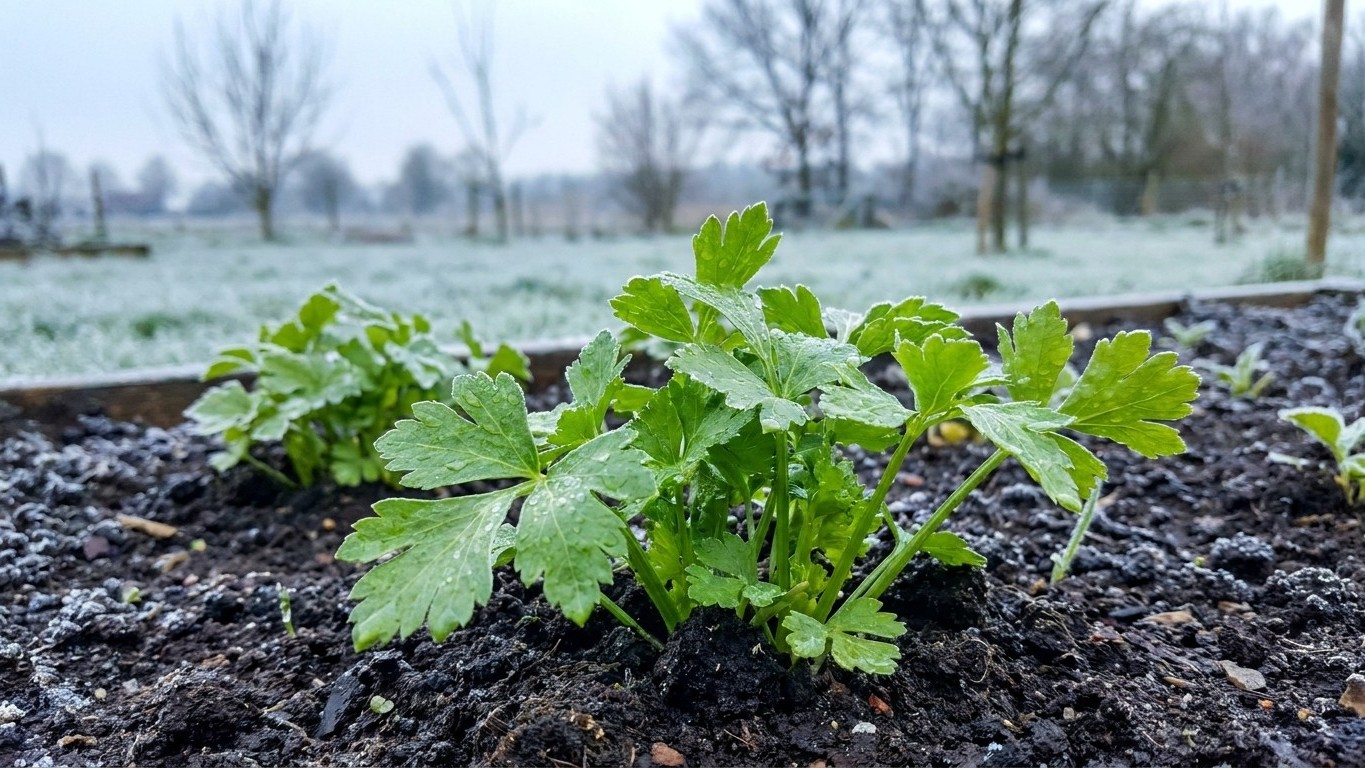

Celery bolts because of cold, not heat. The plant’s cool tolerance is real, but too much of it for too long flips a switch: instead of building the tight, crisp stalks gardeners want, the plant rushes into flower and seed. Gardeners who set celery out early to beat summer heat are doing the opposite of what the plant needs. Understanding the Temperature range that triggers this response, and the range the plant actually prefers, explains why transplant timing matters more than dodging warm weather.
The short answer
According to Utah State University Extension’s guide, Celery in the Garden, the minimum temperature celery can tolerate is 36 F. That’s the number gardeners tend to fixate on, treating it as a floor to protect against on any given night. But the real danger is duration, not that single degree: “if exposed to cool Temperatures for several weeks the plants will flower,” the guide states. Several weeks. Not a single cold night, not one late frost, but a stretch of days on end where the plant sits well below its comfort zone without ever climbing back out of it.
Comfort, for celery, sits at 55 to 65 F. That’s the ideal window Utah State University Extension identifies, and it’s a narrower band than most home gardeners assume for a plant they think of as a tough, cool-season crop. Gardeners often read “cool-season vegetable” as license to set Transplants out at the first mild stretch of spring, expecting celery to shrug off a chilly patch the way lettuce or spinach might. Celery doesn’t shrug it off. Weeks of chill convince the plant it has already lived through a full season, and its response is to bolt: send up a flower stalk, divert energy away from the petioles gardeners actually want to eat, and abandon the crisp habit that makes celery worth growing.
Heat, meanwhile, does something entirely different. When temperatures climb above 85 F, Utah State University Extension’s guidance isn’t about bolting at all. It’s about water: “water the plants more frequently to minimize stress and fiber development.” Hot weather makes celery stringy and stressed if it’s under-watered, but it doesn’t push the plant toward flowering the way weeks of cold does. That reversal is exactly what trips up so many gardeners. The instinct is to treat heat as the enemy and cold as harmless, even beneficial, for a plant billed as cool-loving. Celery’s actual behavior runs the opposite direction: heat is a watering problem, cold is a bolting problem, and the two aren’t interchangeable.
What actually decides it

One mechanism explains celery’s cold sensitivity, and once it’s understood, several separate-seeming rules about growing celery turn out to be the same rule stated in different ways.
The cold-exposure trigger
Celery, like a number of biennial vegetables, treats a sustained stretch of cool temperatures as a signal that winter has already come and gone. In nature, celery is built to grow foliage one season, survive a cold period, then flower and set seed the following season. Weeks of cool weather at the wrong point in the plant’s life, particularly while it’s still young, convince it that the cold period is behind it and it’s time to move into reproduction. That’s why Utah State University Extension frames the danger specifically as duration: a single cool night doesn’t fool the plant, but several weeks of temperatures hovering near that 36 F floor does. Once the flowering response is triggered, it doesn’t reverse. The plant has already committed resources toward a flower stalk, and no amount of later warmth talks it back into producing tender stalks.
Why the ideal range matters more than the maximum
The 55-to-65 F window Utah State University Extension calls ideal isn’t just a comfort zone, it’s the range that keeps the plant away from both triggers. Well below it, for long enough, risks the cold-exposure bolting response. Well above it, the plant shifts into a defensive posture instead, thickening cell walls and developing more fiber, especially if soil moisture runs short. A single underlying factor, temperature stress, produces two different symptoms depending on which direction the plant is pushed. That’s why the guide’s advice splits so cleanly: for cold, the fix is protection and timing; for heat, the fix is water.
Why transplant protection helps early growth, not just frost survival
Utah State University Extension notes that hot caps, plastic tunnels, and fabric covers not only guard against frost, they also stimulate early growth and bigger plants. That’s the same mechanism working in the plant’s favor: a covered transplant sits inside a warmer microclimate, closer to that 55-to-65 F ideal, instead of drifting down toward the 36 F floor on a cool night. Protection isn’t just insurance against a hard freeze. It’s a tool for keeping the plant inside its productive temperature range during the exact weeks when it’s most vulnerable to the cold-exposure trigger.
How to do it
Getting celery’s timing right comes down to counting from your own last frost date, not from a calendar month, since frost dates shift widely from one state to the next and even across a single county.
- Start seed indoors 9 to 13 weeks before you plan to move transplants outside. Celery seedlings grow slowly, and that long indoor head start is what Utah State University Extension’s own timeline reflects. The count of weeks matters more than any specific week, since local frost dates vary.
- Harden off transplants gradually before they go outside. A sudden move from a warm windowsill to open garden soil is its own kind of cold shock, even before the several-weeks-of-cool-weather threshold ever comes into play.
- Set transplants out only once your last frost date has passed, and cover them anyway. Utah State University Extension is direct about this: celery “is very susceptible to early and late season frosts so some protection is advisable.” Hot caps, plastic tunnels, or fabric row covers all work.
- Space plants 12 inches apart, in rows 2 feet apart. This tighter spacing isn’t just about fitting more plants into a bed. Utah State University Extension explains that a tight planting helps force tall growth and long petioles, which is exactly the tall, crisp stalk gardeners are growing celery for in the first place.
- Keep soil consistently moist through the cool weeks right after transplanting. This is when the plant is most exposed to prolonged cool temperatures, and soil-level cold stress compounds whatever stress the air temperature is already causing.
- Once daytime temperatures push above 85 F, increase watering frequency. This is the heat-side response, separate from anything related to bolting: more frequent watering minimizes stress and keeps fiber development down.
What goes wrong

- Transplanting too early, Before the Last Frost date has stabilized. A stretch of cool weeks right after setting plants out is exactly the several-weeks exposure Utah State University Extension identifies as the bolting trigger. Once a plant has locked into that flowering response, there’s no fix. It cannot be talked back into vegetative growth with later warmth or fertilizer. The only remedy is prevention: hold transplants until the frost date has genuinely passed, and cover them if a cool spell is forecast even after that.
- Skipping frost protection on young transplants. Celery’s own vulnerability to early and late season frosts means a single unprotected cold night can damage tissue outright, a separate problem from the slower bolting trigger. Hot caps, plastic tunnels, and fabric covers handle both at once, guarding against a hard frost while also holding the plant closer to its 55-to-65 F ideal range.
- Spacing plants too far apart. Wider spacing looks generous, but it works against celery’s growth habit. Utah State University Extension’s guidance points to 12 inches apart, in rows 2 feet apart, specifically because tighter spacing forces the tall growth and long petioles that make for good stalks. Plants set too far apart tend to sprawl instead of stretch upward, and there’s no later fix for stalks that already grew short.
- Letting soil dry out once temperatures climb above 85 F. This doesn’t trigger bolting, but it does cause the heat-side damage Utah State University Extension warns about: stressed, fibrous, stringy stalks. The remedy is ongoing rather than a one-time fix, since it means watering more frequently for as long as the heat lasts.
Common questions
Does a single cold night make celery bolt?
No. Utah State University Extension specifies that the bolting response comes from exposure to cool temperatures over several weeks, not a single cold night. A brief dip toward the 36 F minimum is a different concern, frost damage, and it’s handled with covers rather than worry over premature flowering.
Can bolted celery be saved by moving it or feeding it?
No. Once weeks of cool exposure have triggered the flowering response, the plant has already committed to producing a flower stalk instead of tender petioles. No later intervention, warmth, water, or fertilizer, reverses a response that was set weeks earlier.
Is heat ever a bolting risk for celery?
Not according to Utah State University Extension’s guidance. Temperatures above 85 F are tied to stress and fiber development, addressed with more frequent watering, not to bolting. The bolting trigger the guide describes is specifically tied to cool temperatures sustained over weeks, not to heat.
Why does closer spacing produce better celery stalks?
Utah State University Extension explains that a tight planting, 12 inches apart in rows 2 feet apart, forces tall growth and long petioles. Spacing plants farther apart removes that competitive pressure and tends to produce shorter, less desirable stalks.