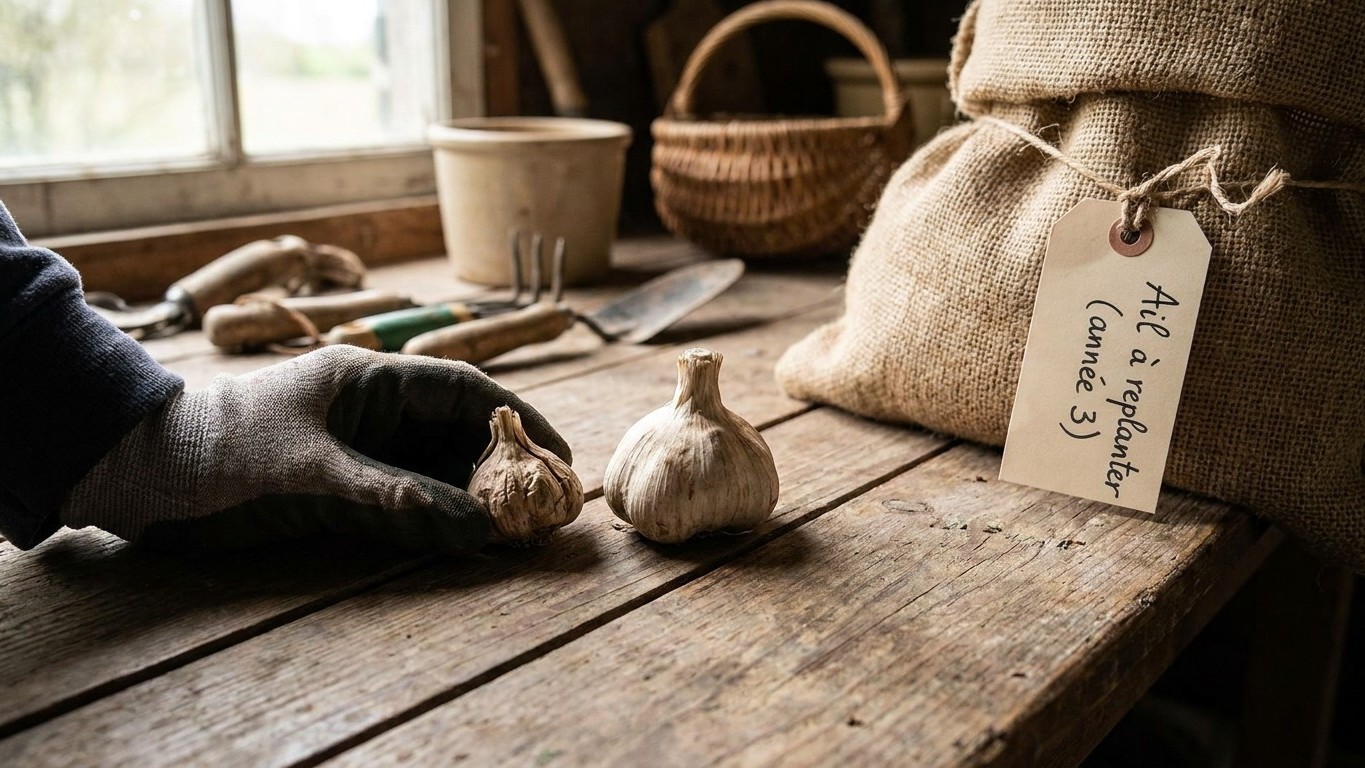

Garlic grown from your own saved cloves can be replanted successfully for several years running, but the practice has a shelf life. Bulb size shrinks a little each cycle, and any disease riding along in the clove tissue builds up instead of resetting the way it does with certified seed. The single move that keeps a home garlic patch productive is this: save seed cloves only from your largest, healthiest bulbs each season, and bring in fresh certified stock the moment size starts to slide.
Why this matters for garlic

If you haven’t grown a full cycle of garlic before, it helps to get familiar with the basic growing calendar first, see Growing Garlic, since everything about replanting decline is measured against that long stretch in the ground. Garlic never grows from true seed the way tomatoes or beans do. Every clove you plant is a genetic clone of the bulb it came from, so whatever that bulb carried forward, good or bad, shows up again in the next generation. Plant a small, underdeveloped clove and you tend to get a small bulb back. Plant a clove that was quietly carrying a virus and the whole row inherits it. This is why seed clove selection matters more for garlic than for almost any other vegetable you grow from your own stock.
The trouble is timing. Garlic goes into the ground in fall and doesn’t come out until the following summer, so a poor decision made at planting doesn’t announce itself for nine months. By the time you’re pulling bulbs and noticing they’ve gotten smaller than last year’s, or that a few plants yellowed early for no obvious reason, the seed clove that caused it was chosen and buried the previous fall. There’s no fixing that year’s crop once it’s in the ground. The only real lever is which cloves you set aside for seed at harvest, made with next year’s planting already in mind.
When to do it
The decision about which cloves to replant happens at harvest, but the planting itself happens months later, anchored to the approach of the first hard freeze rather than a date on a calendar. Extension services differ on exactly how close to that freeze to plant. Some recommend getting cloves into the ground while soil is still workable and several weeks of root-growing weather remain before the ground locks up. Others, in regions where winter arrives gently, favor a later planting so the clove doesn’t push top growth before winter dormancy sets in. Check your own state or provincial extension service for the fall planting window in your area, since this is exactly the kind of figure that shifts a great deal between a short growing season and a long one.
Hardneck garlic in particular needs a sustained period of cold to trigger normal bulb division the following summer, which is part of why planting is anchored to the cold season rather than to any fixed date. Whatever the local timing, don’t break bulbs into individual cloves until you’re within a few days of planting. A clove that sits separated from its bulb for weeks loses moisture through its cut base and papery wrapper, and a dried-out clove is a smaller, weaker clove going into the ground regardless of how good the parent bulb was. Keep bulbs whole in storage and separate cloves right before you plant, not weeks ahead.
How to do it
Selecting seed cloves
Start the selection process at harvest, not at planting time. Walk your rows as you pull bulbs and set aside the biggest, cleanest bulbs you have, the ones with tight, well-formed wrappers and no soft spots, splitting, or discoloration. These become next year’s seed stock. Resist the temptation to eat the best bulbs and plant the leftovers. Since garlic clones itself, planting your worst bulbs is a direct instruction to your soil to grow worse garlic next year.
Cure the whole bulbs the same way you’d cure any garlic meant for storage, hanging or laid out somewhere warm and airy out of direct sun, before setting them aside separately from your eating stock. Mark them clearly. It’s easy to lose track of which mesh bag was the seed selection once curing is done. If reading bulb readiness at harvest is unfamiliar territory, see When to Harvest Garlic: Reading the Leaves, Not the Calendar for the signs that tell you a bulb is actually finished rather than just big.
Planting
Break the bulb apart, keep the papery skin on each individual clove, and discard any that are undersized, bruised, or already sprouting green inside. Plant cloves pointed end up, root end down, deep enough that the tip sits a couple of inches below the soil surface. Space cloves several inches apart within the row and leave enough room between rows to hoe and to get air moving across the foliage later in the season, since damp, crowded rows are where soil-borne disease gets a foothold. Exact depth and spacing recommendations vary with winter severity, colder ground calls for planting a bit deeper and mulching heavier, so check your state extension service’s published figures rather than using a single number for every climate.
- Select only bulbs with no soft spots, mold, or premature sprouting
- Cure and store seed bulbs separately from your eating garlic, clearly labeled
- Break bulbs into cloves within a few days of planting, not weeks ahead
- Discard any clove smaller than a thumbnail or visibly damaged
- Rotate the bed, avoiding spots where garlic or its onion-family relatives grew in the past couple of seasons
Rotation matters as much as clove selection. Garlic and its relatives share pests and soil-borne fungal issues, so planting into the same bed year after year concentrates whatever problems showed up last time, regardless of how good this year’s seed cloves are. Some growers interplant garlic with companion crops to help manage this rotation and use bed space efficiently, covered in What to Plant With Garlic, and What to Keep Well Away. Mulch after planting with straw or shredded leaves, thick enough to buffer temperature swings over winter without smothering the emerging shoots in spring.
What goes wrong
The most common failure is invisible for months: replanting undersized cloves out of convenience, which produces a smaller crop the following summer, which then gets replanted again because it’s what’s on hand, and the decline compounds. By the third or fourth cycle of this, bulbs that started as a fist-sized head from a nursery source shrink to something you’d hesitate to bother peeling. The tell is a steady downward trend across seasons, not one bad year, since a single poor harvest is more likely weather or soil fertility than seed decline.
The second failure is disease riding along in seed stock without obvious symptoms at planting. Garlic can carry viruses that stunt growth or streak leaves without killing the plant outright, and because the clove looks fine going into the ground, there’s no way to catch this at planting. It shows up as yellowing or mottled leaf patterns the following spring, or as bulbs that soften in storage weeks after what looked like a normal harvest.
| Symptom | Likely cause | When it shows up |
|---|---|---|
| Bulbs get smaller each year | Repeated replanting of small or mid-size cloves without size selection | Gradually, over three or four harvest cycles |
| Yellow streaking or mottled leaves | Virus carried inside the seed clove | The following spring, before bulbing finishes |
| Bulbs soften or rot after curing | Soil-borne disease reintroduced from infected seed stock or a bed planted with garlic too recently | Weeks into storage, after curing looked normal |
All three point to the same fix: bring in fresh, disease-tested seed garlic from a nursery or seed supplier every so often to reset the line, rather than replanting your own stock indefinitely.
How this changes across the country
Where you garden changes both what kind of garlic makes sense to save and how quickly decline shows up. In cold-winter states such as Minnesota, Vermont, and Michigan, hardneck garlic dominates because it needs a real cold period to bulb properly, and growers there tend to mulch heavily and plant a bit deeper to protect cloves through hard freezes. In milder-winter states such as California, Georgia, and Texas, softneck garlic is more common since it doesn’t need the same cold trigger and stores longer, and planting can happen later in the fall without the same freeze risk.
Disease pressure also differs by climate. Warm, humid regions of the Southeast tend to see soil-borne fungal problems build up faster in a bed planted with garlic repeatedly, which shortens how long a grower there can responsibly keep replanting the same line before rotating in new stock. Cooler, drier climates in the Mountain West and the northern Plains generally see slower disease buildup, though virus transmission through aphids and other insects still happens regardless of climate.
Because the fall planting window, winter severity, and disease pressure all shift by region, there’s no single answer to how many years a grower can keep replanting before quality drops. Check your state or provincial extension service for guidance specific to your climate, and treat any national figure you read, including in this piece, as a starting point rather than a rule for your own garden.
Common questions
Can I replant garlic cloves from a bulb I bought at the grocery store?
You can, but it’s a gamble. Grocery garlic is sometimes treated to slow sprouting, which can also slow or prevent it from growing well in soil, and it’s rarely sold with any disease-testing behind it. If you want to try it anyway, pick the healthiest, largest bulb you can find and treat the first year as a trial rather than your main seed source.
My garlic came up smaller this year. Does that mean my seed stock is worn out?
Not necessarily. A single small harvest is more often explained by dry weather during bulb formation, poor soil fertility, or crowding than by seed decline. Seed stock decline shows up as a steady downward trend across several seasons in a row, not one off year. If size bounces back the next season with better growing conditions, the seed wasn’t the problem.
Do I need to replant every clove from a bulb, or just the best ones?
Just the best ones. A single healthy bulb usually gives you more cloves than you need for seed, so use the largest, cleanest cloves for planting and cook with the rest. Planting undersized or damaged cloves just to use them up is one of the fastest ways to shrink your line.
Should I just buy new seed garlic every year to be safe?
You don’t need to, and most growers don’t. Replanting your own well-selected seed for a run of seasons is normal practice and saves money. The point of watching for decline is knowing when to bring in fresh stock, not avoiding your own seed altogether.