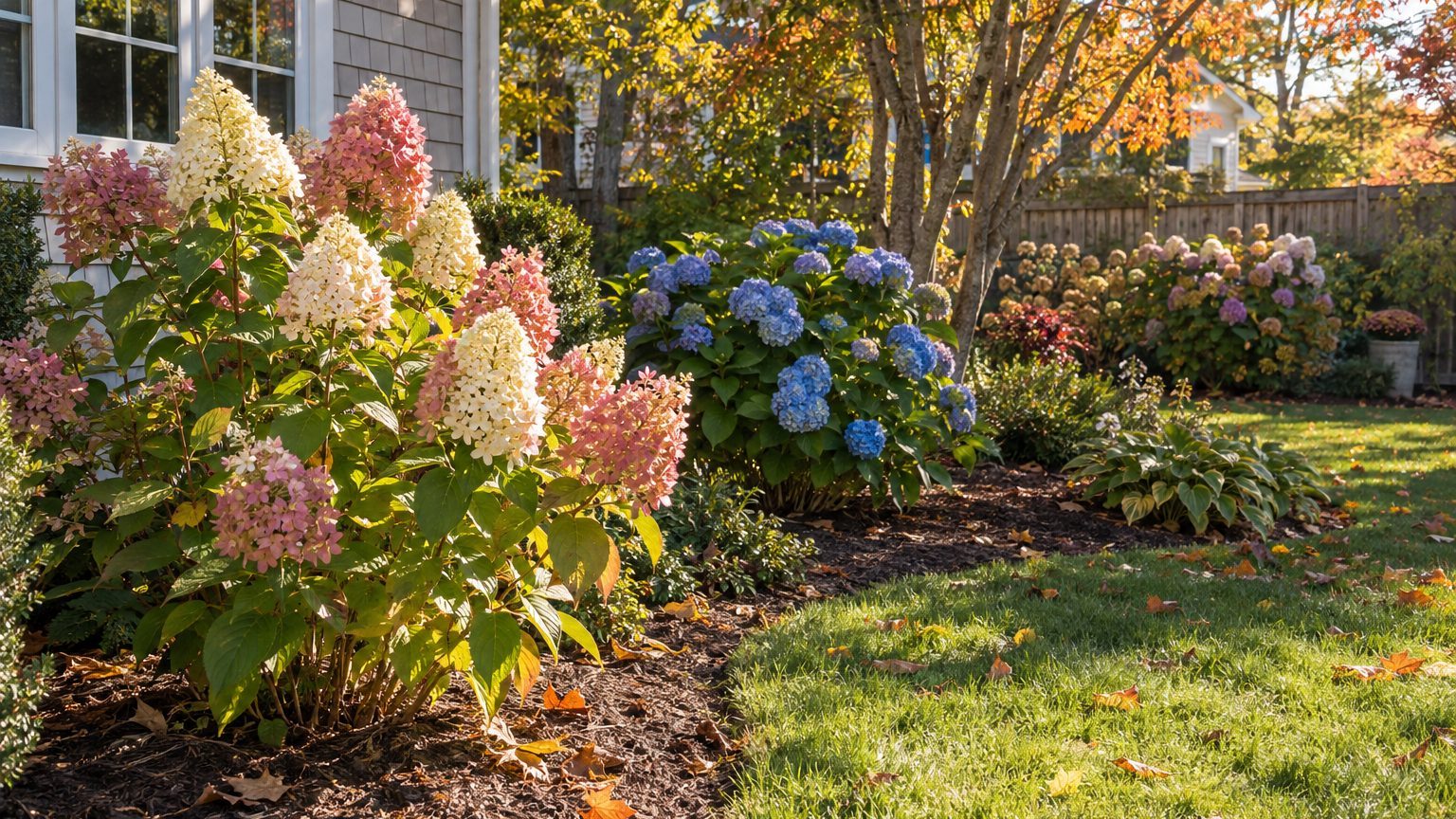

Panicle Hydrangeas (H. paniculata) are the only type that takes full sun well. Bigleaf hydrangeas (H. macrophylla, the mop-heads and lacecaps) want dappled sun or shade and protection from afternoon sun. Smooth, oakleaf, mountain and climbing types fall somewhere between. Your USDA zone also shifts the answer. So the first job is naming your type, and the second is watching where the light actually lands.
Why this matters
Exposure decides whether a hydrangea coasts through summer or spends it recovering. Bigleaf hydrangeas and panicles are both shallow-rooted, so they can’t reach down for water when a hot afternoon pulls moisture out through the leaves. A mop-head in hard afternoon sun droops daily, and the usual reaction is to water more and hope. The plant is telling you the site is wrong, and no watering schedule fully fixes a site. Bigleaf also sets its flower buds the summer before it blooms, on last year’s wood. A season spent stressed is a season spent building next year’s flowers under strain.
Placement is also the one decision you can’t easily undo. A bigleaf tops out at 3 to 6 feet in height and spread. A panicle runs 8 to 25 feet, which is a very different tenant for that corner by the driveway. The How to Grow Hydrangeas guide covers the whole crop. This page assumes you already own plants and want the light question settled properly.
When to do it
Judge light by the plant’s own stages, not by a date on the calendar. The best moment to assess a spot is after the surrounding trees have fully leafed out, because a bed that looks sunny under bare branches can turn dim once the canopy closes. The reverse happens next to evergreens or a south-facing wall, where light and heat build up as the season goes on. If you’re deciding where to plant, or whether to move a shrub, watch the site when the leaves are fully open and the sun is high.
The plant itself gives the signals. Leaves that go limp at midday and recover by evening are stressed but coping. Leaves still limp the next morning, crisp brown edges, or pale, bleached patches on the sunward side mean the exposure is too much for that type. Poor flowering after the first blooms is another cue, though it has several possible causes, so check the light before blaming the soil. When a move is needed, do it while the shrub is dormant and leafless, at a stage when the plant has the least foliage to support.
How to do it

Name the type first
Sun advice only works once you know what you have. Check the tag, the leaf shape and the flower form. Oakleaf hydrangeas have lobed leaves and wine-red autumn color. Climbing hydrangeas cling to walls by aerial rootlets. Panicles carry cone-shaped flower heads. If none of that helps, the Hydrangea Varieties: Choosing by Type, Colour and Hardiness page walks through the differences.
| Type | Flowers on | Size | Sun |
|---|---|---|---|
| Bigleaf, mop-head, lacecap (H. macrophylla) | Last year’s wood | 3 to 6 feet tall and wide | Dappled sun, partial or deep shade; protect from afternoon sun |
| Panicle, peegee (H. paniculata) | Current season’s growth | 8 to 25 feet | The only hydrangea that takes full sun well |
| Smooth (H. arborescens, e.g. Annabelle) | New wood | See varieties page | Not broken out here |
| Oakleaf (H. quercifolia) | Old wood | To about 5 feet | Not broken out here |
| Mountain (H. serrata) | Old wood | See varieties page | Not broken out here |
| Climbing (H. petiolaris) | Old wood | 15 feet and more | Not broken out here |
The NC State Extension Gardener Plant Toolbox gives firm exposure guidance only for bigleaf and panicle. For the other four, no hours-of-sun figure is published here. Since the panicle is the only type named as taking full sun well, give the rest relief from the harshest afternoon light and check their variety pages for detail.
Map the light where the plant will sit
Stand in the spot at several points across a sunny day, or take a phone photo from the same angle every couple of hours. You’re looking for when direct sun arrives and when it leaves. A bed that gets sun early and shade after lunch suits a bigleaf. A bed baking from noon to dusk suits a panicle, or nothing else in the genus.
Match, then support the roots
Put bigleaf hydrangeas where light is dappled, filtered through high branches or tucked on the east side of a building. Deep shade is acceptable to them, too. Put panicles in the open, where they get the most light. Both types are shallow-rooted and benefit from mulch, so spread shredded bark or leaf mulch across the root zone, keeping it off the stems. Soil can be clay, loam or sand, but it should drain well. Occasional wetness is fine, standing water is not.
After planting, judge success by the plant, not by the spot. A well-placed hydrangea has firm leaves through the afternoon and fresh growth on the stems. If you see the stress signs from the previous section, change the exposure before changing anything else.
What goes wrong

The most common error is planting a bigleaf in afternoon sun because the flowers looked so good at the nursery. You’ll recognize it afterward by daily midday wilting, scorched leaf margins, and a shrub that seems to need constant water. Sometimes the pattern is even more direct: the sunward side of the plant looks worse than the shaded side.
The mistake that looks like extra care is drowning a sun-stressed plant. Drooping leaves read as thirst, so people water again and again, or feed harder. Bigleaf hydrangeas tolerate occasional wet soil, but they want good drainage, and a plant sitting in soggy ground while its leaves still droop is telling you the trouble is heat and light, not dryness. Feeding can backfire in another way. High-phosphorus fertilizer locks aluminum up in the soil, which pushes blue bigleaf flowers toward pink. That’s a feeding decision showing up as a color problem.
Judging the light on one day is another trap. Early spring light under bare trees tells you little about midsummer. So does a single glance at noon, since the same spot can be shaded by morning and blazing by 3 p.m.
Then there’s the size mistake. A gardener who plants a panicle for its love of sun, beside a walkway or window, may not have pictured 8 to 25 feet. Finally, treating “hydrangeas” as one plant leads to trouble. Someone in a colder zone who wants full sun and buys a mop-head is asking for problems. The source calls the panicle a good substitute for the mop-head in areas where that species is not winter hardy. Whether that applies to you depends on your zone and type, which the state-level pages in this series work through.
Doing it differently
Containers are the clearest case where a variation beats the standard method. A potted bigleaf can follow the shade: sun in the morning, then moved back under an awning or tree as the afternoon heat builds. Containers also dry out faster than ground soil, so a pot in strong light needs closer watching than the same plant in a bed. A panicle in a large container is possible, but with 8 to 25 feet of potential height in the genus range, choose a variety suited to the space.
Raised beds drain quickly, which the whole genus appreciates, but they also dry faster. In full sun, a panicle in a raised bed does well with a mulch layer. A bigleaf in one needs the shade rather than the extra drainage.
Climbing hydrangeas are a different situation. They cling by aerial rootlets, grow to 15 feet and more, and are very slow to start flowering. A wall gives them a fixed light pattern, so map the wall’s exposure through the day just as you would a bed, and expect patience before you see blooms.
If you’re drawn to reblooming selections, the sun rules for their type still apply. The Reblooming Hydrangeas: What They Change, and What They Do Not page covers what reblooming actually alters.
Common questions
Can bigleaf hydrangeas grow in full sun?
The source recommends dappled sun, partial shade or deep shade for bigleaf, with protection from afternoon sun. Full sun is the panicle’s territory. A bigleaf in strong afternoon light will show the stress signs described above.
Which hydrangea is best for a hot, sunny spot?
The panicle (H. paniculata, also called peegee). It’s the only hydrangea the source says takes full sun well, and it flowers on the current season’s growth. Give it room, since its size range is 8 to 25 feet.
Is morning sun or afternoon sun better?
For bigleaf hydrangeas, the guidance points to protection from afternoon sun, which means morning light with afternoon relief, or filtered light all day. Panicles don’t need that protection. For the other types, a specific hours-of-sun figure isn’t published in the source used here.
I don’t know which type I have. Where should I plant it?
Identify it before you commit, using flower shape, leaf shape and whether it clings to walls. Until you know, treat it as a bigleaf: dappled or morning light, shaded from the hottest part of the afternoon. A panicle will cope with that spot, while a bigleaf placed in full sun by mistake may not survive it. Once you’ve named the plant, check the varieties page and your state’s guide for the rest of the story, because sun is only one of several things that differ by type.