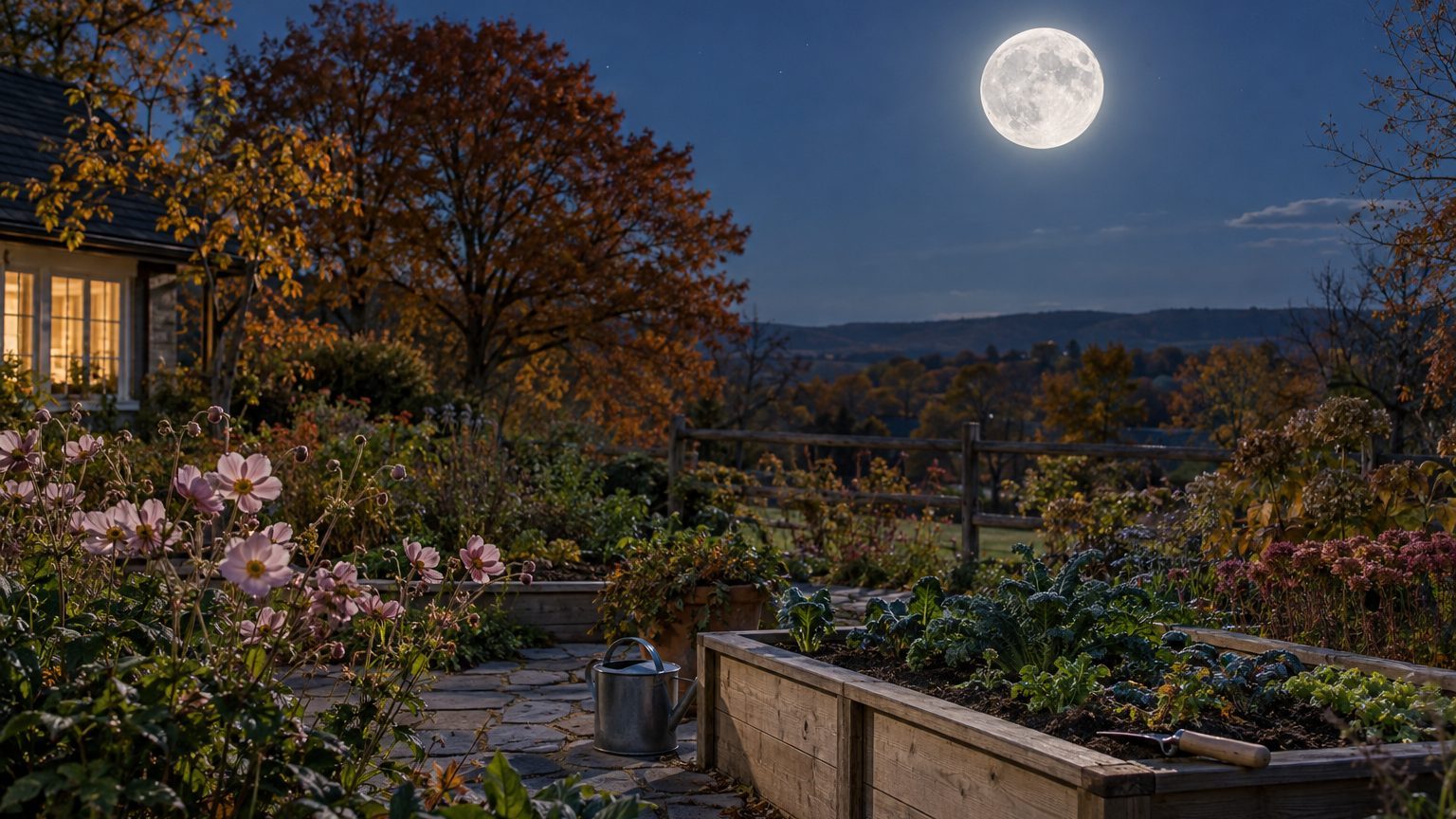

The Pink Moon is the April full moon. In 2026 it falls on April 1 at 10:11 p.m. ET, with the Moon in Libra. In 2027 it arrives on April 20 at 6:27 p.m. ET, in Scorpio. The name has nothing to do with the Moon’s color. It comes from a spring wildflower, and gardeners who plant by the Moon have long treated this full moon as the start of the waning half of the cycle.
Pink Moon in 2026 and 2027
Full moons slide around the calendar because a lunar cycle and a calendar month are different lengths. That is why the April full moon can land on the very first day of the month in one year and near the end of it in the next. The table gives both dates in Eastern time.
| Year | Date | Time (ET) | Moon sign | Name that year |
|---|---|---|---|---|
| 2026 | April 1 | 10:11 p.m. ET | Libra | Pink Moon |
| 2027 | April 20 | 6:27 p.m. ET | Scorpio | Pink Moon |
The name does not shift in either year. The Pink Moon belongs to the April full moon both times, and each one comes after the March equinox (March 20, 10:45 a.m. ET in 2026, and March 20, 4:24 p.m. ET in 2027). 2026 does have a quirk in the following month, with two full moons in May (May 1 at 1:23 p.m. ET and May 31 at 4:45 a.m. ET, the second one called a Blue Moon). It does not touch the Pink Moon, which is the April one.
The one name that can move is the Harvest Moon, which goes to the full moon nearest the September equinox. In 2026 that is the full moon of September 26 at 12:49 p.m. ET. In 2027 it is the full moon of September 15 at 7:03 p.m. ET. The April name follows no such rule. It simply goes to the full moon of the month.
Where the name comes from and what it marks
The Moon does not turn pink. The name comes from moss phlox (Phlox subulata), also called creeping phlox or moss pink, a low wildflower with pink blooms that the Old Farmer’s Almanac describes as one of the first widespread flowers of spring in the eastern United States. The almanac credits the name to Native American, colonial American and European sources, and it lists other names for the same full moon, among them Sprouting Grass Moon, Egg Moon and Fish Moon.
Names like these were seasonal markers. Before printed calendars were everywhere, people tied each full moon to something they could see outside, a flower opening or grass greening or fish running. Read in 2026, the three names in a row show the logic well:
- Worm Moon, March 3, 6:37 a.m. ET
- Pink Moon, April 1, 10:11 p.m. ET
- Flower Moon, May 1, 1:23 p.m. ET
Each name points at the next stage of spring. You can browse the full set of full moon names and see how the sequence runs through the year.
On the calendar, the Pink Moon comes in spring, after the March equinox, which is the astronomical start of the season. That is all the date itself tells you. A yard in Georgia and a farm in North Dakota can be in very different shape on the same April evening, and a phlox-based name means little in places where the plant is not part of the landscape. The name is a label from the almanac tradition, not a report on conditions where you live.
What can actually go in the ground in April depends on your local frost dates and soil temperature, and your state’s planting guide is the place to check them. This page gives astronomy and almanac tradition only, so it does not name crops or dates for any region.
One more point about the name. It describes a month-long label, not a single night. The Moon looks full to the eye for a night or two around the exact time, but the almanac applies the name to the whole full moon event, which is why the exact time in the table matters more than the evening you happen to look up.
The Pink Moon in the garden
Almanac tradition divides the lunar cycle into four quarters. According to that tradition, the waxing half, from new moon to full moon, belongs to crops that grow above ground. The waning half belongs to crops that grow below it. The Pink Moon, as a full moon, sits at the turning point. The almanac rule is that the third quarter, the stretch between the full moon and the last quarter, is the traditional window for root crops. The fourth quarter, running to the new moon, is traditionally a time to rest the garden.
Here are those windows in Eastern time, counted from each Pink Moon:
| Year | Full (Pink Moon) | Last quarter | New moon | First quarter |
|---|---|---|---|---|
| 2026 | April 1, 10:11 p.m. | April 10, 12:51 a.m. | April 17, 7:51 a.m. | April 23, 10:31 p.m. |
| 2027 | April 20, 6:27 p.m. | April 28, 4:17 p.m. | May 6, 6:58 a.m. | May 13, 12:43 a.m. |
So in 2026 the traditional third-quarter window for root crops runs from the evening of April 1 to the early morning of April 10. In 2027 it runs from the evening of April 20 to the afternoon of April 28.
The effect of the Moon on crops has not been proven. Gardeners who plant by the Moon follow these rules as a custom, and nobody should expect a result from them. The Moon also never overrides the calendar of the place. Frost dates and soil temperature decide whether a crop can go in the ground at all, and the Moon, for those who follow it, only chooses among days that are already open. Check your state’s planting guide first.
For the other phases and full moons around the Pink Moon, see the full moon calendar 2026 and the full moon calendar 2027. For the method behind the whole practice, start with planting by the moon.
Questions
Is the Pink Moon actually pink?
No. It looks like any other full moon. The name refers to the pink blooms of moss phlox, an early spring wildflower, and not to anything about the Moon’s color.
What follows the Pink Moon?
The Flower Moon, the May full moon. In 2026 there are two of them, on May 1 at 1:23 p.m. ET and on May 31 at 4:45 a.m. ET, and the second is called a Blue Moon. In 2027 the Flower Moon is on May 20 at 6:59 a.m. ET.
Does the Pink Moon tell me when to plant?
Not on its own. Almanac tradition says the days after a full moon suit root crops, but that is a custom and its effect on crops has not been proven. Your local frost dates and soil temperature come first, and your state’s planting guide is the source for them. The Moon, if you follow it, only picks among the days that are already open.