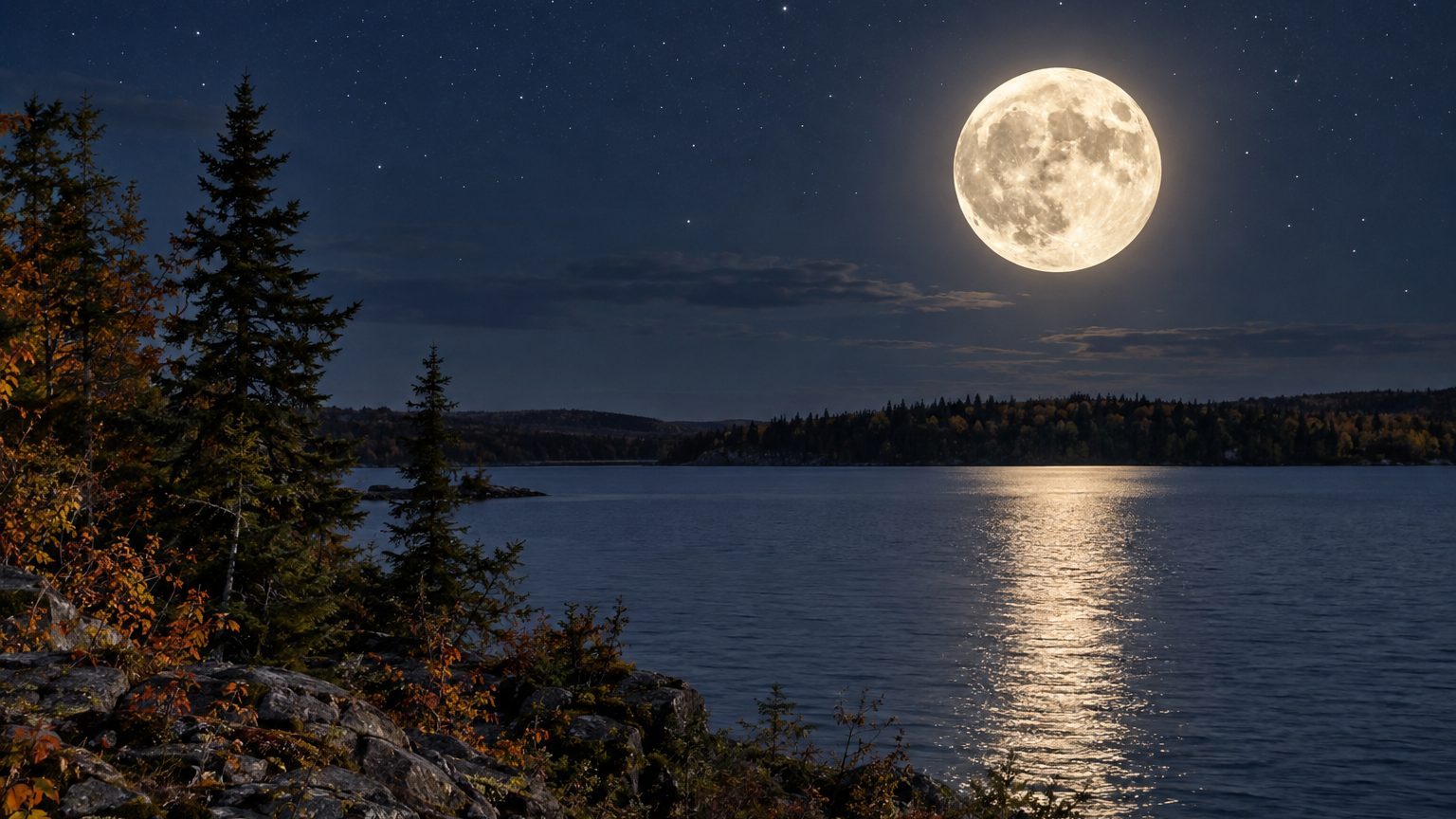

The Sturgeon Moon in 2026 is the full moon of August 28, 12:18 a.m. ET, with the Moon in Pisces. In 2027 it comes on August 17, 3:28 a.m. ET, with the Moon in Aquarius. Both are the August full moon in Old Farmer’s Almanac naming. The name comes from fishing, not gardening, and it has no confirmed effect on crops.
Sturgeon Moon in 2026 and 2027
A full moon is a single instant, the moment the Moon sits directly opposite the Sun as seen from Earth. The times below mark that instant in Eastern time. Anyone west of the Eastern zone has to convert the clock time, and the calendar date can land a day earlier. The 2026 moment falls just after midnight, so it belongs to the night of August 27 into 28 for much of the country.
| Year | Date | Time (ET) | Moon sign | Name that year |
|---|---|---|---|---|
| 2026 | August 28 | 12:18 a.m. ET | Pisces | Sturgeon Moon |
| 2027 | August 17 | 3:28 a.m. ET | Aquarius | Sturgeon Moon |
Moon signs matter only to gardeners who follow a sign convention. In the labels many almanacs use, Pisces is listed as fruitful and Aquarius as barren. That is the convention’s classification, not a measured property of the sky.
The name does not shift in either year. The Harvest Moon is traditionally the full moon nearest the September equinox. That equinox arrives September 22, 8:05 p.m. ET in 2026 and September 23, 2:01 a.m. ET in 2027. The September full moons are September 26, 12:49 p.m. ET in 2026 and September 15, 7:03 p.m. ET in 2027, and both carry the Harvest Moon name. The August full moon therefore keeps the Sturgeon label both years.
The month before is the Buck Moon, on July 29 in 2026 and July 18 in 2027. For every other full moon of those years, see the full moon calendar 2026 and the full moon calendar 2027.
Where the name comes from and what it marks
A fishing name
The Sturgeon Moon is named for a fish. The Old Farmer’s Almanac credits the name to Native American peoples living near the Great Lakes and Lake Champlain, where lake sturgeon were a reliable catch in late summer. The lake sturgeon is one of the largest freshwater fish in North America, an armored, long-lived bottom feeder that looks closer to a prehistoric relic than to a typical lake fish.
That origin explains why the name seems to have nothing to do with a garden. Full moon names were calendar markers first. They tracked the cycle of the year through what people were catching, gathering or watching in each month, and the Sturgeon Moon marked the stretch when that particular fish was easiest to find.
Other names for the same full moon appear in almanac and folk lists, including the Green Corn Moon and the Grain Moon. Those names point toward the field rather than the lake, which shows how one August moon can carry different labels depending on the region and the source. For the full set of month names and where each one comes from, see the guide to full moon names.
Where it sits in the year
Astronomy gives the Sturgeon Moon a clear place on the calendar. It falls after the June solstice (June 21, 4:24 a.m. ET in 2026, June 21, 10:10 a.m. ET in 2027) and before the September equinox. It is the last full moon before the Harvest Moon in both years, which makes it the final named moon of the summer stretch.
Anyone who wants to know what is actually happening in a garden or on a farm at that point in the season should look at their own state’s planting guide. Conditions differ widely between Maine and Georgia, between a lakeshore and a high plateau, and a moon name cannot speak to any of that. The name tells you about an old fishing calendar. The state guide tells you about your ground.
The Sturgeon Moon in the garden
Gardeners who plant by the Moon follow a simple cycle taught in many almanacs. The almanac rule is to split the lunar month into four quarters. The first two, from the new moon to the full moon, are tied to above-ground crops. The third quarter, from the full moon to the last quarter, is the traditional window for root crops. The fourth quarter, from the last quarter to the new moon, is traditionally a rest period for pruning, weeding and tidying.
Applied to the Sturgeon Moon, the almanac’s third-quarter window runs as follows.
- 2026: from 12:18 a.m. ET on August 28 to 3:51 a.m. ET on September 4.
- 2027: from 3:28 a.m. ET on August 17 to 10:27 p.m. ET on August 24.
The rest period that follows ends at the next new moon, which arrives September 10, 11:26 p.m. ET in 2026 and August 31, 1:41 p.m. ET in 2027. The sign named in the table is the Moon’s sign at the full moon only, and the Moon moves into a new sign every couple of days.
None of this is proven. Studies have not established that the Moon changes germination, root growth or yield, so treat the cycle as a custom that some gardeners enjoy keeping and not as a forecast of results.
The calendar of the place always comes first. Frost dates and soil temperature decide whether a crop can go in the ground at all. The Moon, for anyone who follows it, only chooses among days that are already open. Your state’s planting guide is the source for what to sow and when.
For the method behind these quarters and how sign conventions fit in, start with the overview of planting by the moon.
Questions
When is the Sturgeon Moon in 2026 and 2027?
August 28, 2026 at 12:18 a.m. ET, and August 17, 2027 at 3:28 a.m. ET. Convert the time if you live west of the Eastern zone, since the local date may differ.
Can the Sturgeon Moon ever be called the Harvest Moon?
Not in these two years. The Harvest Moon is tied to the September equinox, and the September 26, 2026 and September 15, 2027 full moons carry that name. The August full moon stays the Sturgeon Moon both times.
Does planting by the Sturgeon Moon change how crops grow?
No effect is proven. The almanac tradition assigns root crops to the stretch after the full moon, and some gardeners keep to it as a custom. Frost dates and soil temperature in your area still decide what can be planted, and your state’s planting guide covers those.