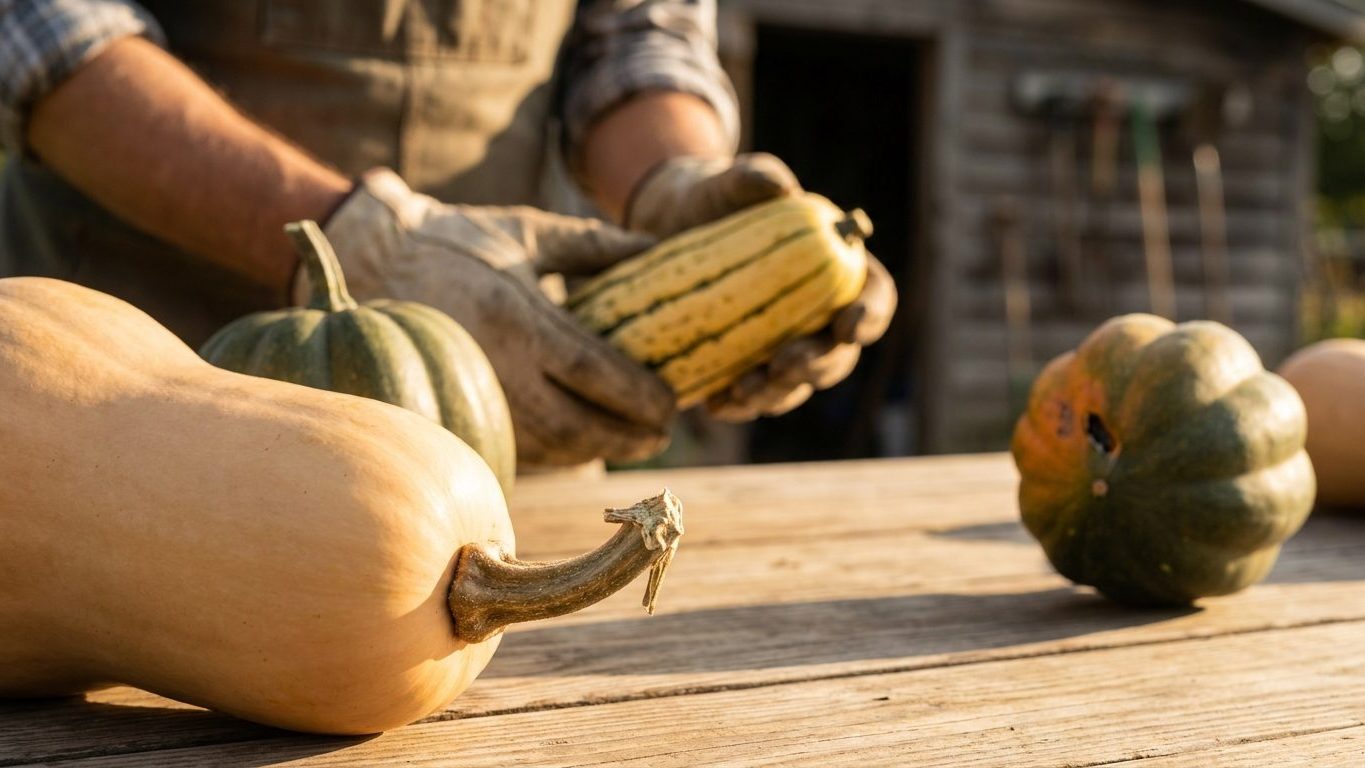

Most winter squash that rot in storage were already compromised before they ever left the garden. A soft spot in December traces back to a bruise, a nick, or an unripe fruit pulled too early in September. The fix isn’t a fancier root cellar, it’s catching the damage at harvest, curing properly, and inspecting often enough to pull problems before they spread.
What is actually going on
A winter squash’s skin is its only real defense once it’s off the vine. Unlike a pumpkin grown for a carved shell, a winter squash is grown for the flesh inside and for how long that flesh will hold, and the rind is what stands between that flesh and every mold spore in the room. The thing to understand here is entry points: a nicked skin, a broken stem, or an immature fruit all give moisture and molds a way in. None of these are storage failures. They’re harvest failures that show up weeks later.
The stem matters more than most gardeners expect. A squash carried by its stem, or one that loses its stem in handling, has an open wound right at the point where rot organisms find the least resistance. That’s different from a carving pumpkin, where a broken stem mostly hurts the display value. For winter squash, a broken or missing stem is a genuine storage liability, and it’s worth treating every fruit like it’s carrying a small wound the moment the stem separates.
Why curing exists
Curing is the step that toughens the skin and lets minor surface injuries seal over before the squash goes into storage. It typically means holding the fruit somewhere warm and reasonably dry for a period of days to weeks, depending on the type, hard-shelled types generally need more time than thinner-skinned ones. This isn’t a cosmetic step. An uncured squash with a thin, still-soft rind is far more likely to develop soft rot within the first month of storage than one that’s had time to harden off.
Immaturity is the other half of the problem, and it’s harder to see. A squash harvested before it’s fully mature carries more surface moisture and less starch conversion in the flesh, both of which favor decay organisms. This is one of the reasons naming a specific cultivar on a page like this would mislead more than it helps, maturity windows and keeping quality vary by type and by region, and the varieties that hold up best where you garden are the ones your state extension service has actually trialled locally. Ask them, rather than trusting a name you saw online.
None of this means a sound-looking squash is guaranteed safe to eat weeks or months from now. It means a squash with no wounds, no soft spots, and no smell of decay has cleared the first hurdle. A soft spot, a weeping patch, or a moldy stem end the question regardless of how the rest of the fruit looks.
In the garden
Storage problems are caught early or not at all, and the difference is almost always a matter of routine inspection rather than any special technique. The table below covers the checks that matter most, and what tends to happen when each one gets skipped.
| What to inspect | What it means | What happens if you ignore it |
|---|---|---|
| Stem condition | A dry, intact stem still attached at the base means the fruit was handled correctly and matured on the vine. | A broken or missing stem becomes an entry point for rot, often within the first few weeks in storage. |
| Skin firmness | Pressing gently with a thumbnail should not leave a mark on a mature, well-cured squash. | Skin that dents easily signals immaturity or insufficient curing, and that fruit will spoil faster than the rest of the batch. |
| Surface nicks or scrapes | Any break in the skin, even a small one from a fingernail or a tool during harvest, is a wound. | Left unchecked, a nick becomes a soft, sunken patch within days, and the rot can spread into fruit touching it. |
| Weight relative to size | A squash that feels light for its size has likely lost internal moisture or started to break down inside. | These fruits often look fine on the outside right up until they collapse from within. |
| Contact with other squash or the shelf | Fruit should sit with space around it, not stacked or touching where moisture can collect. | One spoiling squash in direct contact with others can spread mold to the whole cluster within a week. |
How often to check
A weekly walk-through of stored squash catches problems while they’re still isolated to a single fruit. Waiting a month between checks means a soft spot has time to become a colony, and by the time the smell gives it away, neighboring squash have often already been affected. This is a five-minute task, not a project, and treating it that way is what keeps a storage problem from becoming a storage loss.
When a soft spot, a weeping patch, or visible mold does turn up, the response is the same regardless of how the rest of the fruit looks: remove it from storage and don’t eat it. Cutting away the bad section and hoping the rest is fine is a common instinct, but rot organisms move through squash flesh well beyond what’s visible on the surface, and there’s no reliable way to judge that boundary by eye.
What it depends on where you are
Some of what determines whether a squash keeps well is universal: curing, careful handling, dry storage. But a real piece of this is climate, and climate is local. Season length decides how much time a fruit had to mature fully before frost forced an early harvest. Summer heat and humidity affect how thick and tough the rind grows to be by the time it’s cut. Summer rainfall, especially late in the season, affects how much surface moisture and disease pressure a squash is carrying at harvest.
A gardener in a long, dry-summer region is often harvesting fully mature, well-hardened fruit with minimal disease pressure. A gardener in a shorter or wetter season may be pulling squash before they’d ideally be ready, with more surface blemishing from fungal pressure earlier in the growing cycle. Neither situation is a failure on the gardener’s part, it’s a difference in growing conditions that changes what “properly cured and ready to store” actually looks like from one place to the next.
This is also where cultivar choice becomes a genuinely regional decision rather than a matter of preference. The types and specific varieties that hold up longest in storage in one state are not necessarily the ones best suited to another state’s disease pressure, humidity, or season length. Rather than repeat generic variety names here, the more useful step is checking your state’s cooperative extension service, which typically publishes trial results for the varieties tested under local conditions, including how well they held up in storage. If this site has a guide for your state, that’s the next stop for details specific to your growing season.
It’s also worth being clear about where this topic and pumpkin growing genuinely overlap and where they don’t. Curing practices are similar between the two, and the same rot organisms threaten both. But pumpkins grown for carving are typically judged on shell appearance rather than flesh quality or long-term keeping, so storage priorities diverge from there. If carving pumpkins are the actual question, this site’s pumpkin section covers that ground directly rather than duplicating it here.
The mistake that costs the most
The single costliest error is harvesting on a calendar instead of harvesting on the fruit’s condition. Gardeners pull squash because a frost is forecast, because a weekend is free, or because a date on a seed packet suggested it was time, and any of those reasons can mean pulling fruit that hasn’t finished hardening its rind or converting its starches. That squash goes into curing already behind, and no amount of careful curing afterward fully makes up the difference. It’s the fruit most likely to develop a soft spot in the first month of storage, and it’s usually the one that surprises the gardener most, because it looked ready at harvest.
The alternative isn’t complicated, just less convenient: judge readiness by the fruit itself. A mature squash generally shows a hardened rind, a dried and intact stem, and skin that resists a thumbnail press. When frost threatens before a fruit has reached that point, it’s worth accepting that particular squash will be a short-term kitchen squash rather than a long-term storage one, instead of curing it and storing it alongside fruit that’s actually ready. Sorting by readiness at harvest, rather than treating the whole crop as a single batch, is what keeps one immature or damaged squash from taking down the ones stored next to it.
This sorting instinct is worth applying every time squash come off the vine, not just in years when the season runs short. A single soft or immature fruit set among sound ones is the most common way an entire winter’s storage gets cut short by a problem that started with one squash and spread from there.