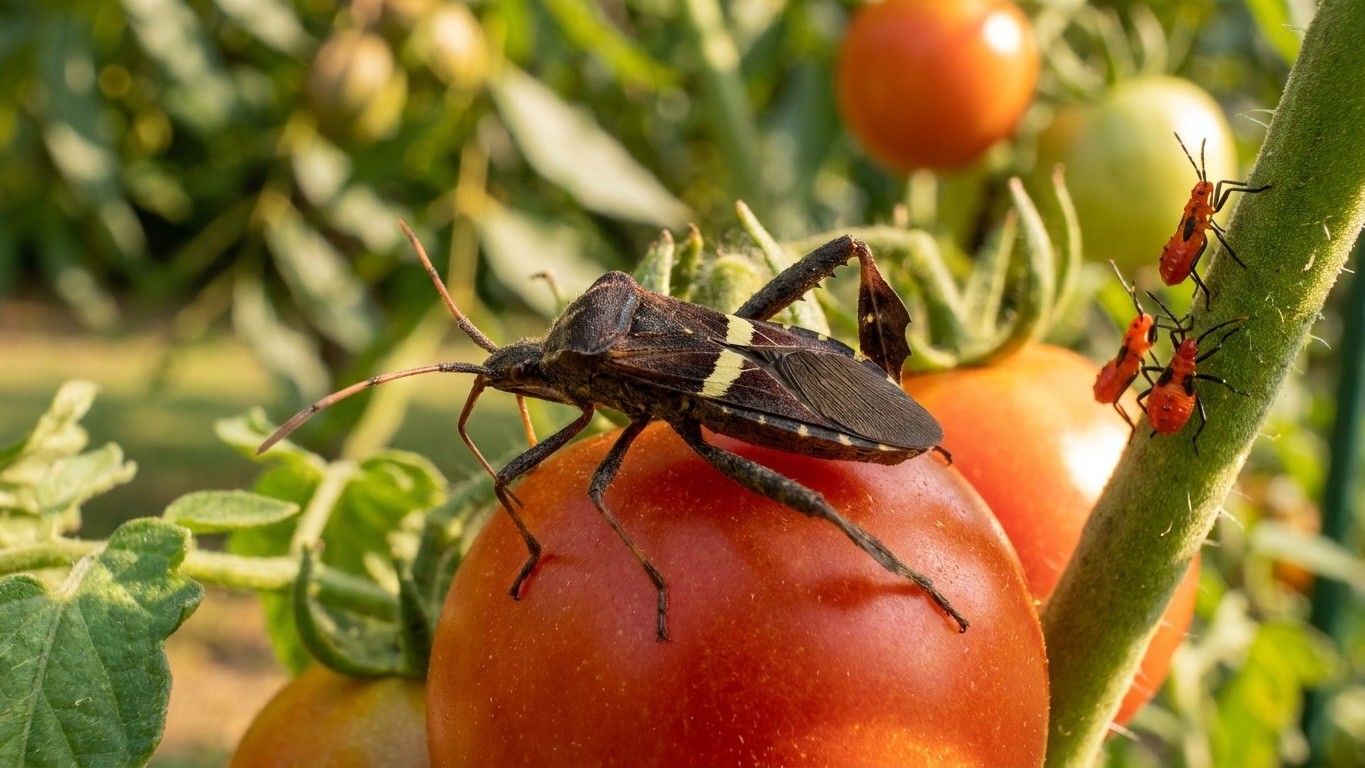

Leaffooted bugs show up in California gardens and orchards from spring through fall, feeding heaviest on developing fruit and nuts during the warmest months before retreating to bark and debris for winter. Row covers, morning hand-picking, and clearing overwintering debris are the tools that actually slow them down, since once the damage is inside the fruit, nothing sprayed on the surface reverses it.
The weeks to watch

Leaffooted bugs are active in California roughly from March through October, with feeding pressure building as temperatures climb into the growing season. The state’s cooperative extension network doesn’t publish a specific week-by-week window for this species the way it does for some other garden pests, so the timing below reflects the general biology of the insect rather than a locally dated calendar.
First activity in spring
Adults spend winter tucked into bark crevices, leaf litter, and woodpiles, and they become mobile again once daytime temperatures settle into a consistent warm stretch. That’s a soil-and-air-temperature trigger, not a fixed date, which is why the same species can be stirring in a Southern California backyard weeks before it moves in the Central Valley.
Peak feeding through summer and fall
Feeding intensifies through summer as fruit and nuts develop, since that’s when the piercing mouthparts of adults and older nymphs do the most damage to almonds, pistachios, pomegranates, and tomatoes. Pressure typically continues into early fall, tapering as cooling nights send adults looking for winter shelter again.
Reading the calendar from your last frost

For most California gardeners, the planning date that matters isn’t a leaffooted bug fact at all, it’s the last spring frost. But here’s the catch for a lot of the state: coastal and Southern California climate records show no freeze in an average year at all, with zero days at or below 32°F recorded over 30 years and a frost-free season listed as 365 days. That flips the usual math on its head, because there’s no frost event to count backward or forward from.
- Find your local last spring frost date, if your area has one. In frost-free coastal and Southern California zones, skip this step entirely, since there’s nothing to count from.
- Where a frost date exists (Central Valley, Sierra foothills, and other inland areas), add a few weeks of buffer time for soil temperatures to warm enough to rouse overwintering adults. That gives a range, not a single day, since soil warms at a different pace every spring.
What that means practically: in frost-free zones, the constraint isn’t frost timing at all, it’s heat and drought stress on the plants themselves, which can make fruit more attractive to feeding bugs looking for moisture. Covers meant to keep bugs off young plants can go on early and stay on late in these areas, since there’s no frost-driven end date forcing their removal.
What it attacks, and what the damage looks like

Most gardeners notice the fruit before they ever spot the insect. On tomatoes, feeding shows up as small dimpled or discolored spots that can turn into sunken, corky patches as the fruit ripens. On almonds and pistachios, the damage is often invisible from outside, an entire kernel found black, shriveled, or hollow at harvest. Pomegranates can develop dry, discolored arils inside an otherwise normal-looking fruit. Citrus can show scarring near the stem end where feeding punctures the rind.
Crops most often affected
- Tomatoes
- Pomegranates
- Almonds
- Pistachios
- Citrus
Which life stage causes it
Both nymphs and adults feed with piercing-sucking mouthparts, but adults do the most economically significant damage because they’re mobile enough to move between plants and reach developing fruit at every stage of ripening. That matters for treatment timing: once an adult has already injected saliva into a nut or fruit, the internal damage is done, and nothing applied afterward restores the kernel or the flesh. Control has to happen before feeding, not after.
How California sits in this pest’s range
Leaffooted bugs turn up across most of California wherever their host plants grow, from Central Valley orchards to Southern California backyards, but the timing of their activity isn’t the same everywhere in the state. The frost data behind this article comes from a coastal, Southern California weather station where freezes essentially don’t happen, and that detail matters because it shapes how long adults stay active in a given year.
| Zone | Frost pattern | What it means locally |
|---|---|---|
| Coastal & Southern California (per this station’s NOAA normals) | Zero days at or below 32°F in 30 years of records; frost-free season listed as 365 days | No frost to reset the clock, so adults can stay active nearly year-round, slowing only with cooler nights |
| Central Valley & Sierra foothills | Regular winter freezes occur (specific dates not covered by this source) | Cold drives adults into bark and leaf litter until spring warm-up begins |
The takeaway isn’t that one part of the state has the pest and another doesn’t. It’s present broadly. What changes is how long the feeding window stretches and how strictly winter shuts it down.
What actually works against it

Start here, cheapest first
- Clear overwintering debris. Leaf litter, woodpiles, and old plant material near the garden give adults a place to survive winter. Removing it in fall reduces the local population that emerges come spring.
- Hand-pick in cool mornings. Leaffooted bugs are sluggish in cold temperatures and drop or freeze in place rather than fly, which makes early morning the easiest time to knock them into a bucket of soapy water.
- Use exclusion netting or bags on individual fruit clusters. This physically blocks adults from reaching developing pomegranates or tomatoes, and it works as long as it’s in place before feeding starts, not after damage appears.
- Check for and remove egg strands. Females lay eggs in a row along leaf midribs and stems; scraping these off before they hatch prevents an entire batch of nymphs from developing on that plant.
- Rotate susceptible annual crops like tomatoes to a different bed each season, since it disrupts the local buildup of nymphs feeding on the same plants year after year.
What stops working once bugs get inside
Home gardeners sometimes reach for copper tape or ultrasonic repellent devices, tools that are more commonly marketed for slugs and snails. For leaffooted bugs specifically there’s no established mechanism showing either one changes behavior, and once feeding has already happened inside a nut or fruit, no surface treatment or gadget reverses that damage. The measures that work are the ones applied before the insect reaches the crop, not after.
Common questions
Do leaffooted bugs bite people? They’re not aggressive toward humans and don’t feed on people, but they can deliver a sharp, momentary pinch if handled carelessly, since the same mouthparts used on fruit can pierce skin.
Why does my pomegranate look fine outside but ruined inside? That’s the signature of leaffooted bug feeding. The puncture site heals over on the surface while the internal tissue dries out or discolors, so the damage often isn’t visible until the fruit is cut open.
Does one warm winter mean a worse year for leaffooted bugs? A mild winter that lets more adults survive to spring can mean an earlier start to feeding activity, though the extent of that effect varies by year and location rather than following a fixed rule.