
The three-lined potato beetle shows up in Manitoba gardens as soon as soil temperatures climb into the 50s Fahrenheit, typically from mid-May through early June, and stays active feeding on potatoes, tomatoes, and their relatives through July. Handpicking adults and larvae, rotating crops away from last year’s Solanaceae bed, and applying a targeted insecticide only when larval counts justify it are the three moves that actually keep populations below damaging levels.
Identifying the Beetle Before You Treat the Wrong Pest

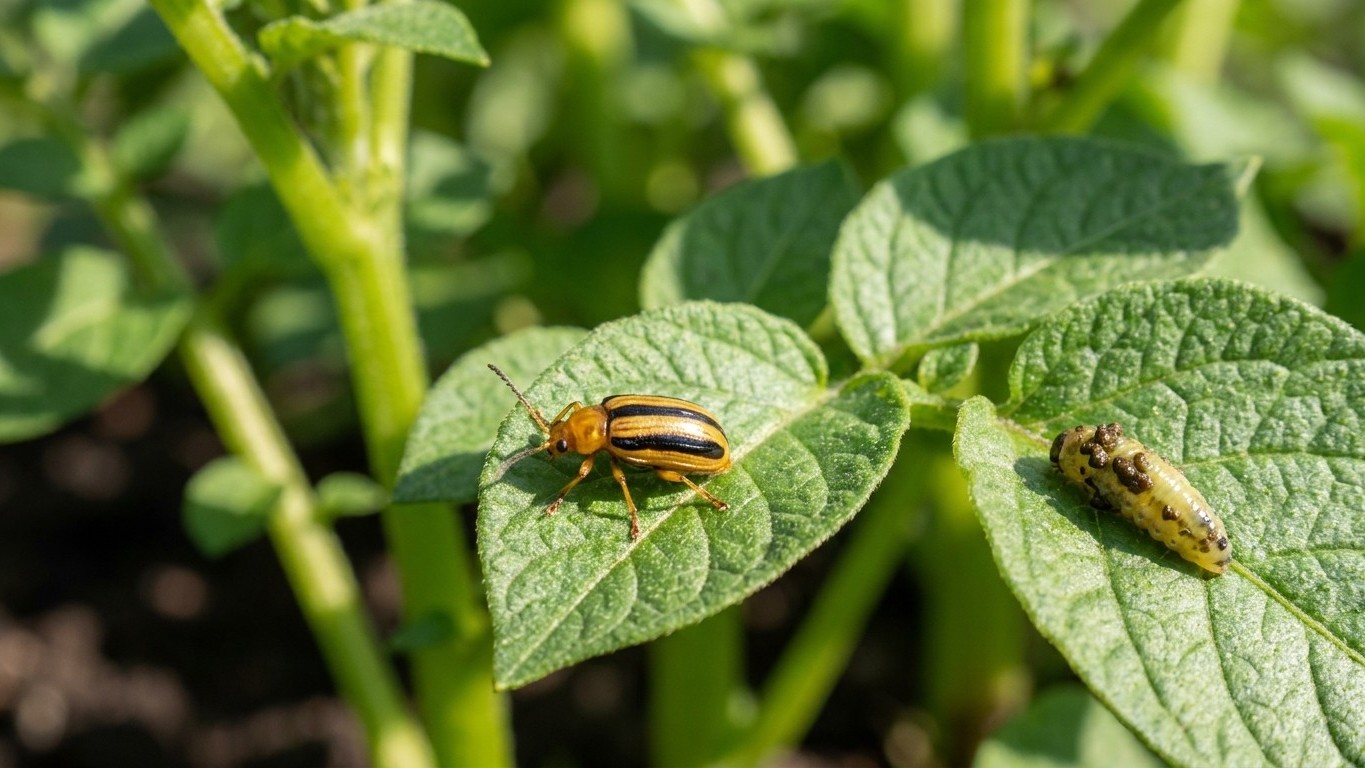
Gardeners in Manitoba often confuse this insect with the Colorado potato beetle, but the two look different once you know what to check. The adult three-lined potato beetle (Lema trilineata) measures about a quarter inch long, with a yellow-orange body and three bold black stripes running lengthwise down its wing covers. The Colorado potato beetle, by contrast, shows ten narrow black stripes and a rounder, more domed shape. Mix them up and you might reach for the wrong control timing, since their life cycles don’t line up exactly.
The larvae are where things get memorable, and not in a good way. They’re pale yellow or greenish grubs that cover themselves in their own dark fecal matter, creating a slug-like smear that hides them from predators. It’s an effective camouflage trick, but it also makes larvae easy to spot once you know to look for a dirty-looking blob on a leaf rather than a clean caterpillar shape. Egg masses appear as tight, upright clusters of orange-yellow eggs glued to the underside of leaves, usually in rows of a dozen or more.
Where It Fits Among Prairie Pests
Manitoba’s short but intense growing season shapes which insects establish reliable populations, and the three-lined potato beetle has adapted well to it. Unlike some pests that need a long, hot summer to complete multiple generations, this beetle typically manages one full generation per year across most of the province, with a partial second generation possible during warmer summers in the Red River Valley. That single-generation pattern is actually good news for home gardeners, because it means the window for meaningful intervention is narrower and more predictable than with pests that cycle continuously.
When It Shows Up: The Manitoba Timeline
Overwintering adults spend the cold months tucked into soil, leaf litter, and garden debris, then emerge once daytime temperatures hold steadily above 50°F. In most of southern Manitoba, including the Winnipeg, Portage la Prairie, and Brandon areas, that emergence lands somewhere between the second week of May and early June, depending on how quickly the spring thaw progresses that particular year.
Once above ground, adults feed for one to two weeks before mating and laying eggs on the underside of host leaves. Eggs hatch within a week to ten days, and the resulting larvae feed aggressively for two to three weeks before dropping to the soil to pupate. New adults emerge roughly three to four weeks after pupation begins, meaning a fresh wave of beetles can appear in mid-to-late July even in years with only one primary generation. Those late-season adults don’t usually reproduce again before fall; instead, they feed to build reserves, then burrow into soil or mulch to overwinter.
Cool, wet springs push the whole schedule back by a week or two, while an early, dry warm-up can bring adults out closer to the first week of May. Gardeners who scout weekly starting in mid-May, rather than waiting for visible damage, catch the population before egg-laying peaks.
What It Feeds On Beyond the Potato Patch
The name suggests a potato-only pest, but the diet is broader than that. Host plants include:
- Potatoes and tomatoes
- Eggplant and pepper, though at lower rates
- Ground cherry and tomatillo, both close potato relatives
- Ornamental petunias, which share the same plant family
That petunia connection catches a lot of home gardeners off guard. A flower bed planted near a vegetable garden can act as an unintentional nursery for the beetle, letting populations build on ornamentals before they move into food crops. Anyone growing petunias alongside a potato patch should scout both areas together rather than assuming ornamentals are safe.
What Stops It: Practical Control Strategies
Control works best as a layered approach rather than a single fix, and the order matters. Cultural practices reduce the odds of a serious outbreak in the first place; mechanical removal handles small, early infestations; and targeted products step in only when populations exceed what handpicking can manage.
Cultural Prevention Before Beetles Arrive
Fall cleanup does more work than most gardeners give it credit for. Since adults overwinter in plant debris and loose soil near last year’s crop, clearing potato vines, tomato stems, and fallen leaves after harvest removes a chunk of the shelter population needs to survive a Manitoba winter. Tilling the soil in fall also exposes overwintering adults to freezing temperatures and predators, cutting survival rates further.
Crop rotation matters just as much. Moving potatoes, tomatoes, and eggplant to a different section of the garden each year, ideally with at least a two-year gap before returning to the same spot, forces emerging adults to travel farther to find host plants. That extra distance means more exposure to birds, ground beetles, and other predators, and it delays the population buildup that comes from beetles emerging directly into a food source.
Mechanical Removal During Active Feeding
Handpicking remains one of the most effective tools for a home garden, mainly because the beetle’s low reproductive rate compared to some other pests means removing even a modest number of adults and egg masses each week can prevent a full-blown infestation. Checking the undersides of leaves every three to four days from mid-May through June, then knocking adults into a container of soapy water and scraping off egg clusters, keeps numbers manageable without any spray at all.
Floating row covers offer a physical barrier during the critical emergence window, particularly useful for gardeners who can’t check plants daily. Covers need to go on before adults emerge in mid-May and come off once plants flower, since many Solanaceae crops need pollinator access. This timing window is narrow, but it lines up well with the beetle’s own emergence schedule, making row covers a genuinely practical Manitoba-specific tactic rather than a generic recommendation.
Biological and Targeted Chemical Options
Natural predators, including several species of ground beetles and parasitic wasps, keep populations in check in gardens that avoid broad-spectrum insecticides. Preserving these predators by skipping unnecessary spraying on nearby flowering plants supports this natural suppression without any added cost or effort.
When populations exceed what handpicking and covers can manage, particularly on larger potato plantings, products containing Bacillus thuringiensis var. tenebrionis (a strain specifically effective against leaf beetle larvae) offer a targeted option that spares most beneficial insects. Spinosad-based products work as a second option for heavier infestations, though they carry more risk to pollinators if applied while plants are flowering, so evening application after bees have left the garden reduces that risk. Neither should be treated as a first response; both work best against young larvae rather than mature adults, so timing the application to the two-week window after egg hatch matters more than the product choice itself.
Monitoring Thresholds That Actually Matter
Not every beetle sighting calls for action. Research from potato-growing regions with climates similar to southern Manitoba generally points to a threshold of around one adult beetle per plant, or noticeable defoliation exceeding 10 to 15 percent of leaf area, before yield impact becomes measurable on potatoes. Home gardens growing potatoes for personal use can often tolerate somewhat higher beetle numbers than a commercial field, since cosmetic leaf damage doesn’t affect tuber development the same way total defoliation does.
Tomatoes and eggplant tend to be more sensitive to larval feeding on young growth, so a lower threshold, closer to two or three larvae per plant on seedlings, makes sense for anyone growing transplants started indoors. Checking plants twice weekly through the peak larval window in June catches problems while handpicking is still a realistic full solution.
A garden that dealt with a heavy beetle population one season often sees a smaller return the following year, provided fall cleanup and rotation happened as planned. That pattern isn’t guaranteed, since adult beetles can fly in from neighboring properties or wild host plants growing along fence lines and ditches, which is why relying on prevention alone, without any weekly scouting, leaves a gap that a single warm, dry spring can exploit quickly.