
July puts Maryland gardens squarely in the middle of the growing season, months clear of the last spring frost window of April 3 to April 16 and months short of the first fall frost, which lands between October 26 and November 5. That gap of roughly six months is what lets a gardener keep sowing heat-loving crops, start the fall garden under cover, and manage the strain that mid-Atlantic humidity puts on everything already rooted in the ground.
What goes in the ground in July

The frost calendar stopped mattering back in April. What decides July planting now is soil temperature, and Maryland soil in July runs hot, often well above 80°F at a two-inch depth in full sun. That heat is an advantage for some crops and a liability for others, and knowing which is which saves a wasted seed packet.
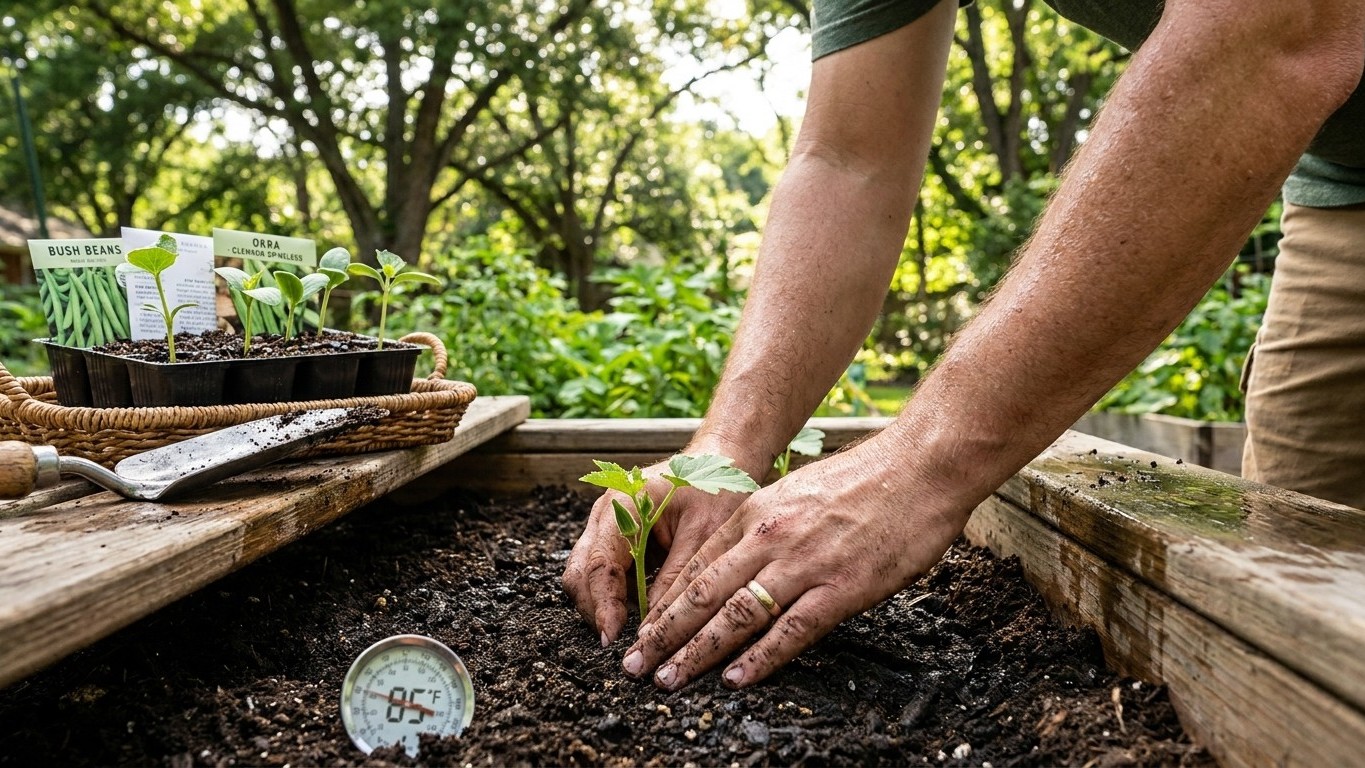
Bush beans take another round of direct seeding in early to mid-July for a fall crop, since they run about 50 to 60 days to harvest and still beat the first frost with room to spare. Okra, southern peas, and cowpeas actually prefer this soil heat and germinate faster now than they did in May. Summer squash and cucumber can go in as a second direct-sown planting too, which matters because squash vine borer often takes out the first planting by midsummer, and a fresh sowing sidesteps the damage rather than fighting it.
Sweet corn has a narrower window: the last succession planting needs to go in by early July at the latest to mature before cooler nights slow pollination. Sweet potato slips can still be set out in the first week or two of the month in a pinch, though later is pushing it.
Where July gets tricky is with cool-season seed. Lettuce and spinach seed can go dormant and refuse to germinate once soil temperature climbs past roughly 80°F, so direct sowing them outdoors now is close to a gamble unless the seed gets a pre-chill in the refrigerator first or goes into a shaded bed. That is not a crop to skip; it is a crop that needs a workaround, covered in the next section.
What to start under cover
The math for July starts runs backward from the first fall frost window of October 26 to November 5, not forward from today’s date. Fall broccoli, cabbage, and cauliflower need roughly 60 to 80 days from transplant to harvest, plus another four to six weeks as seedlings before they go outside. Counting back from late October puts the seed-starting date for these squarely in early to mid-July, whether that seed goes into flats under light indoors, in a shaded cold frame, or in a nursery bed with row cover for shade.
Fall lettuce and kale follow the same backward math but with a shorter runway, since lettuce can be ready in 45 to 55 days. Starting the seed indoors, in an air-conditioned space or a shaded spot, sidesteps the heat-dormancy problem described above and gives seedlings sturdy enough to transplant once the worst of the July sun eases.
The two failure modes are easy to spot in hindsight. Start too early, with no shaded holding space, and the seedlings sit too long in small cells, turn rootbound, and stall once transplanted, never quite recovering their vigor. Start too late, past mid-July for the brassicas, and the plants run out of daylight and warmth before they size up, leaving small heads or none at all when frost finally arrives. Splitting the difference by starting broccoli and cabbage in the first half of the month and lettuce and kale a couple weeks behind gives both groups a fair shot at the fall table.
What is ready to pick
July is when the garden starts paying rent. Bush beans from earlier plantings, the first tomatoes, cucumbers, summer squash, and zucchini all typically come in through the month, along with sweet corn from spring plantings and the tail end of garlic, which should be lifted and curing by now rather than left in the ground.
Blueberries hit their peak across much of the state in July, and stone fruit, particularly peaches, comes in through the month depending on the variety and the season’s weather. Basil is ready for regular cutting, and cutting it back actually keeps the plant productive rather than letting it bolt to flower.
Ripeness cues matter more than the calendar here. Tomatoes should be picked at full color with a slight give, not rock hard, since vine-ripened flavor is the whole point of growing them at home. Summer squash and cucumbers are best picked young and often; oversized zucchini turns woody and stops the plant from setting new fruit, so a squash left two days too long on the vine is a squash that cost the plant its next round of blossoms. Corn is ready when the silks turn brown and dry and a kernel, pressed with a thumbnail, releases a milky liquid rather than a clear one.
The jobs that matter this month
Water is the job that outranks every other job in a Maryland July. Vegetable gardens generally need about 1 to 1.5 inches of water a week, and in a stretch of 90-degree days with no rain, that has to come from a hose rather than hope. Watering deeply and less often, at the soil rather than overhead, builds deeper roots and cuts down on the fungal disease that thrives when leaves stay wet overnight.
Mulch, stakes, and scouting
Mulch does double duty in July: it holds soil moisture between waterings and keeps root zones several degrees cooler, which matters for crops like tomatoes that are prone to blossom end rot when soil moisture swings between soaked and bone dry. Staking and caging tomatoes and trellising cucumbers should already be done by now, but if it slipped, this is the last easy window before the plants sprawl too far to wrangle without breaking stems.
Pest scouting pays off weekly rather than after damage shows. Squash vine borer moths lay eggs at the base of squash stems in early to midsummer; checking for the telltale sawdust-like frass at the stem base and slitting out a borer with a knife can save a plant that would otherwise wilt and die within days. Japanese beetles and tomato hornworms both peak in July, and handpicking in the morning, when beetles are sluggish, is still one of the more effective controls in a home garden.
Succession sowing of beans, and side-dressing fruiting crops like tomatoes, peppers, and squash with a modest dose of fertilizer once they start setting fruit, rounds out the month’s real work. None of this is optional maintenance; skipping it is how a garden that looked great in June turns patchy by August.
What not to do in July
The most common mistake is treating July soil like it’s always safe for tender transplants without accounting for transplant shock. Setting out young seedlings, whether vegetables or fall brassicas started indoors, during a stretch of 90-degree afternoons without shade cloth or at least a few days of hardening off usually stunts or kills them outright. A cloudy day or a shaded transplant window in the evening beats a midday planting every time.
Overwatering can be as damaging as underwatering. Frequent shallow sprinkling encourages shallow roots and fungal disease on leaves that stay wet overnight, while deep, infrequent watering at the soil line builds the resilience plants need to ride out a dry spell.
Nitrogen timing trips up a lot of tomato growers specifically. A heavy dose of nitrogen fertilizer once tomatoes and peppers are already setting fruit pushes leafy growth at the expense of flowering and fruit set, and it can worsen blossom end rot by disrupting the plant’s calcium uptake. A balanced or lower-nitrogen feed at this stage, paired with even soil moisture, does more for the harvest than a nitrogen boost ever will.
Letting lettuce and spinach seed sit in hot, dry soil and assuming it simply hasn’t sprouted yet is another quiet failure. That seed may be dormant rather than dead, and starting over with a pre-chilled batch or a shaded nursery bed usually solves it.
Checking this against your own county
A statewide frost window is a starting point, not an instruction for a specific yard. Maryland’s geography spans mountains and tidal shoreline, and that range moves both the last spring frost and the first fall frost by real weeks depending on where a garden sits.
| Region | General frost tendency | What it means in July |
|---|---|---|
| Western Maryland (Garrett, Allegany) | Runs weeks later than the state’s cited urban reference, due to elevation | Fall brassica seedlings may need to go in earlier in the month to hit the shorter local season |
| Central Maryland | Close to the state-cited April 3 to April 16 and October 26 to November 5 window | The timelines in this article apply fairly directly |
| Eastern Shore | Runs milder, with a later first fall frost | A little more room to push succession plantings later in July |
For a planting calendar built around a specific county, the University of Maryland Extension is the reliable next stop, since local agents adjust these general windows for elevation and local microclimate in a way a statewide article cannot.
Common questions
Is it too late to plant tomatoes in Maryland in July?
Starting tomatoes from seed in July is too late for a full harvest before frost, but setting out an already-started transplant, if one can be found, can still work in the earliest days of the month in warmer parts of the state.
Can you still plant green beans in Maryland in July?
Yes. Bush beans direct-sown in early to mid-July generally mature in 50 to 60 days, which leaves enough time before the first fall frost window of October 26 to November 5 in most of the state.
Why won’t my lettuce seed germinate in July?
Lettuce seed commonly goes dormant once soil temperature climbs above roughly 80°F, which is typical of Maryland in midsummer. Pre-chilling the seed in a refrigerator for a few days, or sowing in a shaded spot, usually solves it.
What USDA hardiness zone is Maryland in?
Maryland spans USDA Plant Hardiness Zones 5b to 8a under the 2023 map, which is built on average annual extreme minimum winter temperature rather than summer heat, so it factors into fall and winter planning more than into July decisions.