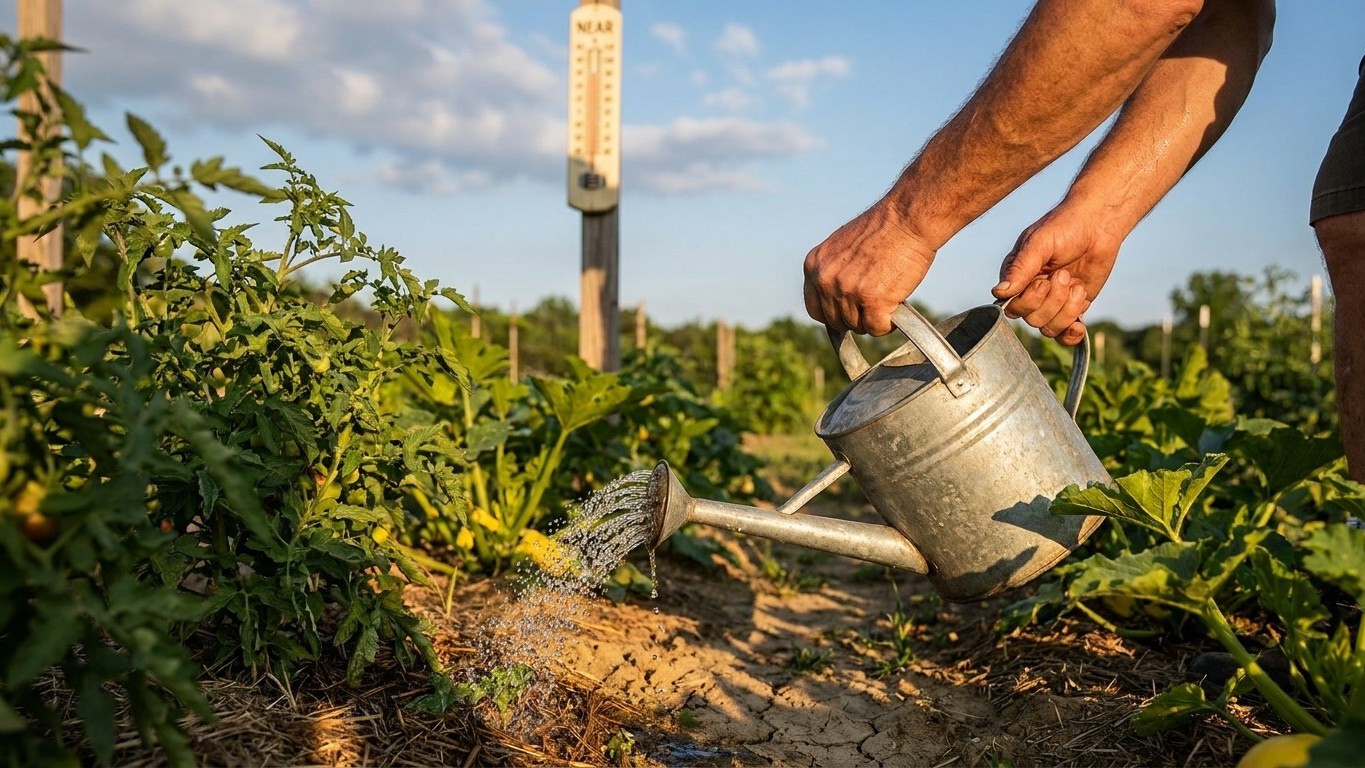

Maryland’s summer rain doesn’t disappear, but it thins out and gets riskier to rely on. June brings only 3.98 inches, the driest month of the growing season, while the thermometer clears 90F on 24.6 days a year, pulling moisture out of soil faster than it falls. The short answer: water deeply, early, and at the base, and don’t let a passing shower fool you into skipping the hose.
What changes here

Two numbers set the terms for every Maryland garden bed: 3.98 inches of rain in June, the driest summer month, and 24.6 days a year when temperatures hit 90F or higher. Read together, they mean the sky delivers less water exactly when the air is pulling more of it back out of the ground. That’s the squeeze a gardener has to plan around, not just react to.
Run the arithmetic and it gets concrete. A typical vegetable bed or perennial border wants roughly an inch of water a week to keep growing without stress. June has about 4.3 weeks in it, so spreading 3.98 inches evenly across the month works out to close to 0.93 inch of rain arriving from the sky in an average week. That’s most of the target, on paper. But June’s rain rarely arrives evenly. A good share of it falls as thunderstorms, dumping half an inch in twenty minutes and then nothing for ten days. On a hot afternoon with 90F pressing down, a lot of that fast rain runs off the surface before it soaks in, so the average hides real dry stretches.
Soil texture decides how much of that water actually reaches the roots. On sandy ground, an inch of rain moves through the top few inches within a day, leaving little reserve for the next hot spell. On heavy clay, the same inch can sit in the root zone for a week or more, which sounds like an advantage until the clay stays wet long enough to starve roots of oxygen. Neither soil gets a free pass from the numbers above. Sand needs the gardener to fill in gaps more often; clay needs the gardener to wait, then soak deeply when the wait is over. A rain gauge staked in the actual bed, not a guess based on the forecast, is what tells a Maryland gardener which situation they’re in this week.
How to water when it matters
Deep and infrequent beats shallow and frequent, and the reason is what happens underground. A deep soak pushes water down six inches or more, so roots follow it down and anchor themselves where the soil stays cooler and holds moisture longer between waterings. A quick daily splash never gets past the top inch, so roots stay shallow, right where 90F afternoons bake the surface hardest. Watering at the base, rather than overhead, keeps leaves dry and cuts down on the fungal diseases that thrive when foliage stays wet overnight. Morning watering matters for the same reason plus one more: it gives leaves and topsoil hours of daylight to dry out before evening, while still soaking in before the heat of midday pulls it back into the air as vapor.
Checking soil moisture beats checking the sky. Push a finger two inches into the bed, or use a trowel to pull up a small plug. If it’s dry at that depth, water. If it’s still damp, wait, even if it looks parched on the surface. On sandy soil, that check will come up dry more often, since sand can’t hold much of a reserve, which means shorter, more frequent soakings. On heavy clay, the same check often stays damp for days after a good watering, and adding more before it dries invites root rot rather than growth.
A reasonable starting point: give the bed a slow, deep soak equal to about one inch of water every five to seven days, then adjust up or down based on what the finger test tells you about your own soil. That’s a starting number to check against your ground, not a rule to follow blindly.
- Push a finger or trowel two inches into the soil before watering to confirm it’s actually dry at root depth.
- Water at the base of the plant with a soaker hose, drip line, or watering can aimed at the soil, not the leaves.
- Apply about one inch of water per session, measured with a rain gauge or a shallow can set nearby.
- Water between roughly 6 and 10 in the morning, before the day’s heat peaks.
- On sandy soil, shorten the interval to every three or four days; on heavy clay, stretch it to seven to ten days and let it dry between soakings.
- Spread two to three inches of mulch over the root zone to slow evaporation between waterings.
What goes wrong
Watering a little every day
A light daily sprinkle feels responsible, but it only wets the top inch of soil, which is exactly where 90F afternoons do the most damage. Roots follow the water, so they stay near the surface instead of growing down to cooler, steadier moisture. This is the costliest habit in a state that clears 90F on nearly 25 days a year, because shallow-rooted plants have no buffer once a heat run starts.
Wetting the leaves after dark
Evening watering with an overhead sprinkler leaves foliage damp all night. Fungal spores that cause mildew and blight need exactly that: hours of standing moisture on a leaf surface with no sun to dry it off. Watering the soil instead of the plant, earlier in the day, removes the problem at the source.
Trusting a quick summer storm
A thunderstorm can look like a soaking and still leave the ground dry two inches down, especially on compacted or clay soil where fast rain runs off before it penetrates. The only way to know is the finger test, not the sound of rain on the roof. On clay specifically, a storm can also oversaturate a bed that hadn’t finished drying from the last watering, and adding irrigation on top of that drowns roots rather than helping them.
Letting bare soil bake without mulch
Uncovered soil loses moisture straight back to the air, undoing a deep soak within days. A two to three inch mulch layer blocks direct sun and slows evaporation, stretching the interval between waterings and easing the swing between the wet stretch of June and hot, dry runs later in the season.
Local help
The University of Maryland Extension publishes region-specific guidance for home gardeners, including seasonal watering and soil advice, through extension.umd.edu. Watering restrictions during dry stretches vary by county and water utility and can change with little notice, so check with your local water provider before setting up an automated schedule.
Common questions
How often should I water my Maryland garden during a summer dry spell?
Start with a deep soak roughly once a week, adjusted by soil type: more often on sandy ground, less often but heavier on clay, and always checked with a finger two inches down before you decide.
What time of day is best to water in Maryland’s heat?
Early morning, roughly between 6 and 10, gives water time to soak in before midday heat pulls it back out as vapor and lets any wet foliage dry before evening.
Does Maryland enforce watering restrictions during droughts?
Restrictions are set locally by county governments and water utilities rather than statewide, so they vary and change; check with your own water provider for current rules before planning irrigation.
How can I tell if my soil is dry enough to need watering?
Push a finger or trowel two inches into the bed. If it’s dry at that depth, water; if it’s still damp, hold off, even if the surface looks parched.