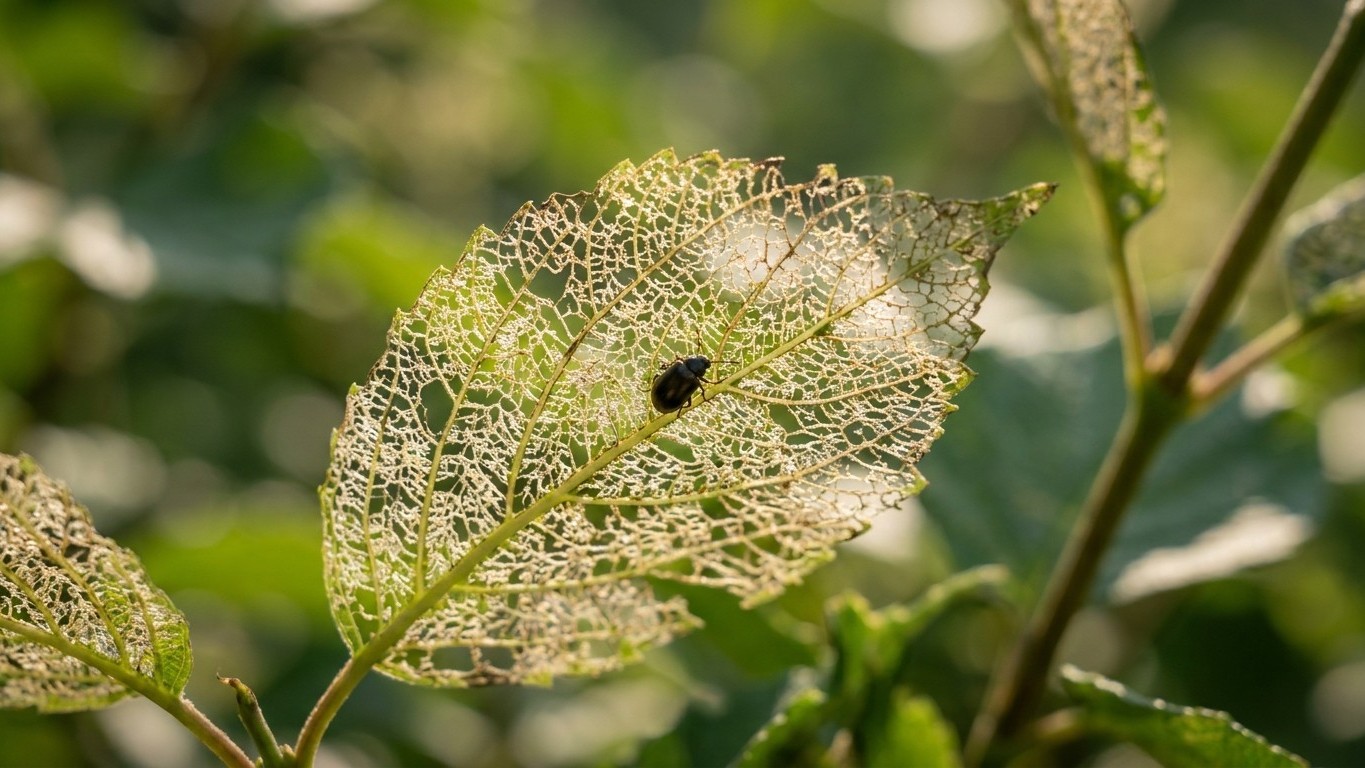

Viburnum leaf beetle activity in Maryland follows a predictable two-stage calendar: larvae strip leaves between April and June, then adults finish the job from July through September before laying eggs that overwinter on twigs. If your viburnum hedge looks lace-like by early summer, this beetle is almost certainly the cause, and the window to stop next year’s damage opens right now, in late summer, when egg-laying begins.
The weeks to watch

Maryland sits squarely in the mid-Atlantic range where Pyrrhalta viburni, an insect that arrived from Europe and was first detected in New York in 1996, has settled in for good. The state’s USDA hardiness zones (6b to 7b depending on where you live) give the beetle a full, uninterrupted life cycle every year, which is part of why populations in Baltimore County, Montgomery County, and the Eastern Shore have built up steadily since the pest was first confirmed in the state.
Eggs survive the winter tucked inside small pits chewed into the undersides of viburnum twigs. Larvae hatch in early spring, often by mid to late April in most of Maryland, a few weeks earlier in warmer pockets near Washington, D.C., and a bit later in the cooler counties of Western Maryland. They feed through May and into June, then drop to the soil to pupate. Adults emerge in July, feed for the rest of the summer, and start laying next year’s eggs in September and October. That means a single calendar year gives Maryland gardeners two distinct damage phases and one narrow but important control window in fall.
Why Timing Matters More Than Product Choice
Most homeowners reach for a spray only after they see chewed leaves, but by the time larval damage is obvious in May, the insects are already mobile and partly protected by curling foliage. The more effective moves happen earlier: inspecting twigs for egg-laying scars in fall and catching larvae in their first two weeks of life in spring, when they’re small, exposed, and easiest to knock back with a single well-timed treatment.
How to Identify Viburnum Leaf Beetle Damage
The damage pattern is distinctive enough that most Maryland Extension agents can diagnose it from a photo. Larvae skeletonize leaves, eating everything between the veins and leaving a lacy, brown, tattered structure that looks scorched from a distance. Adults chew irregular holes through the leaf blade itself, a coarser kind of damage that shows up in mid to late summer on the same shrubs.
Look closely at bare twigs in late fall or winter and you’ll often find the real giveaway: rows of small, dark bumps running along the underside of new growth, each one a capped egg-laying pit where a female beetle inserted 3 to 8 eggs and sealed the hole with chewed bark and excrement. A single twig can carry dozens of these pits. That visual, more than the leaf damage itself, is the most reliable way to confirm this specific pest rather than another leaf-chewing insect or a fungal leaf spot.
Repeated defoliation is the real threat. A viburnum that loses most of its leaves for two or three consecutive years can decline sharply, and established shrubs have died after several seasons of unchecked infestation. That’s a meaningful loss for Maryland landscapes, where viburnums are commonly planted as privacy hedges and foundation shrubs precisely because they’re supposed to be low-maintenance.
Which Viburnums in Maryland Are Most at Risk
Not every viburnum species reacts the same way, and this matters a lot for anyone planning new plantings or deciding whether to replace a struggling shrub. Species with thin, tender leaves tend to suffer the worst damage, while thicker-leaved, fuzzy, or leathery varieties hold up much better.
- Highly susceptible: American cranberrybush (Viburnum trilobum), European cranberrybush (V. opulus), and arrowwood viburnum (V. dentatum) cultivars
- Moderately susceptible: Wayfaring tree (V. lantana) and some doublefile viburnums
- Resistant: Korean spice viburnum (V. carlesii), leatherleaf viburnum (V. rhytidophyllum), and Judd viburnum (V. x juddii)
Cornell University’s long-running viburnum leaf beetle monitoring program has tracked this susceptibility pattern across the Northeast and mid-Atlantic for years, and Maryland’s observations line up with the national data. If you’re replacing a beetle-damaged arrowwood hedge, swapping in a resistant species is often more effective long term than committing to years of spraying.
Control Methods That Actually Work in Maryland Conditions
No single tactic wipes out an established viburnum leaf beetle population in one pass. What works is stacking two or three methods across the calendar, matched to Maryland’s specific timing.
Fall and Winter: Cut Out the Eggs
Between October and March, while shrubs are dormant, walk the plant and prune off twigs carrying visible egg-laying pits. This is genuinely one of the most effective low-cost steps a homeowner can take, since removing eggs before they hatch eliminates that generation entirely without any pesticide. It works best on smaller shrubs and younger hedges where you can realistically reach and inspect most of the branch structure. On a large, mature hedge it’s not practical to catch every pit, but even partial removal reduces spring larval pressure.
Spring: Target Young Larvae
Once larvae hatch, usually by late April in most of Maryland, they’re clustered, exposed, and feeding in the open for a few weeks before they mature. This is the best window for an insecticidal soap or horticultural oil spray, which controls larvae with minimal harm to pollinators since viburnums aren’t typically in bloom during this early feeding stage. Products containing spinosad are also labeled for leaf beetle larvae and tend to perform well when applied while larvae are still small, generally within the first two weeks after hatching.
Systemic Options for Persistent Infestations
For hedges with a history of heavy damage, a systemic soil-applied insecticide containing imidacloprid, applied in early spring before bloom, can suppress both larvae and the adults that feed later in summer. Because these products move through the plant’s vascular system, timing the application well ahead of flowering matters for protecting bees and other pollinators that visit viburnum blooms. This approach makes more sense for a valuable, established specimen than for a beetle-prone species you’re planning to phase out anyway.
Physical Removal in Summer
Adult beetles that emerge in July and August are slower and clumsier than the larvae, and on a small planting you can knock them into a bucket of soapy water by hand, particularly in early morning when temperatures are cooler and beetles are less active. It’s tedious, but for a handful of shrubs it noticeably reduces the number of adults laying eggs come September.
Building a Beetle-Resistant Landscape Going Forward
If a Maryland viburnum hedge has been defoliated three years running, replacement with a resistant species is usually more cost-effective than continued chemical control, especially with labor and product costs factored in. Korean spice viburnum and leatherleaf viburnum both handle Maryland’s climate well and rarely show meaningful beetle damage, making them practical substitutes for gardeners who want the same general look and function without the annual fight.
Mixed plantings also help. A hedge made up of a single susceptible species gives the beetle an unbroken food source and lets populations build quickly. Breaking up that monoculture with resistant varieties interspersed among the vulnerable ones slows the spread and gives beneficial insects and birds, some of which do feed on beetle larvae, more of a chance to make a dent.
Maryland’s University Extension offices across the state field regular calls about viburnum leaf beetle each spring, and local county agents can confirm identification from a sample twig or photo if you’re not certain the lacy leaves in your yard are this pest rather than another chewing insect. That confirmation matters because control timing is specific enough that guessing wrong wastes a season.