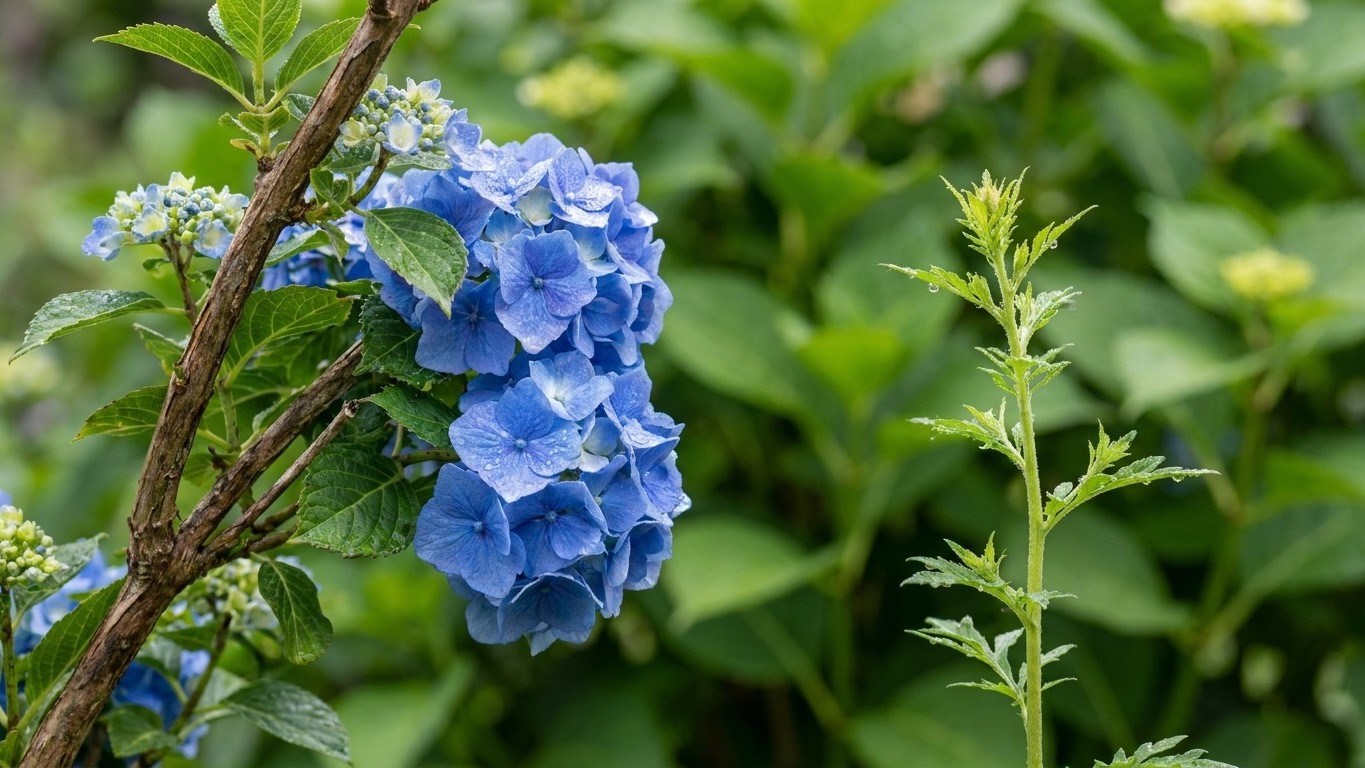

Prune panicle and smooth hydrangeas in late winter or early spring, before the buds swell. Prune bigleaf and oakleaf hydrangeas right after they flower, and stop by the end of July or so. Cold winters add one more rule: wait until the leaves open in spring before you decide which stems are dead. The details depend on which type you grow and how far north you garden.
What this comes down to in Minnesota

At the Twin Cities reference station, the last spring frost falls between April 17 and April 30, and the first fall frost between October 11 and October 23. Those two windows frame every pruning decision. New-wood hydrangeas get cut in late March or early April, ahead of the spring window. Old-wood hydrangeas get trimmed in summer, well before the fall window opens. Both dates come from NOAA NCEI Climate Normals for the Twin Cities.
The split exists because hydrangeas set their flower buds at different times. A shrub that blooms on new wood grows fresh stems each spring and makes flowers on the tips of that growth. You can cut it hard in March and it will still bloom in July. A shrub that blooms on old wood sets next summer’s flower buds on stems that grew the year before, usually by late summer. Cutting those stems in fall, winter or early spring removes the flowers before they open.
Minnesota winters sharpen this difference. USDA hardiness zones here run from 3a to 5a, a system built on the average annual extreme minimum temperature. Stems of some old-wood types freeze to the snow line in many winters, and the buds on those stems go with them. Which hydrangeas keep their stems through winter is covered in Which Hydrangeas Survive a Minnesota Winter.
Which hydrangeas bloom on new wood?
Panicle hydrangeas (Hydrangea paniculata, the group that includes ‘Limelight’) and smooth hydrangeas (Hydrangea arborescens, including ‘Annabelle’) bloom on new wood. These are the easy ones. Cut them in late winter, once the worst cold has passed and before leaf buds start to swell. Smooth types can be cut back to a low framework or nearly to the ground. Panicle types do better with a lighter hand: remove dead or crossing branches and shorten the rest, which keeps a sturdy trunk to hold the heavy flower heads.
Which hydrangeas bloom on old wood?
Bigleaf hydrangeas (Hydrangea macrophylla) and oakleaf hydrangeas (Hydrangea quercifolia) carry their flower buds on last year’s stems. Prune them only after the blooms fade, in July at the latest. In spring, remove only the stems that are clearly dead. Many reblooming bigleaf cultivars, such as ‘Endless Summer’, also flower on new growth, so they give you some bloom even after a hard winter. Even so, treat them gently in spring and hold off on any shaping.
Working it out for your own garden
You can set your own dates with two anchors: the frost windows and the plant itself. For a new-wood hydrangeas such as ‘Annabelle’, start by looking ahead to the spring window of April 17 to April 30. The goal is to finish pruning before buds break, which in a typical spring means late March through the first half of April. In a cold, late spring the shrub tells you when it is ready: look for plump, swollen buds at the nodes. Make each cut just above a pair of healthy buds, and the shrub puts its energy into those shoots. If a warm spell has already pushed green tips out, you can still prune, but cut before the new shoots are more than a few inches long.
Now try an old-wood example that does not work. Say you own a bigleaf hydrangea and you decide to tidy it in October. The first fall frost window runs October 11 to October 23, and by then the buds for next summer are already formed on the stems. Every cut removes flowers. Worse, pruning can wake up buds low on the stem, and that soft growth gets caught by the first hard freeze.
The same arithmetic shows why late July is the cutoff for summer pruning. Counting forward from July 31 to the fall window of October 11 to October 23 leaves roughly ten to twelve weeks. That is enough time for the shrub to settle in before the cold. Pruning in mid-September leaves only about four to five weeks.
For a dead-or-alive check in spring, use a fingernail or a pocketknife. Scratch a small patch of bark on a stem. Green and moist underneath means the stem is alive, and brown and dry means it is dead. If you cannot tell, wait. Bigleaf types in particular can be slow to leaf out, long after the April 17 to April 30 frost window closes, and a stem that looks lifeless in April often has live buds near its base. Cut dead stems back to the first pair of live buds, or to the ground if none show growth.
Shrubs that bloom on both old and new wood fit between these two cases. Prune them lightly after the first flush of bloom and cut only dead wood in spring, and you will not lose much either way.
What changes across the state
The dates above come from the Twin Cities, which sit in the mild south of Minnesota. Northern Minnesota has a shorter growing season, with later springs and earlier falls. In the north, spring pruning of new-wood types shifts later, because the ground stays frozen and the buds swell well after they do in the metro. The summer cutoff for old-wood types moves earlier, since fall frost arrives sooner and the shrub has less time to harden its new growth.
Several things pull the numbers around inside the state. Distance from Lake Superior matters along the North Shore, where the big lake holds spring back and keeps the coast cool through early summer. Inland from the lake the pattern flips, with colder winter lows and a faster spring warm-up. The Twin Cities themselves are warmer than the surrounding countryside, because pavement and buildings hold heat, so a garden ten miles out can lag a downtown yard by a few days in either season. The southeastern river bluffs tend to be milder than the open prairie in the west, where wind exposure dries out stems and adds to winter damage.
Snow cover is a variable that most gardeners underrate. A deep, steady snowpack insulates the base of a shrub, so stems buried under it often survive a winter that kills the exposed tips. A winter with little snow and hard cold produces far more dieback, and the pruning in spring then comes down to how much living wood is left. In practice that means your own yard, and not the state average, decides whether you prune lightly or take the shrub nearly to the ground. Pick your timing from the buds you see, using the frost windows as a starting range.
The mistakes this state punishes

Pruning old-wood hydrangeas in fall or early spring is a common one. It looks like good housekeeping, and it removes the flower buds. Keep the old flower heads on bigleaf shrubs over winter, since they help shelter the buds below them, and trim only after the leaves are out.
Cutting too early after a warm spell is the second. A stretch of mild weather in March can start the sap running, and a panicle hydrangea cut at that moment pushes growth that a late freeze can burn. Minnesota can see freezes into the last week of April, so wait until the worst cold has passed and cut only when the long-range forecast shows no deep cold, still before the buds break.
Third, giving up on a bigleaf too soon. A shrub with bare brown stems in mid-May is often still alive at the crown. Pulling it out at that point throws away a plant that was about to leaf out from the base. Wait for leaves, then cut.
Fourth, late-summer pruning of any type. A cut in September stimulates soft shoots just as the fall frost window of October 11 to October 23 approaches, and that growth is usually killed back. Hold the shears after July and leave the shrub alone until the following spring.
Finally, expecting pruning to change flower color. Pink or blue comes from soil chemistry, which is covered in Why Hydrangeas Are Pink in Minnesota, and How to Turn Them Blue.
Checking this against your county
The Twin Cities dates are a reference point, and a county in the far north or along Lake Superior can run weeks away from them. Your county office at University of Minnesota Extension can tell you how local frost timing compares and what has worked in your soil and exposure. For the rest of the growing picture, including siting, soil and care, see the guide to growing hydrangeas in Minnesota.
Common questions
Can I prune hydrangeas in fall in Minnesota?
It is best to avoid it. Old-wood types would lose next summer’s flowers, and any type can push tender growth that the first fall frost, between October 11 and October 23 in the Twin Cities, will kill. Light removal of clearly broken branches is fine at any time of year.
How far down should I cut smooth hydrangeas in spring?
Smooth hydrangeas bloom on new wood, so you can cut them back to a low framework or nearly to the ground. Leaving a short set of stems gives the new shoots something to lean on, and cutting to the ground gives a neater, shorter plant. Both approaches bloom.
My bigleaf hydrangea has never bloomed. Did I prune it wrong?
Quite possibly. A winter that kills the stems also kills the buds, and spring cutting of live stems removes any that survived. Stop pruning except for dead wood, and consider a reblooming cultivar that flowers on new growth.
When is it too late to prune hydrangeas in summer?
After about the end of July. That leaves a stretch of weeks before the fall frost window opens, which is what a bigleaf or oakleaf needs to set buds for the next year. In northern Minnesota, where the season is shorter, stop earlier.