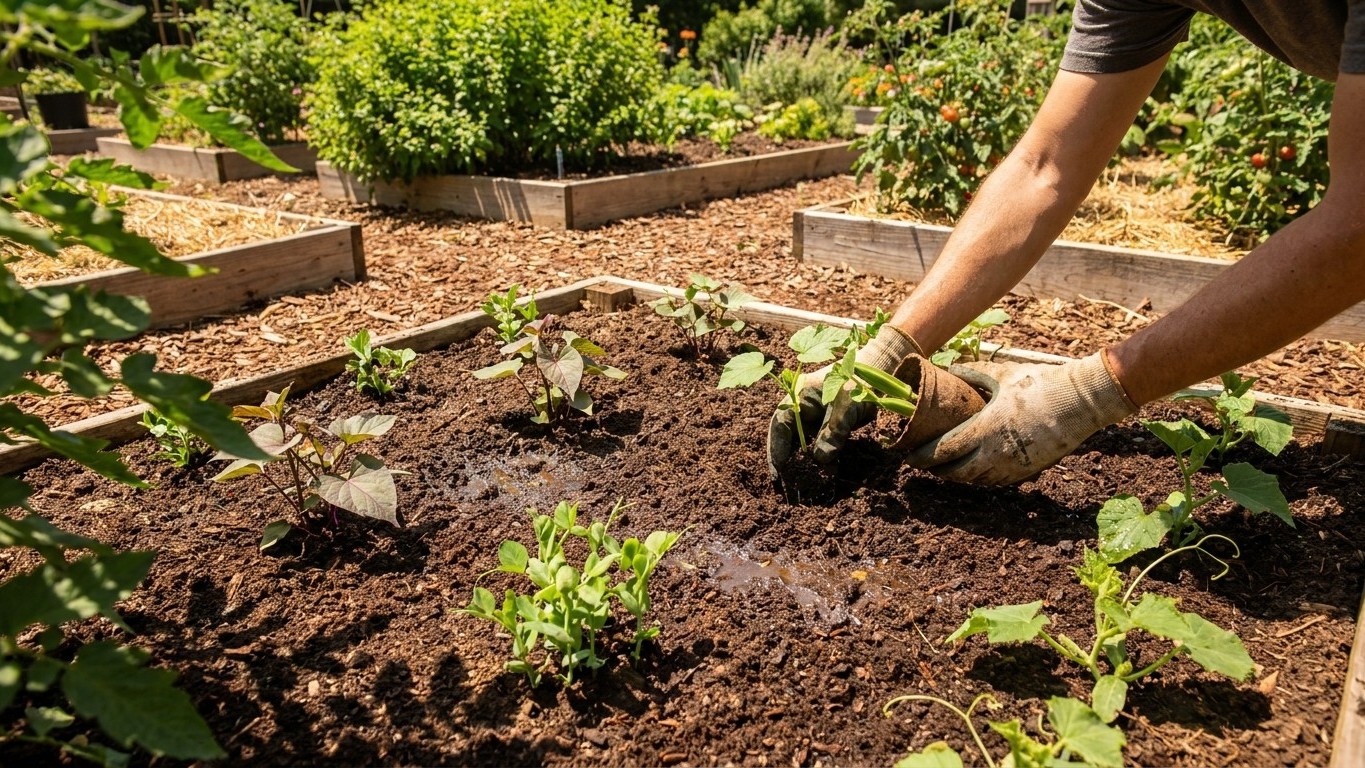

By June, Mississippi gardens have moved well past frost risk and into full heat-season planting. Direct-sow okra, southern peas, sweet potato slips, cucumbers, summer squash, watermelon, and cantaloupe. Set out pepper and eggplant transplants. Skip cool-season crops like lettuce and spinach entirely; they’ll bolt in the heat before they’re worth harvesting. Statewide hardiness runs 7b to 9a on the USDA Plant Hardiness Zone Map, and soil temperatures across the state are already warm enough for anything that likes heat.
What goes in the ground in June

The reference weather station used for state frost data shows a last spring frost window of March 6 to March 22. By June that window is ten to fourteen weeks in the rearview mirror, so frost isn’t the variable that matters anymore. Soil temperature is. Most Mississippi soils are sitting in the 75 to 85 degree range by early June, well above the germination threshold for every heat-loving crop in the garden. That’s the real signal this month, not the calendar page.
Direct-sow okra, southern peas (cowpeas), lima beans, snap beans, cucumbers, summer squash, watermelon, and cantaloupe now. Sweet potato slips go in the ground this month too, and they’ll reward you for it; Mississippi’s long, hot summer is exactly what they need to size up. Early June is also the last realistic window for a sweet corn succession, since pollination struggles once nighttime temperatures climb into the upper 70s and beyond, which happens routinely across the state by midsummer.
Pepper and eggplant transplants can still go in, and in the northern hill counties, where the season runs a bit cooler and later than the Delta or the coast, tomato transplants set in the first week or two of June still have time to produce before extreme heat shuts down fruit set. Further south, that window has mostly closed.
What’s a gamble now: any cool-season leafy crop. Lettuce, spinach, and English peas will bolt or turn bitter fast once daytime highs push past 85 degrees, which is standard weather for a Mississippi June. Don’t plant them expecting a harvest. If you want greens, wait for the fall window and start those seeds under cover later in the summer, as covered below.
What to start under cover
The arithmetic for June seed-starting runs backward from fall frost, not forward from spring. The reference station’s first fall frost window falls between November 7 and November 22. Count back from that date the number of days a crop needs to mature, plus another four to six weeks of transplant age if you’re starting it indoors or under cover first, and you land on a starting date.
Take fall cabbage as an example. It typically needs 60 to 70 days to mature after transplanting, plus four to six weeks as a seedling before it goes in the ground. Add those together and you need transplants ready by mid-August, which means starting seed under cover in late June or very early July, ideally with some shade cloth protection since Mississippi’s June and July heat is brutal on tender brassica seedlings. Broccoli and Brussels sprouts follow a similar timeline.
The two ways this goes wrong are predictable. Start too early, in the depths of June heat with no shade protection, and you get leggy, heat-stressed seedlings that stall out before they ever reach the garden. Start too late, waiting until August out of habit, and you run out of days before that November frost window arrives, especially in the northern counties where fall frost tends to land on the earlier end of the range.
June is also a reasonable month to start a second round of tomato seedlings indoors under cover, aimed at a fall crop, particularly along the coast and in south Mississippi where the growing season stretches long enough to support it.
What is ready to pick
June is one of the more generous harvest months in Mississippi. Garlic and bulb onions planted the previous fall are finishing up now; garlic is ready when most of the leaves have browned and fallen over, and onions signal the same way once their tops flop down on their own. Pull garlic before the wrapper starts splitting, since that affects storage life.
Early tomato varieties are coloring up and ready through the month, alongside summer squash and cucumbers, which should be picked young and often to keep the plants producing. Green beans planted in spring are usually in full swing. New potatoes, the small, thin-skinned ones dug before full maturity, are a June treat in much of the state.
Mississippi’s fruit calendar lines up well with this month too. Blueberries, a genuine home-state crop, ripen through June across most growing regions, and blackberries follow close behind. Early peach varieties in orchards and home plantings are also coming in. If you’ve still got spring cabbage in the ground, get it now; it won’t hold once real summer heat sets in, and it will split or bolt if left too long.
The jobs that matter this month
Mulch is the single highest-value job on the June list. A 2 to 3 inch layer of straw, shredded leaves, or bark around vegetables holds soil moisture and keeps root zones cooler during the hottest stretch of the year, which directly affects fruit set on tomatoes and peppers. Skip it now and you’re fighting blossom drop and cracked fruit for the rest of the summer.
Watering rhythm matters more in June than almost any other month. Deep, infrequent watering, ideally in the early morning, encourages roots to grow down instead of staying shallow, and it reduces the fungal disease pressure that comes with wet foliage sitting overnight. Inconsistent watering, wet one week and bone-dry the next, is the direct cause of blossom-end rot in tomatoes and peppers, which shows up as a soft black spot on the bottom of the fruit.
Stake or cage tomatoes now if you haven’t already; once they sprawl, you’re working around a tangle instead of ahead of one. Keep succession sowing beans and summer squash every two to three weeks through June so the harvest doesn’t hit a wall in midsummer. And scout for pests weekly. Squash vine borer moths are active in Mississippi through June, and once the larvae are inside the stem, the plant is usually done for. Japanese beetles and tomato hornworms also start showing up this month, and catching them early is far easier than dealing with an established infestation.
Side-dress heavy feeders like corn, tomatoes, and squash with nitrogen once they’re established and flowering, not before. Garlic and onions coming out of the ground should be cured in a warm, dry, airy spot for two to three weeks before storage.
What not to do in June
The most common mistake is treating warm weather as permission to plant anything, including crops that are already past their window. Lettuce, spinach, and peas planted now are wasted seed; put them in the ground for a fall crop instead, timed off the November frost window, not the June calendar.
Overdoing nitrogen on tomatoes and peppers is another classic June error. Too much nitrogen at this stage pushes lush green foliage at the expense of flowers and fruit, so you end up with a bushy plant and a thin harvest. Feed for fruiting, not for leaf growth, once plants are established.
Skipping mulch because it feels like an extra step early in the season is a mistake that compounds all summer. Bare soil in a Mississippi June bakes hard, sheds water instead of absorbing it, and heats plant roots to the point of stress. Get it down now rather than after the first heat wave has already done damage.
Watering overhead in the middle of the day is another habit worth breaking. Most of it evaporates before it reaches the roots, and what lands on the foliage in full sun can encourage fungal disease. Water at the base, early in the morning, and you’ll use less water for a better result.
Finally, don’t ignore pest scouting because things look fine on the surface. Squash vine borer damage in particular is invisible until the plant collapses, by which point it’s too late to save it.
Checking this against your own county
These figures are a statewide starting point, not a guarantee for your backyard. Mississippi’s hardiness zones span 7b in the northern hill counties to 9a along the Gulf Coast, and that range alone can shift planting windows by several weeks from one end of the state to the other. Suburban and rural gardens away from the reference weather station also tend to see later spring frosts and earlier fall frosts than the airport data shows, sometimes by one to two weeks.
For county-level guidance, the Mississippi State University Extension Service maintains planting calendars and local recommendations that account for these regional differences far better than a single statewide date range can.
Common questions
Can I still plant tomatoes in Mississippi in June?
In the northern part of the state, early June transplants can still produce before extreme summer heat shuts down fruit set. Further south, the window has typically closed, and it’s better to wait for a fall planting timed off the November frost window.
What vegetables tolerate Mississippi summer heat?
Okra, southern peas, sweet potatoes, cucumbers, summer squash, watermelon, and cantaloupe all handle Mississippi’s June and July heat well and are safe direct-sow choices this month.
When should I harvest garlic in Mississippi?
Garlic planted the previous fall is typically ready in June, once most of the leaves have browned and fallen over. Pull it before the outer wrapper starts splitting to preserve storage quality.
Is it too late to plant sweet corn in June?
Early June is generally the last realistic window for a sweet corn succession in Mississippi, since pollination fails once nighttime temperatures climb too high, which typically happens as summer progresses.