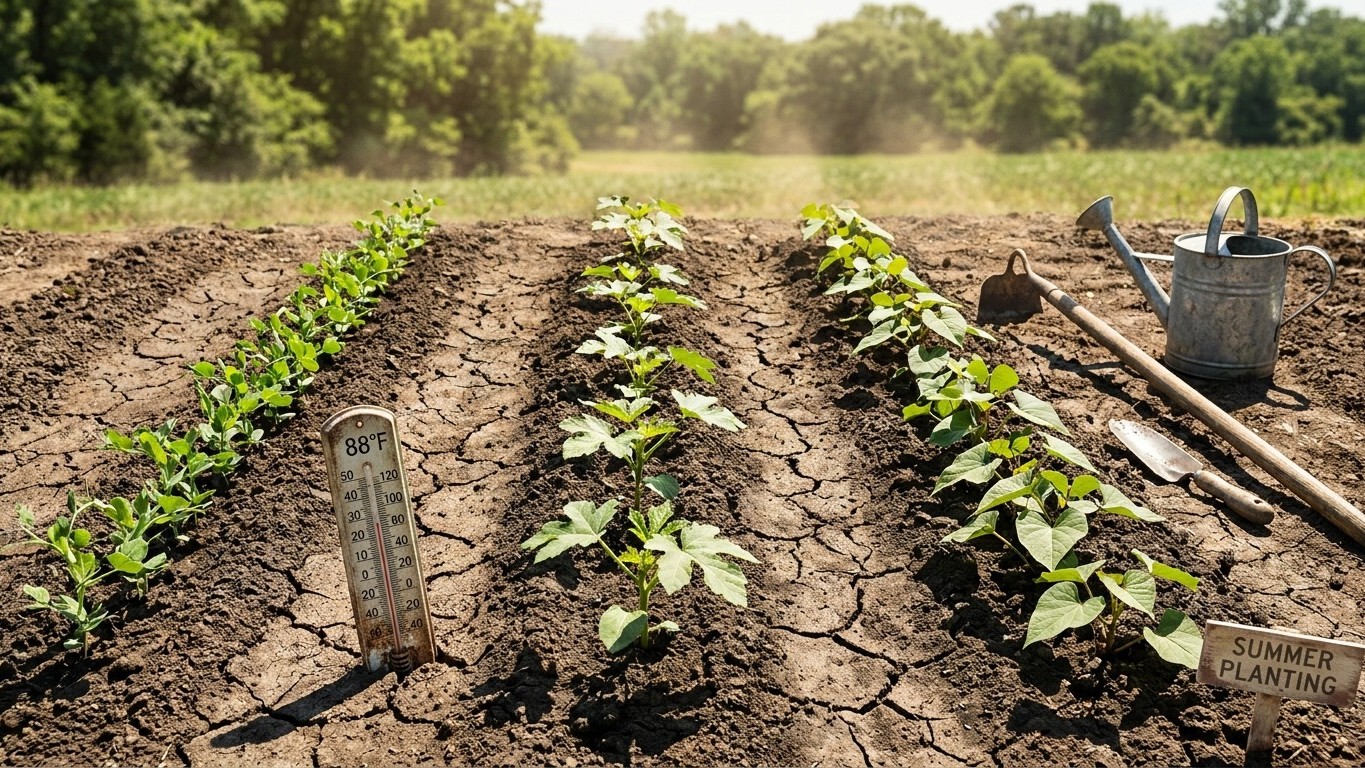

Mississippi in July means one thing for gardeners: the ground is hot, the air is heavier, and the frost dates from March and November are irrelevant to almost every decision you make this month. What goes in now is southern peas, okra, sweet potato slips, and a second round of squash and cucumbers for late summer harvest. Fall crops like broccoli and cabbage start indoors under shade, not in open soil.
What goes in the ground in July

Soil temperature, not the calendar, drives every planting decision in a Mississippi July. By this point soil temps across the state routinely sit in the 80s and low 90s Fahrenheit, months past the last spring frost window of March 6 to March 22. That heat rules out cool-season crops entirely and rewards anything bred to shrug off a Delta afternoon.
Southern peas (blackeye, purplehull, crowder) are the signature July planting. They germinate fast in hot soil and tolerate drought better than almost any other legume grown in home gardens. Okra is the other obvious choice: seed sown directly now will be producing pods within eight weeks, and okra genuinely prefers the heat that stresses tomatoes and beans.
Sweet potato slips still go in through early July in most of the state, giving them enough time to bulk up roots before the first fall frost arrives sometime between November 7 and November 22. A second or third succession of bush beans, summer squash, and cucumbers also makes sense now, since the plants set earlier in spring are winding down and a fresh planting keeps the harvest going into September.
What’s a gamble: new tomato transplants. Blossom drop becomes common once nighttime temperatures stay above roughly 75F, which is the norm across Mississippi in July, so fruit set on newly planted tomatoes is unreliable. Lettuce, spinach, and other tender greens are outright unsafe direct-sown outdoors now; they’ll bolt or fail to germinate in soil this warm. If you want greens this month, they need shade cloth, consistent moisture, and realistic expectations about slow, spotty germination.
What to start under cover
This is the month to start the fall garden, and the arithmetic runs backward from the first fall frost window of November 7 to November 22, not forward from today. Broccoli and cabbage need roughly 70 to 80 days from transplant to harvest, plus another two to three weeks of growing in trays before they’re ready to go in the ground. Counting back from early-to-mid November puts the ideal seed-starting window for these brassicas in late July, started indoors or under heavy shade cloth where the heat won’t fry young seedlings.
Fall tomatoes work the same math. A short-season variety maturing in 60 to 75 days, started from a healthy transplant in late July or very early August, can still ripen fruit before frost risk climbs in November. Starting later than that leaves too little runway; starting much earlier means fighting blossom drop in August heat before the plant even gets established.
The two ways this goes wrong are predictable. Start too early in July’s peak heat without shade and misting, and seedlings stretch into leggy, weak stems that never recover. Start too late, past the first week of August for most fall crops, and the plant runs out of daylight and cool weather before it finishes producing. Both mistakes cost the entire fall harvest, so tracking your own transplant date against the local frost window matters more than following a fixed calendar square.
What is ready to pick
July is one of the fullest harvest months in the Mississippi garden. Tomatoes planted in spring are hitting peak production, and the tell for ripeness is color running from the shoulders down combined with a slight give under gentle thumb pressure, not hardness. Squash and cucumbers need daily checking; both can go from perfect to oversized and seedy within 48 hours in this heat.
Snap beans should be picked while the pods are still slim and snap cleanly, before the seeds inside swell and toughen the walls. Blueberries and early peaches are wrapping up their season across much of the state, and watermelon and cantaloupe are starting to come in, judged by the dried tendril nearest the fruit and, for watermelon, a dull thump rather than a sharp ring.
Sweet corn planted in late spring is reaching harvest for growers who timed it right, marked by tassels browning and kernels that spurt a milky liquid when pierced with a thumbnail. Garlic and onions harvested in late spring should be well into curing by now: check them weekly in a dry, ventilated space and pull any bulb showing soft spots or a sour smell before it spreads to the rest of the batch.
The jobs that matter this month
Water and mulch first
Consistent watering is the single job that determines whether tomatoes and peppers split, blossom-end rot sets in, or fruit sizes up properly. Deep, infrequent watering (soaking the root zone rather than a daily light sprinkle) trains roots downward and helps plants handle the afternoon heat. A three-to-four-inch mulch layer, refreshed now if it’s thinned out, cuts evaporation dramatically and keeps soil temperature from spiking even further.
Scout before it spreads
Squash vine borers, stink bugs, and fall armyworms are all active in Mississippi gardens through July, and catching them early is the difference between losing a few leaves and losing the whole squash patch. Check the base of squash stems for small holes with sawdust-like frass, a sign the vine borer larvae are already inside; row covers on young plants and removing infested vines quickly are the main defenses since there’s no cure once a stem is hollowed out.
Stake, side-dress, and succeed
Tomatoes and pole beans that haven’t been staked or caged yet need it now, before the plants sprawl and fruit starts touching wet soil and rotting. Okra and corn benefit from a light side-dressing of nitrogen at this stage, since both are heavy feeders through their production window. And this is the last real window for succession sowing of bush beans and summer squash if you want a harvest before the fall garden takes over the space.
What not to do in July
The classic mistake is planting a fresh round of tomatoes and expecting normal fruit set. Once nights stay warm, pollen becomes less viable and flowers drop without setting fruit, so new plantings this late are better aimed at a fall crop timed from seed-starting math, not an immediate summer harvest.
Overhead watering in the middle of the day is another common error. Water splashed onto leaves during peak sun encourages fungal disease and does little for root moisture since much of it evaporates before soaking in; early morning watering at the soil level is far more effective.
Heavy nitrogen applications at the wrong moment cause problems too. Feeding tomatoes and peppers a strong dose of nitrogen once they’re already fruiting pushes leafy growth at the expense of flowers and fruit, and that lush new growth is exactly what aphids and other pests target first. Save nitrogen boosts for leafy crops like okra and corn, and switch to a balanced or phosphorus-leaning feed for anything already setting fruit.
Skipping mulch or letting it thin out is a mistake that compounds every other one on this list: without it, soil dries faster, weeds compete harder for water, and root zones swing in temperature enough to stress plants that are already working hard just to survive the heat.
Checking this against your own county
A statewide picture of July in Mississippi is a starting point, not a set of instructions for your own yard. The Gulf Coast, the Delta, and the hill country in the north of the state don’t warm and cool on the same schedule, and even the frost windows cited here come from a single reference weather station, meaning your own garden could run a week or two earlier or later depending on elevation and local terrain. For a planting calendar built specifically for Mississippi conditions and county-level guidance, the Mississippi State University Extension Service is the reliable next stop.
Common questions
Is it too hot to plant tomatoes in Mississippi in July?
For a summer harvest, yes, since blossom drop becomes common once nights stay warm through the month. For a fall harvest, late July is actually the right window to start short-season tomato transplants, counting backward from the first fall frost of November 7 to November 22.
What vegetables tolerate Mississippi’s July heat best?
Okra and southern peas are the two most heat-tolerant staples, both bred for exactly this kind of soil temperature and drought stress. Sweet potatoes and Malabar spinach also handle the heat well when other greens have already bolted or failed.
When should I start fall broccoli and cabbage seeds in Mississippi?
Late July, started indoors or under shade cloth, gives these brassicas the roughly 70 to 80 days they need to mature before frost risk climbs in November, while avoiding direct sun exposure that would stress the seedlings before they’re established.
Why are my squash plants dying suddenly in July?
Squash vine borers are the most likely cause if the stem base shows small holes with sawdust-like debris; once the larvae are inside, the vine typically can’t be saved, so early scouting and row covers on young plants are the main prevention.