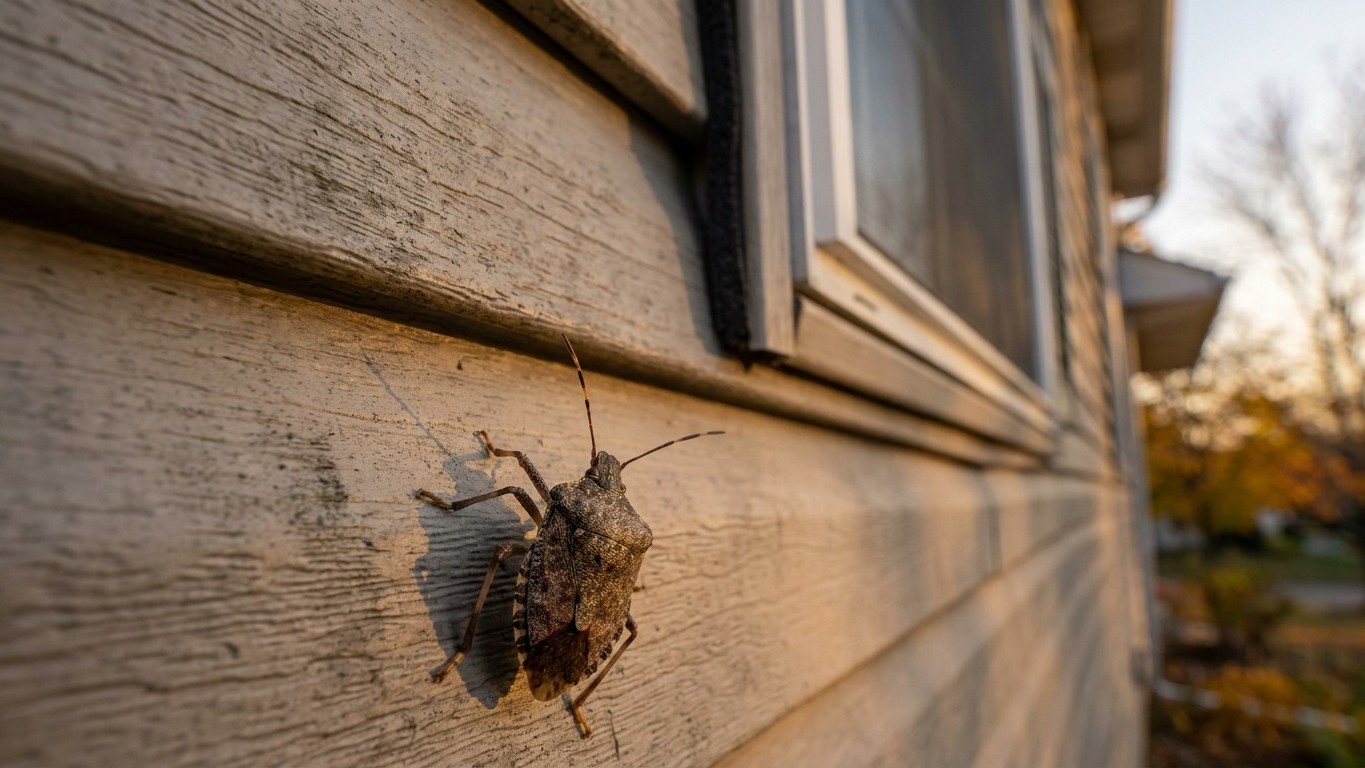

Brown marmorated stink bugs start showing up inside Missouri homes in late September, peak in October as temperatures drop into the 40s and 50s at night, and can linger into early December during warm spells. The fastest way to stop them is sealing entry points before that fall push begins, since once they’re inside walls and attics, removal becomes a much slower process.
When Missouri Sees the Biggest Stink Bug Surges

Timing matters more than most homeowners realize. Brown marmorated stink bugs (Halyomorpha halys) don’t invade randomly. They’re triggered by a specific combination: shortening daylight hours and a sharp overnight temperature drop, usually the first real cold snap after a warm September. In central and eastern Missouri, that window typically falls between September 25 and October 20. St. Louis and Kansas City metro areas, with their dense mix of older housing stock and mature tree cover, tend to see the heaviest activity because these bugs gravitate toward sun-warmed exterior walls, especially south- and west-facing siding, before pushing indoors.
Spring brings a second, smaller wave. As indoor temperatures climb in February and March, bugs that overwintered inside wall voids wake up and wander into living spaces looking for an exit. This is the phase that catches people off guard. They assume the problem ended in December, then find bugs crawling across a windowsill in mid-March. Missouri’s swinging late-winter weather, warm one week, freezing the next, keeps triggering these small emergence events for weeks longer than in states with more stable cold.
Missouri wasn’t an early hotspot. The species arrived in the United States near Allentown, Pennsylvania, in the late 1990s and took roughly a decade to spread west. Confirmed Missouri populations built up through the 2010s, and by the early 2020s the bug had established itself as a recurring seasonal nuisance in most of the state’s population centers, with heavier concentrations in the eastern half near the Illinois border.
Identifying the Bug (and What Gets Mistaken for It)
Adults run about 5/8 inch long, shield-shaped, mottled brown, with alternating light and dark bands on the antennae and along the edge of the abdomen that are visible even without a magnifying glass. That banding is the single best field mark. Plenty of native brown stink bugs live in Missouri too, and they look similar enough at a glance to cause confusion, but they lack the distinct antennae stripes and don’t invade homes in the same aggressive fall numbers.
People also mix them up with western conifer seed bugs, which are longer and narrower with flared hind legs, and with boxelder bugs, which are black and red rather than brown and gray. The confusion matters because control strategies overlap somewhat but not entirely. If you’re treating for boxelder bugs around a silver maple or boxelder tree and the population keeps growing anyway, you might actually be dealing with stink bugs drawn to a nearby fruit tree or garden instead.
The Smell Problem
Crushing one releases a defensive compound that smells sharply of cilantro gone bad, sometimes described as similar to burnt rubber. That odor is the reason vacuuming and physical removal, done carefully, beat swatting every time. A crushed bug on carpet can leave a lingering smell for hours, and the odor also acts as a mild attractant, pulling in more bugs to the same spot.
Why They Target Missouri Homes Specifically
Two things make Missouri houses appealing: age and orientation. Older homes with wood or vinyl lap siding, especially those built before the 1990s, tend to have more gaps around window trim, utility penetrations, and where siding meets the foundation. Newer construction with tighter building envelopes sees noticeably fewer bugs, which lines up with entomology research showing sealed structures are the single strongest deterrent regardless of region.
Sun exposure plays a role too. Bugs cluster on the warmest side of a structure in late afternoon, then work their way toward any crack, gap, or unscreened vent as the sun sets and the surface cools. A house backing up to a wooded lot, a fruit orchard, or even a single ornamental pear tree in the yard will draw noticeably more activity than a house surrounded by open lawn, since these trees serve as feeding and staging sites before the move indoors.
Missouri’s agricultural landscape adds another layer. The bug feeds on more than 100 plant species, but soybeans, corn, apples, and peaches are particular favorites, and Missouri grows all four commercially. Farms near the Missouri and Mississippi River bottoms report periodic crop damage from feeding punctures that cause fruit scarring and soybean pod deformities. That agricultural pressure means rural and semi-rural homeowners near row crops or orchards often deal with heavier fall invasions than someone living in a purely residential subdivision.
What Actually Stops Them: Prevention That Works
Sealing the building envelope beats every chemical option for long-term control, and it’s the approach recommended by university extension entomologists across the Midwest. The bugs need an actual gap to get through, not just a porous surface, so targeting specific entry points delivers far better results than a broad exterior spray.
Priority areas to check and caulk before late September include:
- Gaps around window and door frames, particularly where trim meets siding
- Utility penetrations for cable, gas lines, and outdoor faucets
- Soffit vents and ridge vents lacking fine insect screening
- Cracks where the foundation meets the sill plate
- Chimney flashing and any gaps around roof vents
A tube of exterior-grade silicone caulk and a few hours on a ladder in early September handles most of this for a typical single-family home. Weatherstripping on exterior doors and repairing torn window screens closes two more common gaps that get overlooked because they seem unrelated to pest control.
Once They’re Already Inside
A shop vacuum with a disposable bag works better than a standard vacuum cleaner, since it keeps the smell contained and makes disposal simple, just seal the bag and toss it outside immediately. Some homeowners rig a simple trap using a desk lamp angled over a bowl of soapy water at night, since the bugs are drawn to light and drown quickly once they land in the water. It’s not elegant, but it’s cheap and it works for isolated indoor populations.
Diatomaceous earth applied in wall voids and attic spaces before winter can reduce overwintering survival, since the fine powder damages the bug’s exoskeleton and leads to dehydration over several days. It won’t eliminate an established population overnight, but applied consistently over a season or two, it noticeably thins numbers.
Perimeter insecticide treatments applied by a licensed pest control company in early to mid-September, timed just before the fall migration begins, can reduce the number of bugs that make it inside. Timing is everything here. A treatment applied in November, after bugs have already moved indoors, does almost nothing, since the bulk of the population is already sheltering inside wall cavities where sprays don’t reach.
What Doesn’t Help (and Why)
Bug zappers and sticky traps marketed for general household pests rarely make a dent, since stink bugs aren’t strongly attracted to UV light the way moths or flies are, and their shell shape lets them shrug off standard adhesive traps. Foggers and total-release aerosols inside the home tend to kill bugs already visible in a room but do nothing about the much larger population still hidden in wall voids, so the problem reappears within days.
Pheromone-based commercial traps exist and work reasonably well for agricultural monitoring in orchards and soybean fields, but they’re not designed for residential use and can sometimes attract more bugs toward a structure rather than away from it if placed too close to the house. That’s the opposite of what a homeowner wants.
The Agricultural Side Worth Knowing
Missouri State University and University of Missouri extension entomologists track stink bug populations partly because of the crop damage angle, not just the nuisance factor. Soybean growers in particular watch for feeding damage during pod fill, roughly late July through September, since that’s when the bug’s piercing mouthparts cause the most economic harm by deforming developing seeds. Orchard operators growing apples and peaches deal with a similar problem, cosmetic scarring called “cat-facing” that makes fruit unsellable at retail even though it’s still perfectly edible.
Homeowners with even a small backyard orchard or vegetable garden should know that stink bug damage on tomatoes and peppers looks like small discolored, sunken spots near the surface, distinct from typical insect bite marks. Feeding damage doesn’t spread disease the way some other pests do, but it does reduce marketable yield if you’re growing produce to sell at a farmers market or roadside stand.
The bug’s numbers do fluctuate year to year based on winter severity. A harsh, sustained cold snap in January, especially one that drops well below zero for multiple nights, kills a meaningful share of the population sheltering in less-insulated spots like sheds, garages, and thin-walled outbuildings. A mild Missouri winter, by contrast, tends to produce a noticeably heavier invasion the following fall, which is one reason some years feel far worse than others even without any change in a homeowner’s own prevention habits.
Related guides
- Brown marmorated stink bug in Illinois: When It Shows Up and What Stops It
- Brown marmorated stink bug in Kentucky: When It Shows Up and What Stops It
- Brown marmorated stink bug in Montana: When It Shows Up and What Stops It
- Brown marmorated stink bug in New Hampshire: When It Shows Up and What Stops It
- Brown marmorated stink bug in Maryland: When It Shows Up and What Stops It
- Brown marmorated stink bug in Washington: When It Shows Up and What Stops It