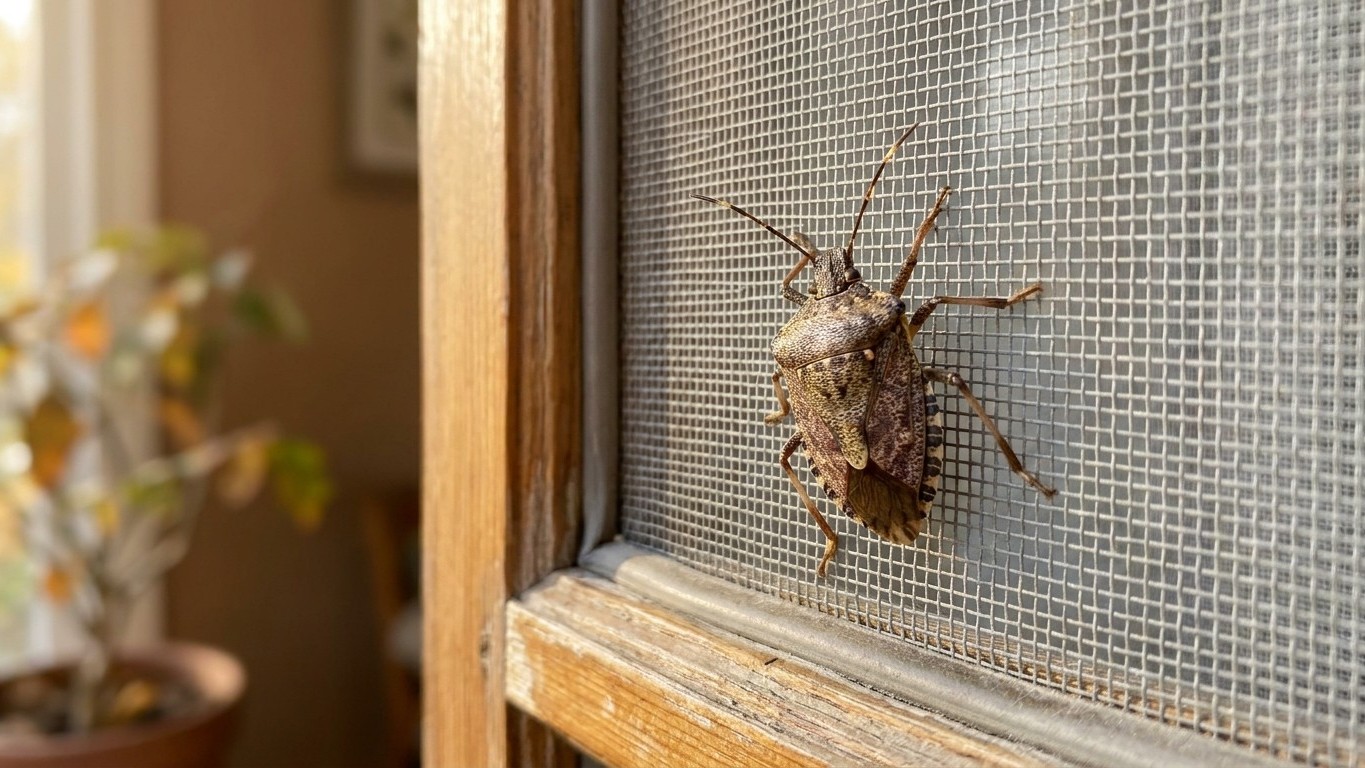

Brown marmorated stink bugs are already living in New Hampshire, mostly in the southern tier along the Massachusetts border and up through the Merrimack Valley. They show up in two distinct waves: a slow buildup outdoors from late spring through summer, and a sudden indoor invasion each fall when temperatures start dropping toward the 50s. Sealing entry points before mid-September and vacuuming (never squashing) any bugs that get inside are the two moves that actually make a dent in the problem.
The weeks to watch

Halyomorpha halys, the scientific name for this shield-shaped invader, hitchhiked into Pennsylvania from Asia in packing material back in 1998. It took roughly two decades to work its way into New England. New Hampshire’s first confirmed populations were reported in Hillsborough and Rockingham counties, the state’s most densely populated and warmest corridor. From there it has crept north along the Interstate 93 corridor, though winter cold still limits how far it spreads compared to states like Maryland or Virginia, where the pest causes serious crop losses.
The tracking site StopBMSB.org, a USDA-funded monitoring network, lists New Hampshire among states with an established, reproducing population rather than just occasional stray sightings. That distinction matters. It means the bug isn’t just blowing in on a truck from New Jersey once in a while, it’s breeding here, overwintering here, and building numbers year over year in the counties where it’s taken hold.
Cooler summers in the White Mountains and the North Country still keep populations low up there. Southern New Hampshire, with its longer growing season and denser housing stock, gives the bug both food and shelter, which is exactly what it needs to thrive.
When It Shows Up: the New Hampshire seasonal timeline
Adults that survived winter tucked into attics, wall voids, or leaf litter emerge as soil temperatures climb past 60 degrees, typically in late April or early May in southern New Hampshire. They spend the next several weeks feeding and mating, favoring tree fruit, garden vegetables, and ornamental trees like maple and catalpa.
A single female can lay a couple hundred eggs across a season, in clusters of about 20 to 30 on the underside of leaves. In warmer parts of the country the bug manages two generations a year. New Hampshire’s shorter growing season usually limits it to one generation, sometimes a partial second in an unusually warm year, which is part of why populations here haven’t exploded the way they have in the mid-Atlantic states.
Late July through September is peak feeding season, when nymphs mature into adults and damage to gardens becomes most visible. Then comes the part homeowners actually notice: as daylight shortens and nighttime temperatures drop into the 50s, usually starting in mid-September and running through late October, the bugs go looking for a place to spend the winter. That search is what brings them to siding, window frames, and eventually the inside of houses. Once temperatures settle into the 30s and 40s for good, the bugs go dormant, sometimes reappearing on unusually warm winter afternoons when they mistake a heated attic for spring.
What triggers the fall invasion specifically
Brown marmorated stink bugs are drawn to sun-warmed surfaces, which is why south and west-facing walls of a house often see the heaviest bug traffic in September. They cluster on light-colored siding, gather near soffits and gable vents, and squeeze through gaps as small as an eighth of an inch. Houses near wooded edges, orchards, or overgrown hedgerows tend to see the worst activity, since those spots double as feeding grounds during summer and staging areas before the move indoors.
How to identify it (and what it’s not)
Adults run about five-eighths of an inch long, roughly the size of a fingernail clipping, with a mottled brown, marble-like pattern across a shield-shaped back. The giveaway feature is a series of alternating light and dark bands along the antennae and the edge of the abdomen, visible from a couple feet away if the light hits right.
New Hampshire homeowners often confuse it with the western conifer seed bug or the native brown stink bug, both of which show up in similar spots in fall. The marmorated version is broader and more rounded than the seed bug, and its marbled coloring is denser and more irregular than the plainer brown of native stink bug species. None of these bugs bite people or spread disease, which separates them from pests like ticks or mosquitoes that New Hampshire residents have more reason to worry about.
What actually stops it
Prevention beats reaction here, and the window to act is narrow: late summer, before the fall migration into homes begins in earnest.
- Seal gaps around window and door frames, utility pipes, and where siding meets the foundation with caulk or expanding foam
- Install or repair screens on attic, soffit, and gable vents, since these are the most common entry points into unfinished spaces
- Replace worn weatherstripping on exterior doors and garage entrances
- Trim tree branches and shrubs that touch the house, since the bugs often walk from foliage directly onto siding
- Check chimney caps and dryer vent covers for gaps large enough to admit an insect roughly the size of a dime
Once bugs are already inside, a vacuum with a disposable bag or a shop vac works better than swatting or crushing. Crushed stink bugs release the defensive odor that gives the species its name, a musty, almost cilantro-like smell that can linger in fabric and carpet. Empty the vacuum canister outside right away rather than leaving trapped bugs to die (and smell) indoors.
Exterior insecticide treatments applied to siding and around entry points in early to mid-September can reduce the number of bugs that make it inside, though the EPA notes that chemical control has limited long-term effect on established populations, since the insects keep migrating in from surrounding vegetation regardless of a single treated house. Pheromone-based traps sold for home use can help monitor activity in a yard, but they’re generally more useful for tracking numbers than eliminating them, since the lures can sometimes draw in more bugs than they catch.
Protecting gardens and fruit trees
For anyone growing tomatoes, peppers, or apples in southern New Hampshire, the bug’s feeding leaves telltale cloudy or sunken spots where it pierces the skin to feed, sometimes called “cat-facing” on fruit. Row covers during peak feeding weeks in late summer offer the most reliable protection for vegetable gardens, since they physically block adults from reaching fruit while it’s forming. Commercial growers in the region have started using perimeter trap crops, planting a preferred host like sunflowers along field edges to draw the bugs away from the main crop, a tactic backyard gardeners can scale down with a few sacrificial plants near the garden border.
What doesn’t work as well as people assume
Bug zappers and sticky traps marketed for general household insects barely register with this species, since stink bugs aren’t strongly attracted to light or common lures. Essential oil sprays, a popular DIY suggestion online, may repel a few individuals temporarily but haven’t held up as a serious control method in university extension trials. The most consistent, boring, effective answer remains physical exclusion: closing the gaps a bug can walk or fly through before the fall push into houses begins.
One detail that surprises a lot of New Hampshire homeowners: unlike ants or termites, brown marmorated stink bugs don’t reproduce indoors during winter. The ones found clustered in an attic in January are the same population that walked in during September, just sitting dormant rather than multiplying, which is why a thorough fall sealing effort tends to pay off for the entire winter rather than needing repeated treatment.
Related guides
- Brown marmorated stink bug in Oregon: When It Shows Up and What Stops It
- Brown marmorated stink bug in Pennsylvania: When It Shows Up and What Stops It
- Squash vine borer in New Hampshire
- Brown marmorated stink bug in Illinois: When It Shows Up and What Stops It
- Brown marmorated stink bug in British Columbia: When It Shows Up and What Stops It