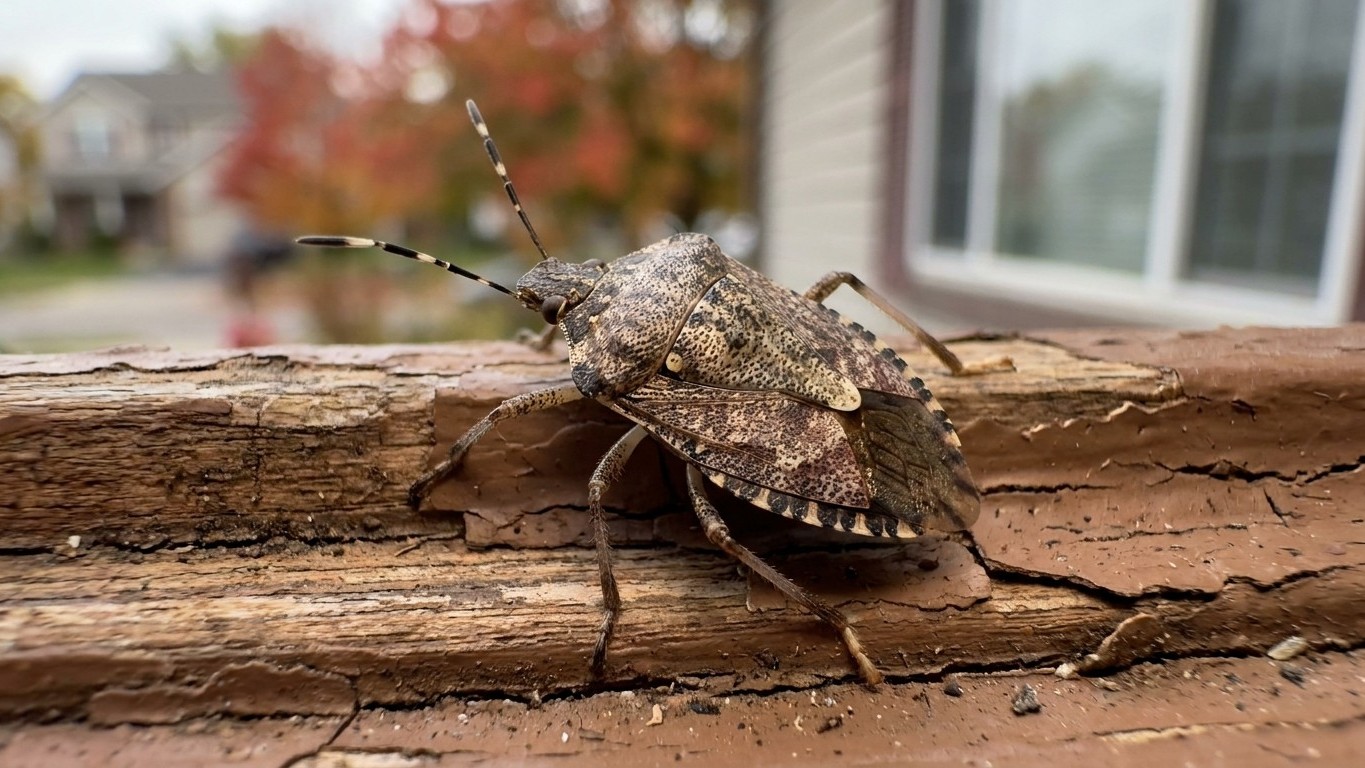

The brown marmorated stink bug (Halyomorpha halys) reaches its peak activity in Illinois twice a year: a spring emergence around late March through April, and a much bigger fall invasion of homes starting in mid-September and running through October as temperatures drop toward the 50s. Sealing cracks, gaps, and utility penetrations before that fall push begins is the single most effective way to keep it out, since the bug doesn’t breed indoors, it just looks for a warm crack to ride out winter.
What the Brown Marmorated Stink Bug Looks Like in Illinois

This isn’t the small green stink bug that’s been hanging around Midwest gardens for decades. The brown marmorated version is bigger, about 5/8 of an inch long, shield-shaped, and mottled in shades of brown and gray. The giveaway is on the antennae and the edge of the abdomen: alternating light and dark bands, almost like a marbled cake. Native stink bugs common in Illinois soybean and vegetable fields don’t have that banding pattern.
The species arrived in the United States from East Asia, first documented in Pennsylvania in the late 1990s, and it reached Illinois roughly fifteen years later, becoming established in the Chicago suburbs before spreading south through the state along transportation corridors. That spread pattern matters, because it means the pest showed up first in Cook and DuPage counties and has been working its way into central Illinois farmland and downstate neighborhoods gradually rather than all at once.
Unlike a lot of insects gardeners worry about, this one has an enormous appetite range. Researchers have documented it feeding on more than 170 different plant species, including apples, peaches, sweet corn, soybeans, tomatoes, and a long list of ornamental trees and shrubs common in Illinois landscaping. That’s a big reason both home gardeners and commercial growers in the state pay attention to it.
When It Shows Up: The Illinois Seasonal Pattern
Timing is everything with this insect, and it follows a fairly predictable calendar across Illinois. Understanding the four phases makes it much easier to know when to act.
Spring Emergence
Adults that spent the winter tucked into attics, wall voids, or leaf litter start moving again once daytime temperatures consistently reach the 60s, usually late March into April in central and northern Illinois. At this stage they’re not looking for shelter anymore, they’re looking for food and mates, so they head back outdoors toward host plants. Homeowners sometimes notice a handful of sluggish bugs crawling across windowsills or ceilings in early spring, which is simply the tail end of the overwintering group waking up before making an exit.
Summer Feeding and Breeding
From late May through August, the bugs are out in fields, orchards, and gardens rather than in houses. Females lay clusters of pale, barrel-shaped eggs on the undersides of leaves, and Illinois summers are warm enough for the state to see one or sometimes two generations per year, fewer than the two-to-three generations reported in warmer mid-Atlantic states. This is also the season when agricultural damage shows up, with stink bug feeding leaving cat-facing scars on fruit or discolored, sunken spots on tomatoes and peppers.
The Fall Invasion
This is the phase Illinois residents actually notice. As nights cool in September and October, adults abandon plants and start searching for overwintering sites, and sunny, south-facing walls of houses act like a magnet. They cluster on siding, work their way through gaps around window frames, utility pipes, and soffits, and end up inside wall cavities, attics, and sometimes living spaces. Pest control operators across northern Illinois routinely field the most stink bug calls in late September and early October, right as the first cool fronts move through.
Winter Dormancy
Once inside, the bugs go into a low-energy state and mostly stay put until warm spells or indoor heating trick them into moving again, sometimes appearing on ceilings or near windows on unseasonably warm January afternoons. They aren’t reproducing during this stretch, and they aren’t damaging structures, but a heavy cluster in an attic can mean hundreds of individuals waiting for spring.
Why Illinois Homes and Farms Are Vulnerable
Older housing stock is part of the story. A lot of Illinois neighborhoods, especially in Cook, DuPage, Will, and Lake counties where the insect got established earliest, have homes built before modern sealing standards, with gaps around old window frames, chimney flashing, and attic vents that give the bugs easy entry points.
Agricultural exposure is the other half. Illinois grows a lot of the crops this insect prefers, corn and soybeans across the state, plus fruit orchards concentrated in the western and southern counties. The U.S. Department of Agriculture has flagged the brown marmorated stink bug as a significant threat to specialty crops nationally, and Illinois growers near orchard regions have reported the kind of fruit scarring associated with heavy feeding pressure in years when populations spike.
Proximity to wooded edges also raises risk. The bug overwinters naturally under bark and in leaf litter as well as in buildings, so properties backing up to woodlots or windbreaks tend to see heavier fall pressure than homes in open subdivisions.
What Actually Stops It
No single tactic eliminates this pest completely once it’s established in an area, but a layered approach cuts the number getting inside by a wide margin.
Sealing the Building Envelope
This is the highest-leverage step, and it’s mostly a matter of basic maintenance rather than anything exotic. Caulk gaps around window and door frames, repair or replace torn window screens, add door sweeps where daylight shows under exterior doors, and seal openings where utility lines, cable, and dryer vents pass through exterior walls. Because the bugs are drawn to warm, sun-exposed surfaces, paying extra attention to south- and west-facing walls pays off. This work needs to happen before the fall migration starts, not after bugs are already clustering on siding, since sealing during an active invasion just traps them in wall voids.
Exterior Perimeter Treatments
Licensed pest control applicators sometimes apply residual insecticide treatments around foundations, window frames, and eaves in early to mid-September, timed to intercept bugs before they find a crack to squeeze through. This approach targets the insects on the outside of the structure rather than after they’ve gotten in, which matters because indoor insecticide use against stink bugs isn’t very effective and can leave a lingering odor when the bugs die and decompose inside a wall.
Dealing With Bugs Already Inside
For bugs that make it past exclusion, a vacuum with a disposable bag works better than crushing them underfoot or with a paper towel. Crushed stink bugs release the defensive odor the species is named for, a smell often described as similar to cilantro or coriander gone sour. Emptying the vacuum bag outside afterward keeps that smell from lingering in the house. Light traps placed near windows can also intercept the bugs drawn to daylight in late winter and early spring, when overwintering adults start stirring.
Biological Control on the Horizon
Longer term, researchers with the U.S. Department of Agriculture and land-grant universities, including work coordinated through the multistate StopBMSB research network, have been studying a tiny parasitic wasp native to Asia, Trissolcus japonicus, sometimes called the samurai wasp, which attacks stink bug eggs and has already turned up establishing itself naturally in several states without being deliberately released. It’s not a tool homeowners can buy or apply, but its spread could gradually reduce wild populations over the coming years, the way biological controls have dented other invasive insect numbers in the past.
Farm and Garden Impact Beyond the House
For anyone growing vegetables or fruit trees in Illinois, monitoring matters more than reacting after damage appears. Sticky traps baited with the pheromone lure specific to this species, sold through agricultural supply retailers, give growers an early warning before feeding damage shows up on fruit. Row covers protect vulnerable vegetable crops like tomatoes and peppers during the peak feeding window in July and August, and removing weedy plant hosts around field edges, some invasive shrubs like tree of heaven are especially attractive to this bug, reduces the number of insects staging near a garden or orchard before they move onto crops.
The U.S. Environmental Protection Agency maintains guidance on safe pest management approaches for stink bugs that emphasizes exclusion and mechanical removal over broad insecticide use around homes, precisely because chemical control has limited effectiveness against an insect that’s mostly hiding rather than actively feeding once it’s indoors.
One detail that surprises a lot of Illinois residents: this species doesn’t bite, sting, or transmit disease, and it doesn’t damage wood, wiring, or insulation the way carpenter ants or termites do. The real cost is agricultural and aesthetic, crop scarring in fields and orchards, and a genuinely unpleasant smell when disturbed indoors, rather than any threat to the structure of a house itself.
Related guides
- Brown marmorated stink bug in Missouri: When It Shows Up and What Stops It
- Brown marmorated stink bug in Kentucky: When It Shows Up and What Stops It
- Brown marmorated stink bug in Indiana: When It Shows Up and What Stops It
- Brown marmorated stink bug in Maryland: When It Shows Up and What Stops It
- Brown marmorated stink bug in Connecticut: When It Shows Up and What Stops It
- Brown marmorated stink bug in Oregon: When It Shows Up and What Stops It