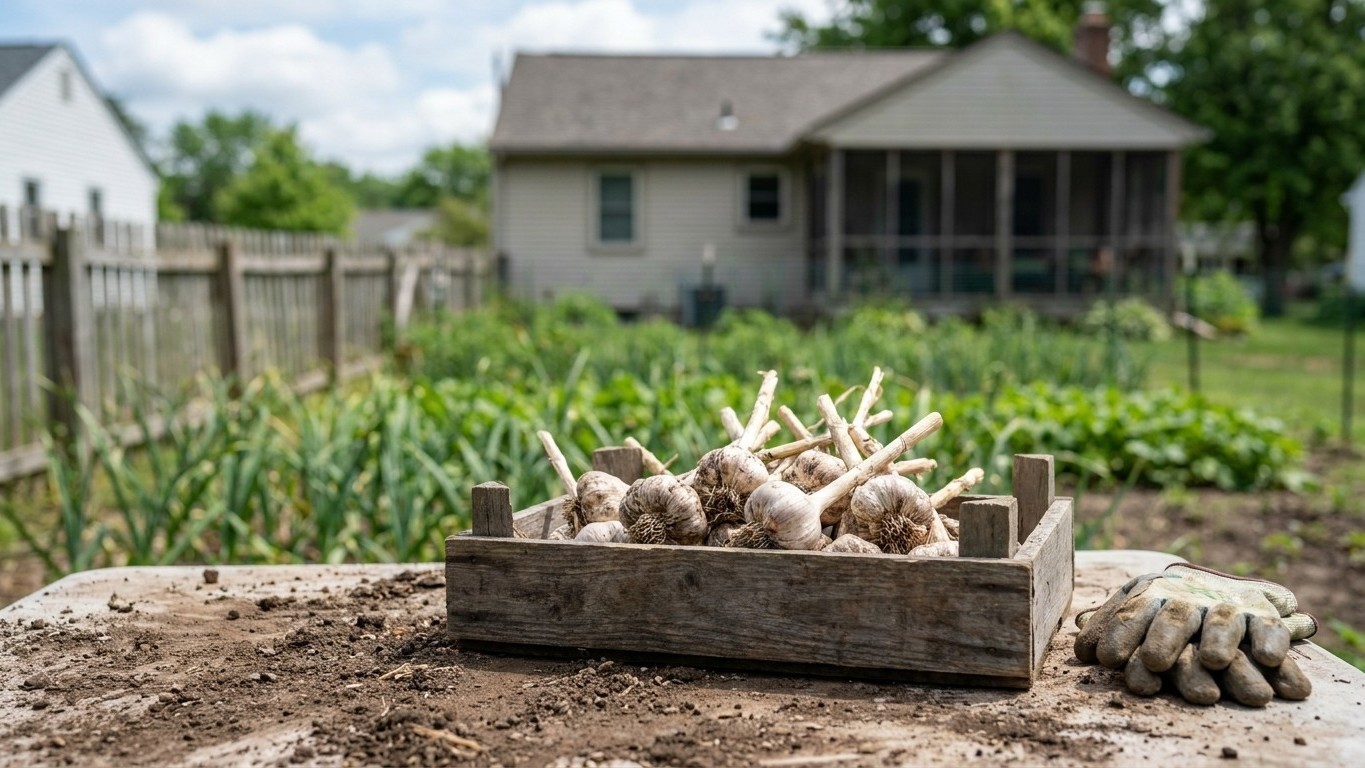

In Nebraska, garlic goes in the ground during autumn and comes out the following summer, once the lower leaves have started dying back. There’s no fixed calendar date for the lift itself. The bulb tells you when it’s ready, not the month. Curing after that takes two to four weeks in a dry, shaded, airy spot before the bulbs are fit for winter storage.
When garlic is ready to lift in Nebraska
The clock that matters for Nebraska garlic actually starts the previous fall, at planting. Growers here typically get cloves into the ground in the weeks before the ground begins to lock up for winter, which means timing planting against the first fall frost. According to NOAA NCEI’s 1991-2020 U.S. Climate Normals for the reference weather station, the first fall frost (32°F) falls somewhere between October 15 and October 26 in a typical year.
That’s a midpoint, not a promise. In one year out of two, the actual frost arrives later than that window, sometimes considerably later. And the number comes from a single airport weather station. Suburban yards and rural gardens away from that station commonly see their first frost show up one to two weeks earlier, more if there’s elevation involved. Check your own county’s typical dates through Nebraska Extension rather than treating the airport figure as a rule for your specific plot.
Reading the plant instead of the calendar
Once garlic has spent the winter in the ground and pushed through spring growth, the harvest signal comes from the foliage. As bulbs mature, the lowest leaves start browning and drying first, then the die-back moves upward. Most Nebraska gardeners pull the crop when somewhere around 40 to 50 percent of the leaves have gone brown, with the upper leaves still holding some green.
Pulling too early means small, underdeveloped cloves with loose wrapper layers that won’t store well. Waiting too long past full die-back risks the wrappers splitting open in the ground, which exposes cloves to soil moisture and rot organisms. If you’re unsure, dig one test bulb from the row and slice it open. Well-formed cloves with tight, distinct wrapper layers mean the rest of the row is ready. Loose, undifferentiated cloves mean give it another week or two.
Curing it, and where to hang it here
Curing is the step between pulling garlic from the soil and putting it away for months. Skip it, or rush it, and bulbs that looked fine in July turn soft and moldy by October. The mechanism is simple: the outer wrapper layers and the neck need to dry down and tighten before the bulb goes into storage, sealing the cloves inside against rot and moisture loss.
Don’t wash the bulbs. Brush off loose soil with a dry hand or soft brush and leave the roots and tops attached. Move the whole plants to a shaded, dry space with good air movement, out of direct sun, which can scald bulbs and cook them from the outside in. A garage, a covered porch, a shed, or a barn all work, provided the air isn’t stagnant. A box fan running on low for part of the day helps considerably in a closed space.
Humidity is the local wrinkle
Nebraska summers bring enough humidity, especially in the eastern part of the state, that curing spaces without airflow can stay damp longer than gardeners expect. That’s the difference between a three-week cure and a five-week cure in a still, muggy shed. Western Nebraska’s drier air tends to move the process along faster. Either way, hang bulbs in loose bunches or lay them on screens or slatted shelves rather than piling them, so air reaches every bulb.
You’ll know curing is finished when the roots are dry and brittle, the neck above the bulb has tightened and dried, and the outer wrappers feel papery rather than fleshy. At that point, trim the roots close and cut the tops down to an inch or two above the bulb (or braid softneck varieties if you prefer), and the crop is ready for storage.
Storing it through a Nebraska winter
Cured garlic wants a cool, dark, moderately dry space with steady airflow. The commonly cited target range for storage temperature is roughly 32°F to 50°F, with humidity kept moderate rather than damp. Above that range, bulbs sprout early. In a wet environment, they rot from the inside before you notice.
Nebraska’s climate makes both ends of that range easy to hit by accident. An unheated garage or shed that’s fine in October can freeze solid by January, and freezing damages stored bulbs. A heated basement, on the other hand, can run warmer and drier than ideal, but it’s often the most stable option available in a house that sees single-digit outdoor temperatures for weeks at a stretch.
Comparing common storage spots
| Location | Typical winter conditions | Main risk |
|---|---|---|
| Unheated garage/shed | Swings widely, can freeze | Freeze damage in deep cold |
| Basement (unfinished) | Cool, stable, moderate humidity | Can be too damp near foundation walls |
| Heated basement/pantry | Warmer, drier, stable | Sprouting if too warm |
| Root cellar (if available) | Cool, stable, humid | Rot if humidity runs too high |
Whichever spot you use, keep bulbs off direct concrete floors, out of sealed plastic bags or airtight containers, and out of the refrigerator. Mesh bags, cardboard boxes with ventilation holes, or open baskets all let air move around the bulbs. Refrigerator storage can trick cloves into thinking winter has passed, pushing early sprouting once they’re brought back to room temperature. Check stored bulbs every few weeks and pull any that have gone soft before they spread rot to their neighbors.
What goes wrong here
Most Nebraska garlic problems trace back to timing rather than disease. Pulling bulbs before enough wrapper layers have formed, curing in a damp or sunny spot, or storing at the wrong temperature account for the bulk of losses reported by home growers. Splitting bulbs, where cloves burst through the wrapper in the ground, usually means the harvest happened a week or two past ideal.
On the pest side, Nebraska Extension documents a set of insects active in home gardens across the state, including Bean leaf beetle, Blister beetles, Cucumber beetles, Grasshoppers, Green June beetle, Imported cabbageworm, Japanese beetle, Squash bug, Squash vine borer, and Tomato hornworm. These are largely pests of neighboring vegetable crops like beans, squash, and tomatoes rather than garlic specifically, but they’re worth knowing if garlic shares bed space or a rotation with those plants, since heavy pressure on one crop can spread through a mixed garden. Garlic itself tends to have fewer documented pest problems in this region than the vegetables often planted alongside it.
Storage rot is the other recurring complaint, and it almost always comes back to moisture. A cure that felt “done” after two weeks in a humid, still garage may not actually be done. Squeeze the neck of a bulb before storing it; if it still feels soft or fleshy rather than dry and firm, give it more time before boxing it up for winter.
Common questions
How long does cured garlic keep in Nebraska storage conditions?
Well-cured bulbs stored cool and dry commonly last several months into winter, though exact shelf life varies by variety and how consistently the storage temperature stays in range.
Can I plant garlic in spring instead of fall in Nebraska?
Garlic in this territory is planted in autumn and lifted the following summer; that fall planting period, timed around the region’s first frost window, is what sets up proper bulb development.
Should I cut garlic scapes before harvest?
This page covers harvest timing and curing rather than scapes or flowering; check with Nebraska Extension for guidance specific to your variety.
Is it normal for garlic leaves to brown unevenly before harvest?
Yes. Die-back typically starts at the bottom of the plant and moves upward, which is exactly the pattern growers watch for when deciding it’s time to lift the crop.