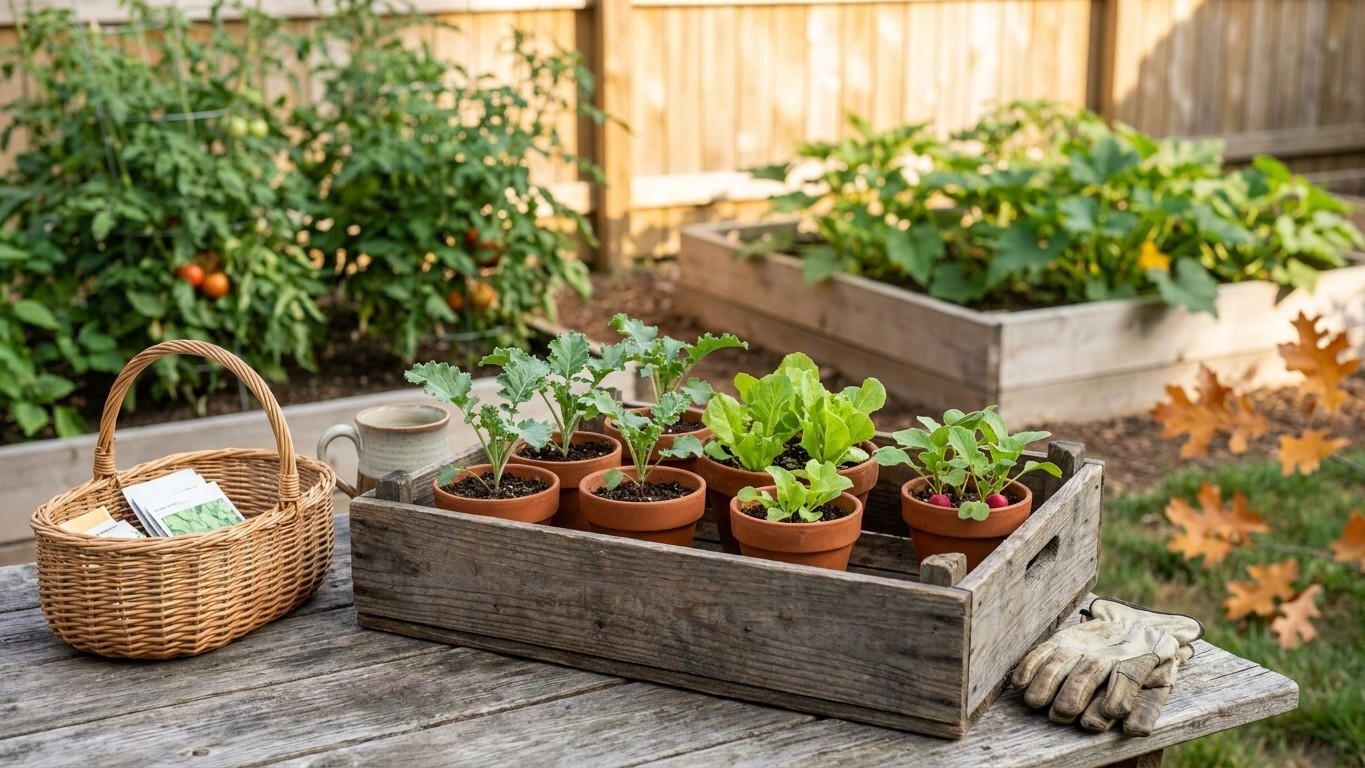

August in Nebraska is a pivot point, not a planting free-for-all. The window for new warm-season crops has closed, but there’s still real time to get fall greens, roots, and a second round of beans into the ground before the first freeze arrives sometime between October 15 and October 26. The trick is counting backward from that date instead of guessing.
What goes in the ground in August

Soil temperature stopped being the limiting factor months ago. By August, Nebraska ground is warm clear through, often too warm for cool-season seed to germinate well in the top inch. The real constraint now is the calendar running out before the first fall frost, which lands anywhere from October 15 to October 26 depending on where you garden relative to the reference weather station used for that estimate. Every seed packet’s “days to maturity” number becomes the thing that decides whether something belongs in the ground this month.
Early August still has room for crops that need 60 to 75 days: beets, carrots sown by the first week, and a last round of bush beans if you get them in before mid-month. Turnips and rutabagas planted in the first half of August have enough runway to size up before frost, and they actually sweeten once cool nights arrive. Bok choy and other quick Asian greens fit almost anywhere in the month.
Late August narrows the list to crops that finish in 30 to 45 days or less: radishes, spinach, arugula, mustard greens, and loose-leaf lettuce all work as direct-sown seed right through the last week of the month. Kale sown now won’t reach full size before hard frost, but the young leaves are perfectly usable, and kale itself tolerates a light freeze without complaint. Cilantro, which bolts in summer heat, often does better sown in late August than it ever did in May.
What doesn’t belong in the ground this month: tomatoes, peppers, sweet corn, melons, and winter squash. None of them have enough season left to reach harvest before frost, no matter how good the soil looks. Transplants of fall broccoli and cabbage started in early summer, though, can still go into the ground in the first half of August if they haven’t already.
What to start under cover
Counting backward from an October 15 to October 26 frost window changes what “starting seeds” means in August. A lettuce or spinach transplant needs roughly three to four weeks in a tray before it’s ready to go into the garden, and then another 40 to 50 days to reach harvest size outdoors. Started as trays indoors in the first two weeks of August, that timeline lands the transplant date in late August or early September, with harvest falling right around or just before the frost window opens, sometimes stretching past it under a row cover.
Started too early, in the thick heat of early August, lettuce and spinach seedlings tend to bolt or stall the moment they’re moved outside into afternoon sun still pushing 90 degrees. The fix is starting trays in a shaded spot or under lights indoors, where temperatures stay moderate, rather than direct-seeding into baking garden soil.
Started too late, in the last week of August, the arithmetic simply doesn’t work. A transplant that needs four weeks indoors plus six weeks outdoors is asking for ten weeks total, and the first fall frost may be as close as seven weeks away by then. That’s the second failure mode: seedlings that never get the chance to size up before cold shuts them down.
The crops worth this indoor head start in August are the ones intended to carry a fall garden under row covers or a cold frame into October: lettuce, spinach, and hardy Asian greens like tatsoi or mizuna. Anything with a longer maturity window, brassica heads like cabbage or cauliflower, needed to be started weeks earlier and isn’t a realistic August indoor project anymore.
What is ready to pick
August is the harvest engine room of the Nebraska garden year. Tomatoes hit full stride, sweet corn comes off in waves, and cucumbers, summer squash, and zucchini need checking every day or two because they go from perfect to oversized almost overnight. Green beans planted back in May and June are producing steadily, and picking them consistently is what keeps the plants setting new pods instead of shutting down.
Melons ripen through the month, and the surest sign is the tendril nearest the fruit’s stem turning brown and dry rather than the color of the rind, which is a much less reliable clue than most gardeners assume. Peppers can be picked green or left to color up to red, orange, or yellow, depending on patience and variety.
Onions and garlic, both planted the prior fall or early spring, finish their curing indoors by now if they were pulled in July, and August is a good month to check that cured bulbs are firm with dry, papery necks before they go into long-term storage. Early potato varieties are often ready to dig once the foliage yellows and dies back, while later varieties keep bulking underground into September.
Brambles, raspberries and blackberries, come in through much of the month on everbearing types, and the fruit should pull free with a gentle tug when fully colored. Early apple varieties in home orchards often start dropping ripe fruit in late August as well, well ahead of the main fall apple harvest.
The jobs that matter this month
Watering rhythm matters more in August than almost any other month, because peak heat combines with plants at peak fruit load. A tomato plant carrying a full crop of green fruit under 95-degree afternoons needs deep, consistent soil moisture, not a light daily sprinkle that only wets the surface. Inconsistent watering right now is the direct cause of blossom end rot and split tomatoes showing up on the counter.
Succession sowing has a real deadline attached to it this month, not next month. Every week that passes narrows the list of fall crops that still have time to mature before the October frost window, so getting beets, carrots, and turnips into the ground in the first half of August, and radishes and greens through the back half, is the difference between a fall harvest and an empty bed.
Pest scouting pays off now because populations peak in August heat. Squash bugs and their egg clusters on the undersides of leaves, Japanese beetles skeletonizing foliage, and corn earworm working down into ripening ears are all easier to manage caught early than after a full-blown infestation. A few minutes walking the rows every couple of days catches most problems before they spread.
Mulching around tomatoes, peppers, and squash keeps soil moisture even and suppresses the weeds that compete hardest for water during a Nebraska August dry spell. Staking and tying sprawling tomato and cucumber vines before they collapse under their own fruit load saves labor later and keeps fruit off the ground, where it rots or draws slugs. And as summer crops finish producing, clearing spent bean and squash plants frees up bed space and sunlight for the fall crops going in behind them.
What not to do in August
The most common mistake this month is planting a warm-season crop because a cool morning made it feel like spring again. A stretch of mild days in mid-August doesn’t change the fact that tomatoes or peppers set out now have no realistic path to a harvest before frost arrives in October. That effort is better spent on fall greens and roots that actually have the days left to finish.
Feeding nitrogen heavily late in the month is another trap, particularly on perennial plantings like fruit trees, brambles, and asparagus beds. A late nitrogen push encourages soft new growth that hasn’t hardened off by the time cold arrives, making it far more vulnerable to frost damage than growth that stopped naturally weeks earlier. Vegetable beds heading into fall crops don’t need it either; established fertility from earlier in the season usually carries greens and roots to harvest just fine.
Letting watering lapse during an August dry spell, especially right as fruit is sizing up, is the other classic error. Uneven moisture during peak heat is what drives blossom end rot in tomatoes and peppers and causes cucumbers and melons to turn bitter. Deep, regular watering, rather than frequent shallow sprinkling, keeps root zones consistently moist through the hottest stretch of the year.
Harvesting onions and garlic too early, before the tops have started to yellow and fall over, or leaving them in the ground too long after that point, both shorten storage life. Either mistake leads to bulbs that soften or sprout in storage well before winter is over.
Checking this against your own county
A single state-wide month is a starting point, not an instruction. Nebraska’s own hardiness range runs from 4a to 5b under the USDA Plant Hardiness Zone Map, and elevation, local terrain, and the difference between the Panhandle and the southeastern corner of the state can shift frost timing by a couple of weeks in either direction from the reference dates cited here. Rural and suburban gardens away from the reference weather station typically see frost arrive a little earlier in fall and linger a little later in spring than the airport figures suggest.
The most reliable next step is checking those local details against the University of Nebraska-Lincoln Extension service at extension.unl.edu, which publishes county-level guidance and planting calendars tailored to Nebraska’s regional differences.
Common questions
Can I still plant tomatoes in Nebraska in August?
Not with any realistic expectation of a harvest. With first fall frost arriving between October 15 and October 26, a newly planted tomato lacks the roughly 60 to 80 days most varieties need to set and ripen fruit.
What vegetables can I direct-sow in Nebraska in late August?
Radishes, spinach, arugula, mustard greens, and loose-leaf lettuce all mature quickly enough, generally 30 to 45 days, to fit into the remaining stretch before frost.
How do I know when melons are ripe in August?
Check the tendril closest to where the fruit attaches to the vine. When it dries and turns brown, the melon is ripe; rind color alone is a less reliable signal.
Should I fertilize fruit trees and brambles in August?
Avoid heavy nitrogen feeding this late. It pushes soft new growth that hasn’t hardened off before frost, making the plant more vulnerable to cold damage than growth that stopped on its own earlier in the season.