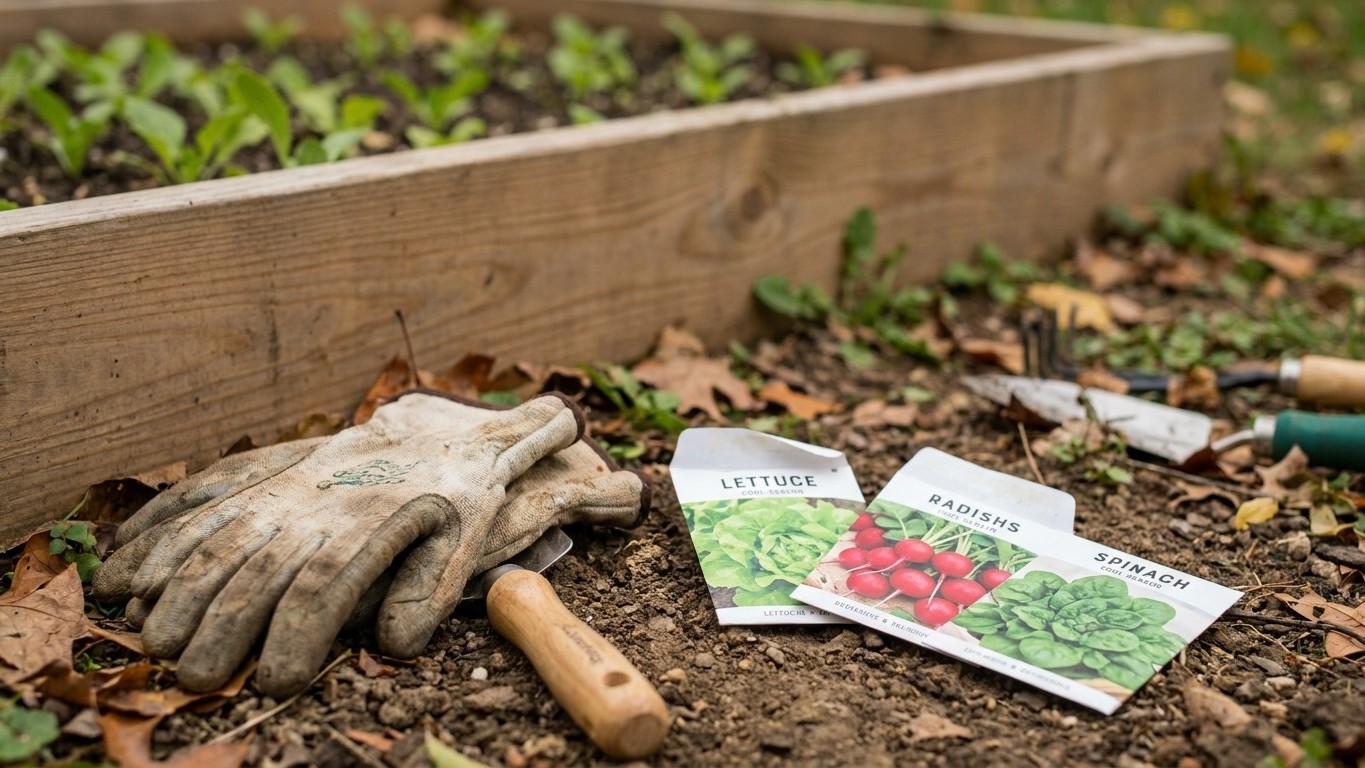

September is a working month in Nebraska gardens, not a wind-down. The safe bets are fast, cool-tolerant crops: spinach, lettuce, radishes, turnips, and mustard greens sown early in the month, garlic prep and cover crops going in later, and fall peas already coming along. What actually fits depends less on the date than on how many weeks stand between now and the first hard frost.
What goes in the ground in September

The number that matters here is the first fall frost window: October 15 to October 26, according to NOAA’s 1991-2020 climate normals for the region’s reference weather station. That gives a garden roughly four to six weeks of open-ground growing time once September starts, which rules out anything slow but leaves plenty of room for crops built for speed.
Radishes are the easiest call. Most varieties finish in 25 to 30 days, so a sowing made anytime in the first three weeks of September still has a comfortable margin before the earliest frost date arrives. Spinach and leaf lettuce run closer to 40 to 50 days to a usable harvest, which means the safest window for those is the first half of the month rather than the back half. Arugula and mustard greens sit in between, ready in about 30 to 40 days, and both tolerate a light frost anyway, so they’re forgiving if the sowing slips a week.
| Crop | Typical days to maturity | September fit |
|---|---|---|
| Radish | 25-30 | Sow through mid-month, still safe |
| Arugula, mustard greens | 30-40 | Sow early to mid-month |
| Spinach, leaf lettuce | 40-50 | Sow first half of month for best odds |
| Turnips (greens or small roots) | 50-60 | Sow only in the first week; a gamble after that |
Garlic and shallots follow a different clock entirely. Nebraska gardeners typically hold off on planting cloves until soil temperatures cool further, usually late in fall, so September is the month to order bulbs and prep the bed rather than plant. Turning under spent bean and pea vines, working compost into beds that will hold garlic later, and starting a cover crop of winter rye or oats on any ground going empty are all legitimate September plantings even when the crop itself isn’t a vegetable. Cover crop seed doesn’t care about the frost window the way vegetables do; it’s bred to establish in cool soil and survive winter dormant.
What to start under cover
Counting backward from the first fall frost window works better than counting forward from a calendar date. If the ground typically freezes hard sometime after October 15, and a crop needs three to four weeks of protected growth before it can handle a cold frame or low tunnel, the seed-starting window sits in the first two weeks of September, not later.
Spinach and mache (corn salad) are the classic candidates for this treatment. Started indoors or in a shaded seed tray early in the month, they’re ready to move into a cold frame or under a low tunnel by early October, right as the tunnel starts earning its keep against the season’s first light frosts. Both crops can then keep producing well past the point when open beds have shut down, since a cold frame typically buys a grower several extra weeks on either end of the season.
The two ways this goes wrong are predictable. Start too early, say in late August when it’s still warm, and the seedlings stretch and get rootbound in their trays before the tunnel is even worth using, wasting the head start. Start too late, into the back half of September, and there isn’t enough daylight or warmth left for the seedlings to size up before growth slows to a crawl. A grower short on time is usually better off buying started spinach or lettuce plugs at that point rather than gambling on seed.
Herbs for indoor kitchen use, like parsley, chives, and cilantro, are a lower-stakes option this month. They don’t need to hit a frost deadline the way a cold-frame crop does, so timing is more about kitchen convenience than climate math.
What is ready to pick
September is the month the garden pays back the summer’s work. Tomatoes are usually at their peak, and the reliable test is color and a slight give when squeezed, not size. Peppers, both sweet and hot, can be picked green or left to color fully; leaving them longer concentrates flavor but also increases the odds a frost catches the crop before it’s harvested.
Sweet corn signals readiness with dry, brown tassels and ears that feel full when pressed, and it doesn’t hold on the stalk long once ripe, so daily checks matter more here than with almost any other crop. Winter squash and pumpkins are the opposite story: they want to stay on the vine until the rind resists a fingernail scratch, and a light frost on the vines themselves doesn’t hurt the fruit as long as it’s harvested before a hard freeze.
Beans, cucumbers, and summer squash are still producing for most of the month in a typical year, and picking them regularly is what keeps the plants setting new fruit instead of shutting down. Apples and grapes on established plantings are also coming in, with ripeness judged by taste and how easily the fruit separates from the stem rather than by the calendar.
Potatoes and onions planted earlier in the season are usually ready to lift once their tops have died back, and both need a few days of curing in a dry, airy spot before they go into storage.
The jobs that matter this month
Watering rhythm changes as temperatures drop, and that’s easy to miss. Plants need less water per week in September than they did in July, but a dry spell combined with cooling nights can still stress shallow-rooted fall greens, so the fix is checking soil moisture by hand rather than sticking to a July watering schedule out of habit.
Succession sowing still pays off in the first half of the month for the fast crops listed above, but the payoff window closes fast, so this is not a job to leave for October. Staking and supporting late-season tomatoes and tall brassicas matters too, since heavy fruit loads combined with fall wind and rain can snap unsupported stems just as the harvest is at its heaviest.
Pest scouting shifts focus this month. Squash vine borer damage shows up as sudden wilting on otherwise healthy vines, and cabbage worms tend to spike on fall brassicas just as they’re sizing up, so a quick check under leaves every few days catches problems before they spread.
Behind the scenes, September is also planning season. Testing soil before the ground gets too cold to amend it makes the results useful for spring planning rather than a formality. Turning compost piles one more time before they slow down for winter, cleaning and sharpening tools before they sit unused, and repairing raised beds or fencing while the weather still allows outdoor work are all jobs that cost far more time if they slip into a wet, cold month.
Checking stored crops from earlier harvests, like the first cured onions and potatoes, for soft spots or sprouting catches losses early, before one bad specimen spreads rot to its neighbors in storage.
What not to do in September
The most common mistake is treating a warm afternoon as permission to plant something that needed the whole summer to mature. A patch of 80-degree days in early September doesn’t change the fact that the first frost is likely within four to six weeks; tomatoes, peppers, and squash started from seed now simply won’t have time to produce before the season ends.
Feeding high-nitrogen fertilizer late in the month is another trap. Nitrogen pushes soft, leafy growth, and that new growth is exactly what a light frost damages first. Crops that are going to overwinter or push through into a cold frame are better served by a low-nitrogen or balanced feed earlier in the month, giving them time to harden off before growth slows naturally.
Uncovering cold frames or row covers too eagerly after a stretch of mild weather is a quieter mistake, but it costs just as much. A five-day warm spell in late September doesn’t mean the risk of frost has passed; it means the next cold night will hit uncovered seedlings that had no chance to adjust.
Letting spent squash and cucumber vines sit in the bed rather than pulling them promptly is also worth avoiding, since decaying vines are where several fungal diseases and overwintering pests get their start for the following season.
Checking this against your own county
A state-wide month is a starting point, not an instruction. Nebraska spans USDA hardiness zones 4a to 5b, and elevation, local terrain, and the difference between the far north and the southern parts of the state can shift a frost window by a couple of weeks in either direction. The dates above come from one reference weather station; a rural or elevated garden nearby often sees frost arrive earlier in fall and later in spring than that station records.
For a planting calendar built specifically for local conditions, the University of Nebraska-Lincoln Extension is the most reliable next stop.
Common questions
Is it too late to plant a vegetable garden in September in Nebraska?
Not for fast crops. Radishes, arugula, and mustard greens sown early in the month still have time to mature before the first fall frost window of October 15 to October 26. Slower crops like tomatoes or squash started from seed now will not.
Can garlic go in the ground in September in Nebraska?
September is better used to order bulbs and prep the bed than to plant. Garlic cloves are typically planted later in fall once soil temperatures drop further, giving roots time to establish without pushing top growth that frost would damage.
What crops keep producing through September in Nebraska?
Tomatoes, peppers, beans, cucumbers, and summer squash usually keep going for most of the month in a typical year, along with sweet corn and early apples. Regular picking keeps beans, cucumbers, and summer squash setting new fruit.
Should I cover my plants if frost is forecast in September?
A light frost this early in the window often damages only the most tender crops, but a row cover or low tunnel protects fall greens and any lingering warm-season plants without the risk of shocking them by covering and uncovering too aggressively on mild days in between.
Gardeners who plant by the Moon can check the September 2027 moon planting calendar, a tradition rather than a proven method.