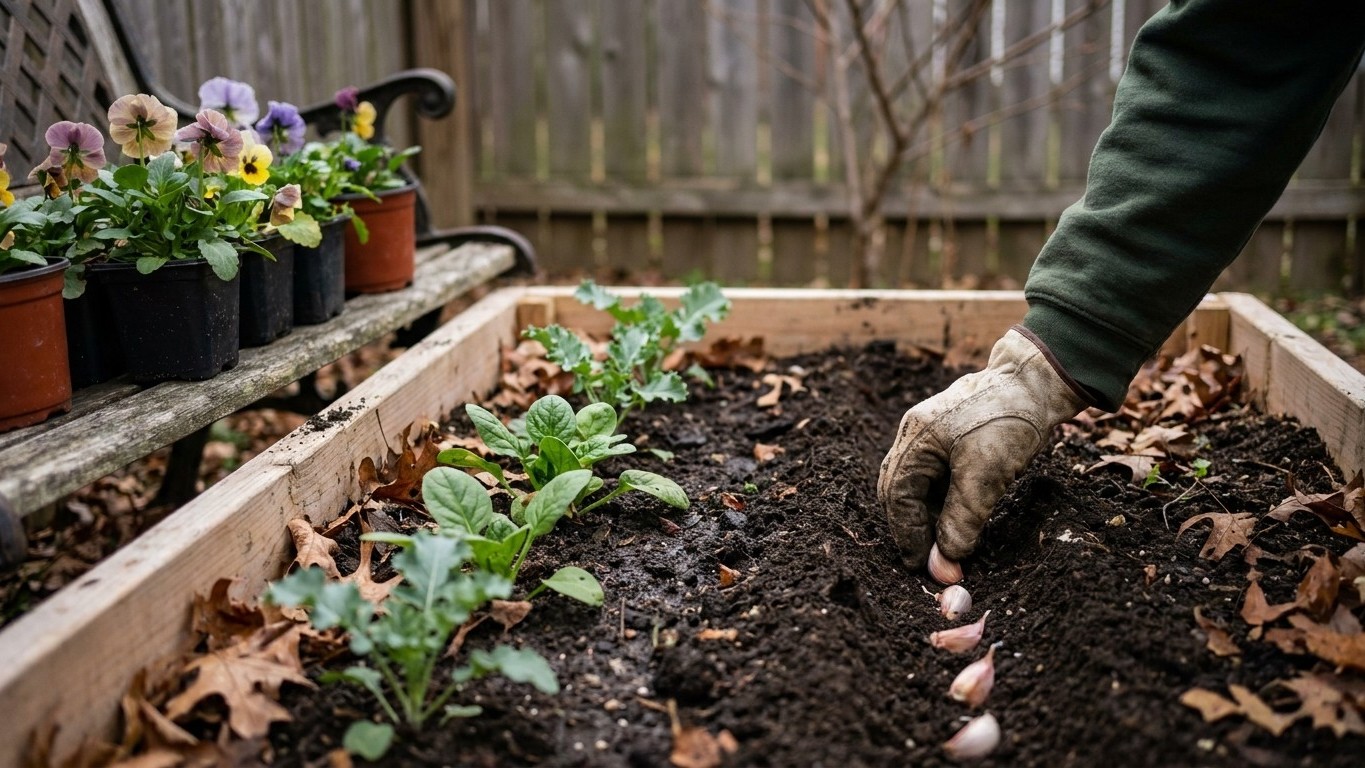

The short answer: October in Nebraska is garlic month, bulb month, and bare-root planting month, not a month for sowing vegetables outdoors. With the first fall frost landing somewhere between October 15 and October 26 across the state, most gardens are closing down rather than opening up. What still goes in the ground is narrow but worthwhile: hardy alliums, spring-flowering bulbs, and dormant woody plants that need the next six months underground before they wake up.
What goes in the ground in October

The number that matters this month isn’t the calendar date, it’s soil temperature, and by extension the freeze line that NOAA NCEI’s 1991-2020 climate normals put between October 15 and October 26 for a first 32°F frost. Early in the month, soil is usually still workable and warm enough at planting depth for anything that needs to root before winter but doesn’t need to grow top-side. Once that frost window arrives, the door closes fast.
Garlic and shallots are the classic October crop here. Push cloves 2 inches deep, pointy end up, four to six weeks before the ground locks up solid, which puts most of Nebraska squarely in the early-to-mid-October planting window. They’ll send down roots through fall, sit dormant under mulch through winter, and push green shoots as soon as the soil thaws.
Spring-flowering bulbs, tulips, daffodils, crocus, and alliums, want soil that has cooled but not frozen, typically once nighttime lows settle into the 40s. That’s exactly what October delivers in a USDA zone 4a-5b state. Plant them at the depth listed on the bag (usually three times the bulb’s height) and they’ll spend winter building roots for a spring show.
Fall is also prime time for bare-root and dormant-stock trees, shrubs, and perennials. Roots keep growing even after leaves drop, as long as soil stays above roughly 40°F, which gives fall-planted stock a head start over anything planted the following spring. Cover crops like winter rye or hairy vetch can still be broadcast in early October to hold soil and add organic matter over winter.
What doesn’t belong in this list: any warm-season vegetable, and honestly most direct-sown vegetables at all. With a fall frost arriving somewhere in the back half of the month, there isn’t enough season left to mature a crop from seed outdoors. A cold frame or low tunnel can buy a few extra weeks for spinach or mâche, but that’s a stretch, not a rule.
What to start under cover
“Starting under cover” in October means two different things, and confusing them wastes both time and windowsill space. The first is bulb forcing for indoor winter bloom: paperwhite narcissus and amaryllis are potted now and counted forward, not backward, from a desired bloom date. Paperwhites typically flower within four to six weeks of potting, amaryllis within six to eight, so working backward from a target date tells you when to start rather than a fixed calendar day.
The second is moving fast-growing greens into protected space before the season closes entirely. Lettuce, spinach, and mustard greens started indoors now, then transplanted under a cold frame or low tunnel within two to three weeks, can still size up before light levels drop too far to support real growth. The math runs backward from the frost window: count back roughly three to four weeks from the October 15-26 freeze date, and that’s the last realistic window to get transplants into protected soil with any growing time left.
Both jobs fail in the same two ways. Start bulbs too early and they finish blooming weeks before you wanted color in the house. Start greens too late, past that three-to-four-week runway, and they sit stunted under cover without enough daylight to bulk up, wasting the tray space and the seed. The fix in both cases is the same: work backward from the date that actually matters, whether that’s a holiday centerpiece or the county’s typical first freeze, rather than starting on a fixed day out of habit.
What is ready to pick
October is a harvest-and-race month more than a growing month. Winter squash, pumpkins, and dry beans should already be off the vine or close to it, since a hard freeze turns squash flesh soft and ruins storage life. Potatoes keep better dug before the ground freezes; cure them in a cool, dark spot for a week or two before moving them to long-term storage.
Late brassicas actually improve with a light frost. Kale, Brussels sprouts, collards, and parsnips convert starches to sugars when temperatures dip, so a touch of cold before harvest makes them sweeter, not worse. Carrots and beets left in the ground through the early frost window can be mulched heavily and pulled as needed, which works as a low-effort form of storage.
Tomatoes and peppers still hanging on when frost is forecast should come off the plant green rather than be left to freeze. Green tomatoes wrapped individually in newspaper and stored in a cool, dark spot will ripen slowly over weeks. Any tree fruit still on the branch, apples especially, should be picked before a hard freeze softens the flesh.
For stored crops from earlier in the season, October is a good month to check onions, garlic, winter squash, and potatoes for soft spots or sprouting. Pull anything showing rot before it spreads to the rest of the batch, and use up crops that are starting to turn rather than let them go to waste in storage.
The jobs that matter this month
October’s real work is protection and cleanup, and skipping it costs more in spring than it saves now. Drain and disconnect garden hoses and outdoor irrigation lines before the first hard freeze; water left in the line can crack fittings and split hose walls, a repair that’s entirely avoidable with five minutes of effort.
Cleanup and protection
Clear out spent annual and vegetable debris, especially anything that showed disease or heavy pest pressure over the season. Leaving diseased leaves in the bed over winter gives fungal spores and overwintering insects a head start next year. Healthy plant material can go straight to the compost pile; diseased material should be bagged and trashed instead.
Mulch perennials, strawberries, and newly planted garlic or bulbs with 2 to 4 inches of straw or shredded leaves once the ground has cooled but before it freezes solid. The goal isn’t to keep the soil warm, it’s to keep temperature swings from heaving roots out of the ground during freeze-thaw cycles later in winter. Wrap the trunks of young trees, especially thin-barked species like maple and fruit trees, to guard against sunscald and rodent gnawing over winter.
Planning ahead
October is also when spring bulb orders and garlic seed stock sell out fastest, so placing orders now, alongside the planting, secures next year’s varieties before catalogs run thin. It’s a reasonable time to pull a soil sample and send it in for testing, since amendments like lime or sulfur need months to adjust pH before spring planting. Turn the compost pile one more time before cold weather slows the microbes down, and give tools a cleaning and a sharpening before they go into winter storage.
What not to do in October
The most common mistake is trusting a warm afternoon over the calendar. A run of 70-degree days in early October doesn’t mean the frost window has moved; it means the ground is warm and the air is deceiving. Tender crops left uncovered on the assumption that “it still feels like summer” are usually the ones lost to a sudden overnight freeze once the October 15-26 window arrives.
Fertilizing lawns or perennials with a high-nitrogen feed this late pushes soft new growth right when the plant should be shutting down for winter. That tender growth is the first thing frost kills, and it weakens the plant going into cold weather rather than strengthening it. If a fall feeding is planned at all, it should lean toward phosphorus and potassium for root development, not nitrogen for top growth.
Pruning trees and shrubs now, outside of removing dead or damaged wood, is another timing error. Fresh pruning cuts stimulate a flush of new growth in some species, and that growth has no time to harden off before winter. Structural pruning is better saved for full dormancy in late winter, when the plant has no incentive to respond with new shoots.
Planting spring bulbs too early, while soil is still warm from summer, can trigger premature top growth that gets damaged by the first freeze. Wait until nights are consistently cool before bulbs go in, even if that means planting later in the month than the bag’s suggested date.
Checking this against your own county
A statewide frost window is a starting point, not a guarantee. Nebraska’s hardiness range, USDA zone 4a-5b, spans everything from the higher, colder Panhandle to the milder river valleys along the Missouri and Platte, and elevation alone can shift a frost date by a week or two in either direction. The October 15-26 figure above comes from one reference weather station, and NOAA NCEI notes that suburban and rural gardens often see frost arrive earlier than an airport station records, sometimes by a week or more.
Before locking in a planting date, check current conditions and local guidance through the University of Nebraska-Lincoln Extension, which tracks county-level frost data and season-specific advice across the state.
Common questions
Is it too late to plant garlic in Nebraska in October?
Not in most years. Garlic wants to go in four to six weeks before the ground freezes solid, which lines up with early-to-mid October across most of the state. Cloves planted right up against the first frost window can still root before hard freeze, especially with a mulch layer on top.
Can I still start a vegetable garden from seed outdoors this month?
Realistically, no. With a first fall frost landing between October 15 and October 26, there isn’t enough frost-free growing time left for most vegetable seeds to mature outdoors. A cold frame or low tunnel can stretch the season slightly for fast greens, but direct-sowing without protection is a gamble that usually doesn’t pay off.
Should I fertilize my lawn or garden beds in October?
Skip high-nitrogen fertilizer this late, since it pushes soft growth that frost damages quickly. If any feeding is done, a phosphorus- and potassium-leaning formula supports root development instead of top growth, which is what the plant actually needs heading into winter.
When should spring bulbs go in the ground?
Once nighttime temperatures have settled into the 40s and soil has cooled from summer highs, which for most of Nebraska falls within October. Planting too early, while soil is still warm, can trigger premature top growth that gets damaged by the first hard freeze.
Gardeners who plant by the Moon can check the October 2026 moon planting calendar, a tradition rather than a proven method.
Related guides
- What to Plant in Nebraska in June
- What to Plant in Nebraska in February
- What to Plant in Nebraska in July
- the Nebraska planting calendar
- What to Plant in Nebraska in September
- What to Plant in Nebraska in November
Elsewhere? See what to plant in October in every state and province.