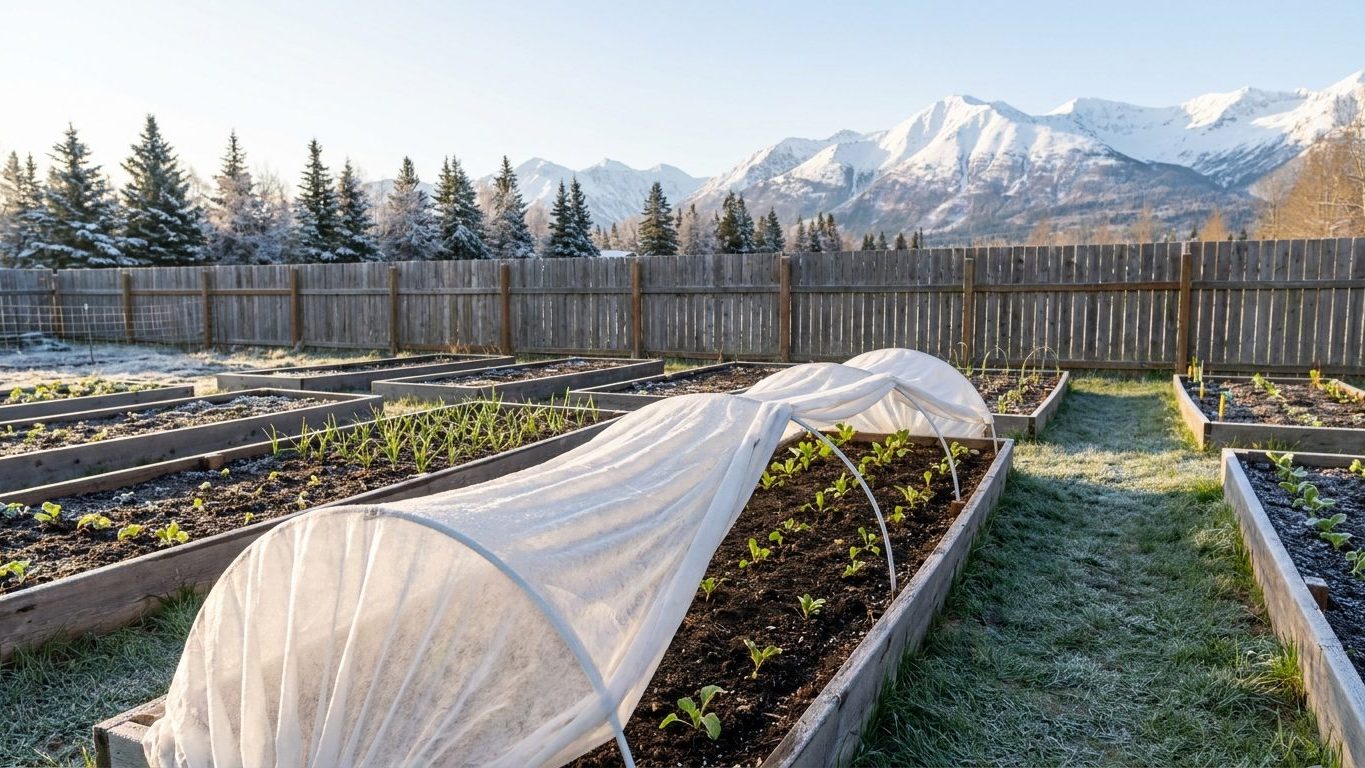

Cover tender plants, such as tomatoes, peppers, squash and beans, on any night the forecast low comes within a few degrees of 32°F, especially when the sky is clear and the wind is calm. Hardy greens can wait until the mid-20s. In Nebraska that call comes up most often from mid-April into early May and again from early October on. The calendar tells you when to start watching, and the forecast tells you when to cover.
The short answer for Nebraska
Keep a cover within reach from mid-April through the first week of May, then again from early October until nights stay below freezing for good. At the Omaha reference station, the last spring freeze at 32°F falls between April 12 and April 23, and the first fall freeze between October 15 and October 26. Those come from the NOAA 1991-2020 U.S. Climate Normals.
Each date is a probability of a 32°F freeze. By April 12, the odds that another freeze is still ahead have dropped to about 70 percent. By April 23 they are down to about 30 percent, so roughly three springs in ten still bring a freeze after the later date. In fall, the first freeze has arrived in about three years in ten by October 15 and in about seven in ten by October 26.
Those are airport numbers. Suburban and rural gardens usually see the last spring frost later and the first fall frost earlier, often by one to two weeks. A garden outside the city can have a spring watch that runs into early May and a fall watch that starts around October 1. Higher ground adds more.
How do you decide whether to cover on a given night?
Look at the sky and the wind as well as the forecast low. On a clear, still night the ground sheds its heat upward, and the air at plant height can run colder than the forecast. A cloudy or breezy night holds warmth much better, so a 35°F forecast under overcast skies is a lesser threat than the same number under stars.
Put the cover on in late afternoon, while the soil is still giving off the day’s heat. Let the fabric reach the ground and weight the edges so the warmth stays trapped. Take it off the next morning once the air is above freezing. A lightweight row cover typically buys a few degrees, and heavier fabric buys a few more. That is enough for a light frost but not for a deep freeze. The overview of extending the growing season in Nebraska covers how those gains add up over a whole season.
What will not work here
Planting tender crops on the average last-frost date with no cover on hand is the most common failure. The April 23 end of the band still leaves about three chances in ten of a 32°F freeze after it. Spring in the plains swings hard, with a run of 70°F afternoons followed by a clear night near freezing. Gardeners who set out tomatoes and peppers after one warm week are the ones scrambling with buckets and bedsheets in early May.
A single thin cover will not save plants from a hard freeze either. Late October can bring nights well into the 20s, and light fabric that handles 31°F will not handle that. When a deep freeze is forecast and the crop is tender, harvest what you can. Green tomatoes can ripen indoors. A heavy-duty cover might save the plants, but a cold snap that deep rarely repays the effort in late October.
Winter is beyond any extender for warm-season crops. At the Omaha station, the average nightly low in the coldest month is 15.2°F. Tomatoes, peppers and squash are finished long before that. Spinach, kale and similar hardy greens can hold under a tunnel or in a cold frame, but they mostly sit rather than grow through the darkest weeks. Extenders buy a few weeks at each end of the season. They do not buy a winter harvest of summer crops.
Two more mistakes come from open ground and sunny skies. Loose covers on open land get shredded or blown away by wind, so anchor every edge with soil, boards or sandbags. Sealed clear plastic overheats fast when a cold morning turns sunny, and plants can cook while the air outside is still in the 40s. Vent tunnels and cold frames by mid-morning, and close them again before the afternoon cools. Which season extenders work in Nebraska goes through what holds up in this wind and sun.
What changes across Nebraska
The USDA Plant Hardiness Zone Map (2023 edition, built on 1991-2020 normals) puts Nebraska in zones 4a to 5b. That spans four half-zone steps, so no single answer fits the whole state. The zone reflects the average coldest night of the year, which speaks to winter survival. It does not set your frost dates, though colder winters tend to go with later springs and earlier falls.
The frost dates above belong to Omaha, at 41.31 degrees north, on the eastern edge of the state. A garden toward the north, or on higher ground in the west, gets a shorter season at both ends. Gardeners there should add days to weeks to the spring watch and start the fall watch earlier. Day length shifts with latitude too, which matters for crops like onions that bulb in response to daylight.
| Garden location | Spring cover watch | Fall cover watch |
|---|---|---|
| Omaha reference station | April 12 to April 23 | October 15 to October 26 |
| Suburban or rural garden | Often one to two weeks later | Often one to two weeks earlier |
| Farther north or higher ground | Later still | Earlier still |
To find your own zone, enter your ZIP code on the USDA map. Do not assume it matches a neighbor’s across the county line.
Where to check this for your own county
The University of Nebraska–Lincoln Extension is the place to go. Look for the local planting calendar for your county or the nearest one, which lists frost-risk windows for the vegetables you actually grow. Then look for the vegetable varieties trialled near you, since a tomato that ripens well in the east can stall in a shorter western season.
The extension office can also tell you how its local frost dates compare with the Omaha figures, and how much cover plants typically need in spring and fall where you live. Many county offices answer garden questions by phone or email.
A county recommendation beats a state one. Frost dates here reach across a wide state, so they give you a starting window and nothing finer. A county calendar built from nearby weather stations and local trials will be tighter, and if the two disagree, trust the county.
Checking this against your own garden
Your own observations outrank every date above. Three are worth tracking, and none needs an instrument.
- Soil warmth by feel. Push your hand into the bed to planting depth in mid-morning. If the soil feels cold and damp against your palm, warm-season seedlings will sit and stall even without frost. A bed that feels mild days before your neighbor’s is warmer, perhaps because of a south-facing wall or a sandier soil.
- The first true leaves. Seedlings of peas, spinach or lettuce push out true leaves after the rounded seed leaves. When they appear on direct-sown plants, the roots are established and the plants can handle a light frost under cover. A bed where they show up a week late runs cooler than the calendar suggests.
- The first male flowers on squash and cucumbers. These open before the fruiting flowers. When they appear, the plants have found enough warmth to bloom. Dates that run well ahead of or behind the usual pattern tell you whether your patch is a warm pocket or a slow one.
Write the dates down each year, along with the mornings you find frost on the grass. A low corner that frosts when the rest of the yard stays clear is where tender plants need cover first.
Common questions
What temperature should I cover plants at in Nebraska?
Cover tender plants when the forecast low comes within a few degrees of 32°F, and more readily if the night will be clear and calm. Hardy crops such as spinach and kale tolerate light frost and usually need cover only in the mid-20s.
Is it safe to plant tomatoes after April 23?
The date is only the end of a band. About three springs in ten still bring a 32°F freeze after it at the Omaha station, and rural gardens run later. Many gardeners wait until early May and keep covers handy. Cool nights slow tomatoes even without frost.
Do I leave covers on during the day?
Take row covers off or vent them once the air is above freezing and the sun is up. Closed plastic tunnels and cold frames heat up quickly on sunny days, so vent them by mid-morning. Lightweight fabric over cool-season crops can stay on longer.
Can covers get plants through a Nebraska winter?
Not warm-season crops. The average low in the coldest month is 15.2°F at Omaha, which finishes tomatoes, peppers and squash. Hardy greens can survive under a tunnel or in a cold frame, but they grow little through midwinter.