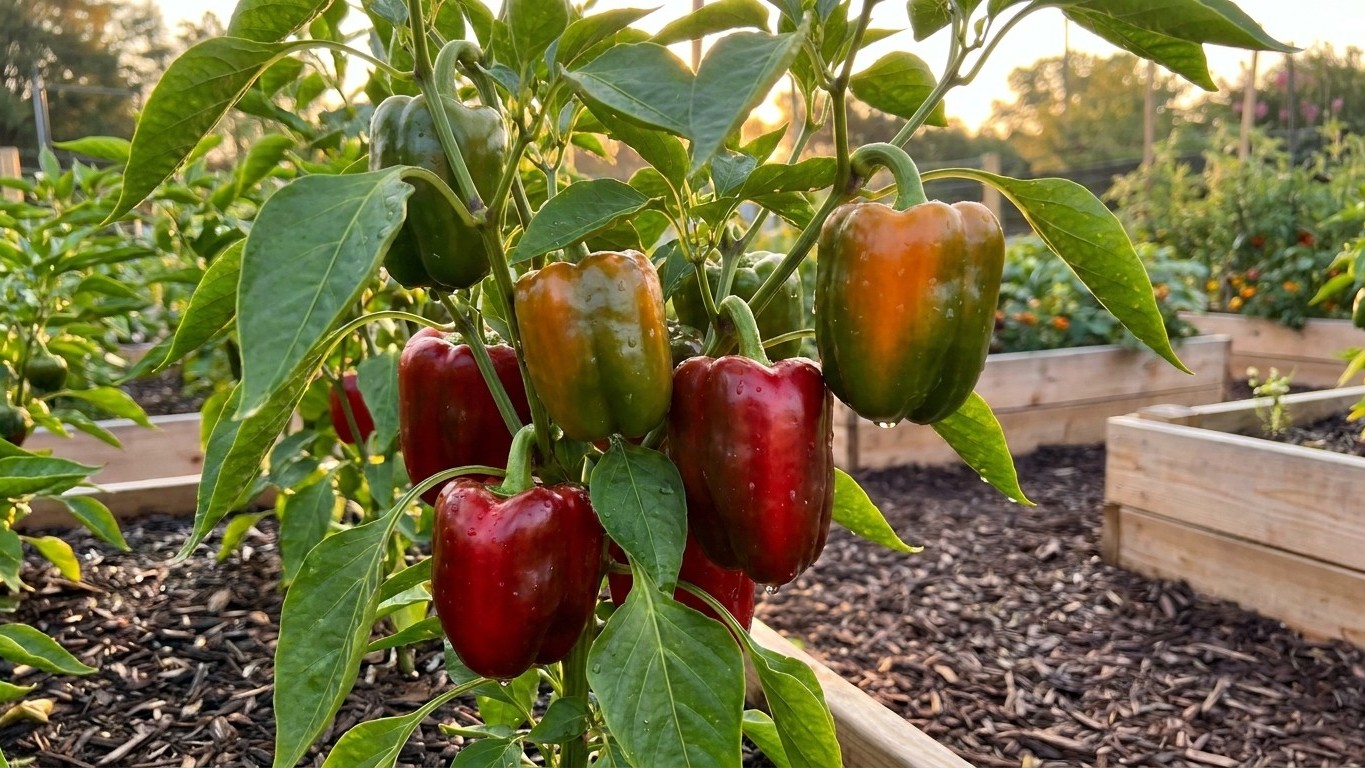

Pick peppers once the fruit has reached full size and feels firm, which is about 70 to 85 days after transplanting, and bring them in before a frost. Then keep them out of the refrigerator. Peppers store best at 45 to 50 °F, and a refrigerator runs colder than that. Below about 45 °F they pit and soften. It’s the mistake nearly everyone makes with a good harvest.
Keeping them, and for how long
How cold is too cold for stored peppers?
Clemson Cooperative Extension gives the storage target in one sentence: “The optimal conditions for storage are temperatures of 45 to 50 °F and 80- to 90-percent relative humidity for two to three weeks.” That last phrase is a ceiling. It describes perfect conditions and sound fruit. A pepper with a soft spot, a sunscald patch or a nick from a pruner will give out well before the third week.
The temperature is where most people go wrong. The range sits above what a refrigerator is built to hold, and chilling injury starts below about 45 °F. The skin develops small sunken pits, the flesh goes soft, and the pepper breaks down quickly once it warms up again. Damage can show a day or two after the fruit leaves the cold, so a pepper that looked fine in the crisper drawer may be limp by dinner.
Humidity matters too. At 80 to 90 percent, the skin stays glossy and firm. Much drier air shrivels it. A wet, closed container invites rot. A loosely closed perforated bag or a ventilated bin usually holds moisture without letting water pool on the fruit.
When are peppers ready to pick in North Dakota?
Clemson counts 70 to 85 days from transplanting to harvest. Start the count on the day the plant goes into the garden. Utah State University Extension says transplants need 8 to 10 weeks indoors and should go out when the soil reaches 60 F, after frost. At the reference station, the last spring freeze at 32 F falls between May 4 and May 15. Suburban and rural gardens often see it one to two weeks later, so check your county extension office for your own dates.
Once a plant is blooming, fruit takes roughly 35 to 45 days from flowering to reach harvest size. Those days run from the flower, not from sowing or transplanting. A plant that sets its first blossoms in July will not have mature fruit in early August.
Flowers also drop when the weather is wrong. Utah State reports that fruit set fails at both ends: nights below 55 F or days above 90 F. Fargo averages 11.7 days a year at 90 F or more, so the hot end is brief most summers. The cool end is different. Watch your own nights, because a cold snap in July can strip blossoms from a healthy plant. More on that in Why Peppers Fail to Set Fruit in North Dakota.
Harvest when the fruit is full size, firm and glossy. Cut it with pruners and leave a short stub of stem, because pulling by hand can snap branches. When a frost is forecast, pick everything that has reached full size, even if it hasn’t colored. For the rest of the season, see Growing Peppers in North Dakota.
Where in the house that actually is
Three spots are tempting, and each one misses the range. The refrigerator is too cold. A heated kitchen or living room is too warm and too dry, so peppers soften and shrivel on the counter. An attached or detached garage is cool in early fall but swings with the weather. A warm afternoon can follow a night near freezing, and a freeze will ruin the whole batch.
The room that usually comes closest is a basement, a cool cellar or an unheated interior room away from outside walls. The ground keeps these spaces cooler than the upstairs and steadier than a garage. Many basements run damp, which helps hold the 80 to 90 percent humidity range. Others sit warmer than expected near a furnace or water heater, so a spot far from the mechanicals is better.
Don’t guess at the numbers. Leave a thermometer in the spot for a full day or two before you store anything there, and read the low as well as the high. A digital model with a min-max memory does this well, and many also show relative humidity. If the spot reads between 45 and 50 °F and the humidity lands in the 80 to 90 percent range, it’s a good home for sound fruit. If the low dips under 45 °F, the same chilling injury that hits a refrigerator will hit the peppers there, only slower.
If no room in the house fits, change the plan. Eat the freshest peppers first, and use the soft or blemished ones right away. Peppers can also be sliced and frozen or dried rather than held in a space that damages them. Those peppers lose their crisp texture but keep their flavor for cooking.
Check stored fruit every few days. One pepper starting to rot will spread it to the rest, and pulling it early saves the batch. Pests that chewed the fruit in the garden often leave entry points for rot, so store any bored or nibbled peppers separately or use them first. What Eats Pepper in North Dakota, and When covers who is likely to be responsible.
Common questions
Can I put peppers in the refrigerator at all?
A short stay is better than losing a pepper to the counter, but it comes with a cost. A refrigerator holds colder than the 45 to 50 °F range, and peppers start to pit and soften below about 45 °F. If you must use it, keep them only for a day or two, and use those peppers first. A cut pepper is a different case. Once it’s sliced, it belongs in a container in the refrigerator, because a cut surface can’t be stored at room temperature for long.
Should I pick peppers green or wait for color?
Either works, as long as the fruit has reached full size and feels firm. A green pepper picked at full size is mature enough to eat. Waiting for red, yellow or orange needs more days on the plant, and the northern season is short. If a frost is forecast and the fruit has not colored, pick it. Frost damages leaves and fruit alike, and a ruined pepper is worth nothing at any color.
Why do my pepper plants bloom but never make fruit?
Blossoms drop when nights fall below 55 F or days climb above 90 F. At the reference station, only 11.7 days a year reach 90 F or more, so a cool stretch is the more likely cause in many summers. The number to watch is your own overnight low, since regional averages don’t show a cold night in your garden. Fruit set is covered in detail in Why Peppers Fail to Set Fruit in North Dakota.
What if something is eating the peppers before I can pick them?
Look at the damage first. Holes in the fruit, chewed leaves and missing flowers point to different culprits, and each shows up at a different time of year. Picking fruit as soon as it reaches full size shortens the exposure window. The details are in What Eats Pepper in North Dakota, and When. Fruit with damage should be eaten soon rather than stored, since rot starts at the wound.