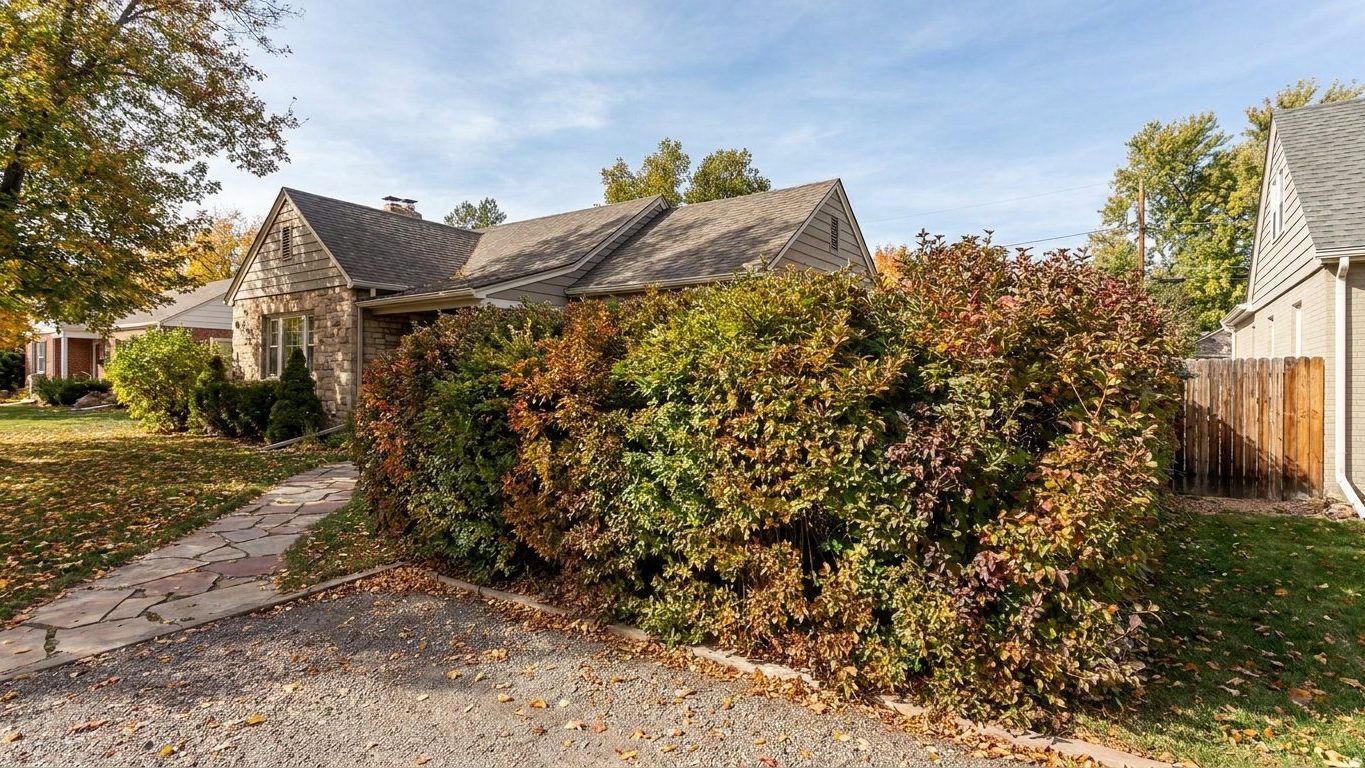

New Mexico has no statewide hedge height limit. There’s no statute in the state code that says a hedge can be 4 feet or 6 feet or anything else. The real limit on your property comes from your city or county’s zoning ordinance, and that number changes depending on which municipality you live in, and often depending on which part of your yard the hedge sits in.
There is no New Mexico hedge height law
Search “hedge height law New Mexico” and you’ll find pages that confidently state a single number, as if Santa Fe, Las Cruces, Albuquerque and a rural county in the Gila all follow the same rule. They don’t. New Mexico, like every other state, leaves fence and hedge height to local zoning codes. The state legislature has never passed a statute setting a maximum height for a hedge, a living screen, or a planted boundary. Height limits on yard structures are a classic zoning matter, and zoning is delegated to municipalities and counties under state enabling law, not written into the state code itself.
This matters because a single-figure answer is almost always wrong for somebody. A rule that works in one city’s residential zone might not apply three miles away in an unincorporated part of the same county, where a different planning commission wrote the ordinance. Even within one city, the number can shift block by block: front yard setback zones frequently cap hedges lower than side or rear yards, and corner lots carry their own separate restriction unrelated to the general fence height.
Why states leave this to cities
Fence and hedge height sits in the same bucket as setbacks, lot coverage, and accessory structure rules, all things a state legislature typically hands off to local planning bodies because the right answer depends on lot sizes, street widths, and neighborhood character that vary enormously across a state. A dense historic district in Santa Fe and a large rural parcel outside Roswell have almost nothing in common when it comes to how much privacy screening a hedge should provide, so the state lets each municipality write its own zoning chapter.
The commercial sites that rank for this search term tend to gloss over that distinction. They’ll cite “New Mexico law” and give a figure, usually pulled from one city’s code, or from a different state entirely, and generalized. If you’ve read one of those pages and walked away with a specific height in mind, treat it as unverified until you’ve checked your own municipal code. That check takes about ten minutes, and the next section walks through exactly how to do it.
How to find the rule that actually applies to you
No city in New Mexico has a hedge height ordinance documented on this page yet, and rather than guess at one, here’s the method that gets you a real answer for your address, whether that’s Albuquerque, Las Cruces, Rio Rancho, Santa Fe, or a small town nobody’s written about.
Start with the publisher, not the city website. Most American municipal codes are hosted by one of three services, and once you know which one your city uses, finding the fence and hedge section takes minutes:
- Municode, at library.municode.com, hosts the largest share of city and county codes nationwide.
- American Legal Publishing, at codelibrary.amlegal.com, hosts a smaller but still substantial set of municipalities.
- eCode360, run by General Code, hosts many smaller towns and townships.
Search “[your city name] municipal code” and one of those three domains will usually show up first. Once you’re in the code, don’t search for “hedge” as your first move, since a lot of ordinances never use that word. Go to the zoning chapter, then look for a subsection titled “fences,” “walls and fences,” or “accessory structures.” That’s where height limits for both built fences and living screens usually live, when they’re addressed at all.
Check the wording, not just the number
This is the step people skip, and it’s the one that causes the most confusion. Many zoning codes regulate fences as physical structures, built of wood, chain-link, vinyl, and so on, and never mention living hedges at all. Others fold hedges into the same definition as fences, treating a planted screen as functionally identical to a built one for height purposes. A few codes address them separately, sometimes with a different height cap for vegetation than for a built fence, on the theory that a hedge can be trimmed back if it grows too tall while a wall can’t.
Before you assume the fence height limit applies to your boundary hedge, read the definitions section of the zoning chapter and see how “fence” is defined. If hedges aren’t mentioned anywhere, that’s not necessarily good news. It might mean there’s no local limit on hedge height at all, or it might mean the topic falls under a general nuisance or vegetation-obstruction clause elsewhere in the code.
If the online code leaves you unsure, call your city or county planning and zoning department directly. This is a five-minute phone call for staff who field this exact question regularly, and it gets you a written or citable answer instead of a guess. Ask specifically whether hedges are treated as fences under the code, and whether the answer changes for a front yard versus a side or rear yard.
The branches that cross the line
Height limits are one problem. A hedge that grows sideways into a neighbor’s yard is a different one, and it’s actually the more common source of disputes between neighbors, since it doesn’t require anyone to measure anything with a tape.
The general rule that shows up across most states, including New Mexico, isn’t a statute at all. It comes from long-standing case law on encroaching vegetation, sometimes called the “self-help” doctrine. Under this principle, if your neighbor’s hedge sends branches or roots across the property line onto your land, you’re generally allowed to cut back the encroaching growth yourself, at your own expense, up to the boundary line and not one inch further. You can’t go onto their property to do the trimming, and you can’t cut in a way that kills the plant or does obvious damage beyond what’s needed to remove the encroachment.
That last part matters more than people expect. Courts in various states have found that a neighbor who deliberately kills a tree or hedge while “trimming” it, rather than simply cutting back what crosses the line, can be liable for damages, sometimes calculated at a multiple of the tree’s value. The safe version of self-help is conservative: cut only what’s on your side, cut cleanly, and stop at the property line.
Where this principle comes from, and where it doesn’t
Because this comes from case law rather than a statute written by the New Mexico legislature, its exact contours, how much notice you need to give, whether you can recover the cost of trimming, what happens if the hedge is a shared boundary planting, aren’t spelled out in a single place the way a zoning height limit is. It’s a general common-law principle recognized in some form across most U.S. states, not a specific New Mexico statute with a citation number attached. If you’re dealing with a genuine dispute rather than routine trimming, that distinction is exactly why this is a conversation for a local attorney, not a DIY legal research project.
Before you cut anything, it’s worth getting an actual property survey if there’s any doubt about where the boundary runs. Assuming a line based on an old fence or a mental estimate is how a lot of these disputes start in the first place.
What to check before you plant
The sight triangle is the closest thing to a universal rule in this whole topic, and it’s worth checking before you check anything else, because it applies even in places where no other hedge or fence height rule exists. At intersections and driveway aprons, zoning and traffic-safety codes almost always require a clear sightline for drivers, meaning nothing (hedge, fence, parked trailer, stack of firewood) can block the view within a defined triangular area measured from the corner or driveway edge. That height limit is typically much lower than the general fence or hedge height allowed elsewhere on the lot, often somewhere in the range of two to three feet, though the exact figure and the size of the triangle are set locally and vary by municipality. This isn’t a courtesy. It’s usually enforced as a traffic-safety matter, and it’s one of the first things a city will act on if a hedge near a corner becomes a visibility complaint.
Before you plant a hedge along any boundary that touches a street, driveway, or intersection, check whether your municipal code defines a sight triangle and what it requires, in addition to whatever general height limit applies elsewhere in the code.
A few other things are worth confirming at the same time, since you’re already reading the code:
- Whether your property sits in a homeowners association with its own architectural or landscaping rules, which can be stricter than the city’s zoning code and are enforced separately from it.
- Whether the species you’re planning to plant has a documented mature height and spread, since a hedge that’s compliant at year three can outgrow the limit by year eight if you picked something that gets tall.
- Whether the boundary line is confirmed by survey, especially if you’re planting directly on or near a property line rather than well inside it.
None of this takes long, but skipping it is how a hedge planted with good intentions turns into a neighbor complaint, a code enforcement letter, or a sightline problem at a corner nobody was thinking about when the seedlings went in the ground.
Common questions
Is there a New Mexico state law that sets a maximum hedge height?
No. Hedge and fence height in New Mexico, as in every other state, is set by municipal or county zoning ordinance, not by state statute. There is no single figure that applies statewide.
How do I find my city’s actual hedge height rule?
Search for your city’s municipal code on library.municode.com, codelibrary.amlegal.com, or eCode360, then look in the zoning chapter under “fences” or “accessory structures.” If the code doesn’t mention hedges specifically, call your local planning or zoning department to ask directly.
Can my neighbor make me cut my hedge if it’s growing over the property line?
Generally, a neighbor can trim back branches or roots that cross onto their side of the line, at their own expense, up to the boundary and no further, without your permission. This comes from general legal principles recognized in most states rather than a specific New Mexico statute, and it doesn’t allow them to kill the plant or cut beyond the line.
Does the sight triangle rule apply even if my city has no general hedge height limit?
Yes. Sight triangle requirements at intersections and driveways are close to universal and typically enforced separately from general fence or hedge height rules, precisely because they’re a traffic-safety measure rather than an aesthetic one. Check your local code for the specific height and triangle dimensions that apply to your corner or driveway.