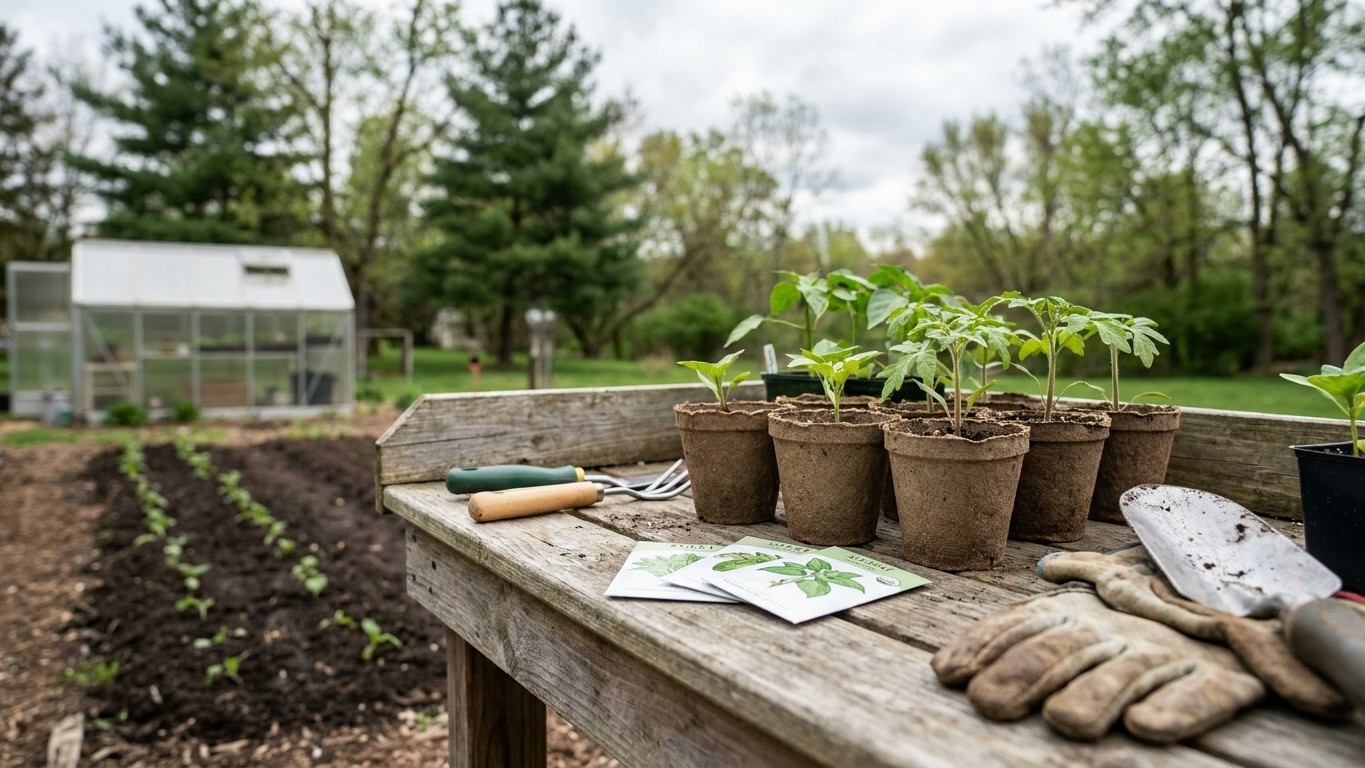

April in New Mexico splits into two very different gardens depending on where you stand. At lower elevations, cool-season crops go in early and warm-season ones wait until the soil catches up. At altitude, April is still closer to late winter, and the safest plantings are garlic, alliums, and cold-hardy greens rather than anything tender.
What goes in the ground in April

The number that matters more than the calendar is soil temperature, and the number that sets the calendar itself is frost risk. At the Albuquerque airport weather station, NOAA’s 1991-2020 climate data puts the last spring freeze in the window of March 31 to April 12. That means the first ten to twelve days of April still carry real frost odds at that elevation, and gardens sitting higher or further from the valley floor should expect that window to run later still, sometimes by one to two weeks or more.
What that means in practice: the first half of the month belongs to crops that shrug off a light freeze. Peas, spinach, lettuce, radishes, carrots, beets, and turnips can go directly into the ground as soon as the soil can be worked, even before the frost window closes. Onion sets and seed potatoes belong in this same early group. Garlic planted the previous fall is already up and growing and needs nothing more than weeding and water.
Once the frost window has passed
Toward the back half of the month, once the local last-frost date has come and gone, hardened transplants of broccoli, cabbage, and cauliflower can go in. Warm-season crops are a different story entirely. Tomatoes, peppers, squash, beans, and corn need soil that has actually warmed, not just air that felt pleasant on a sunny afternoon. In most of New Mexico that point doesn’t arrive until later in spring, and at higher elevations it can be weeks further out. Planting these now is a gamble that the plant, not the gardener, usually loses.
| Crop group | April status |
|---|---|
| Peas, spinach, lettuce, radishes, root vegetables | Safe to direct-sow early in the month |
| Onion sets, seed potatoes, overwintered garlic | Go in or continue growing now |
| Broccoli, cabbage, cauliflower transplants | Wait until after the local last frost date |
| Tomatoes, peppers, squash, beans, corn | Hold until soil has warmed, later in spring |
What to start under cover
The math for starting seeds indoors runs backward from the local last-frost window, not forward from a fixed date on the wall. Tomatoes and peppers need roughly six to eight weeks under lights before they’re ready to transplant, which means they should already be growing by the time April arrives, not started fresh this month. Starting them now in most of New Mexico risks pushing transplant timing into the hottest, driest part of the season before the plants are ready for it.
What does make sense to start indoors in April are the faster warm-season crops with shorter runways: cucumbers, summer squash, and melons typically need three to four weeks under cover before they go outside, which lines up well if the transplant target is late spring. Starting them earlier than that produces the classic failure mode of leggy, rootbound seedlings straining against their pots weeks before it’s safe to plant them out.
The opposite mistake shows up with brassicas and lettuce. Gardeners who skip starting a second round of cabbage or lettuce indoors this month often find themselves without transplants ready when the first round bolts in early summer heat. A simple rule covers both failure modes: count the weeks a crop needs to reach transplant size, then work backward from when the ground and air will actually support it outdoors, adjusting later for higher, cooler ground and earlier for the warmest low-elevation valleys.
What is ready to pick
April harvests in New Mexico lean on what survived the winter rather than anything planted this spring. Overwintered kale, spinach, and leeks that made it through under mulch or in a cold frame are usually at their best right now, before the weather warms enough to push them toward bolting. Established asparagus beds start sending up spears this month, and they’re ready to cut once a spear reaches about six to eight inches, before the tip loosens and starts to fern out.
Rhubarb crowns that are three years old or older can be harvested lightly this month too, pulling stalks rather than cutting them and always leaving several stalks per plant so it can keep building strength. Green onions from fall-planted sets are usually ready to pull as scallions by now if they were started early enough.
Stored crops deserve a look before anything else. Winter squash, potatoes, and onions held over from the previous harvest are entering their last stretch of good storage life. Check squash for soft spots or a sweet fermented smell, sort out any potatoes that have gone soft or sprouted eyes beyond what’s usable, and pull onions showing new green growth or a wet neck. Anything questionable gets used first, not left for later.
The jobs that matter this month
Fruit tree pruning has a hard deadline in April: it needs to be finished before buds break open, because cuts made after that point cost the tree stored energy it needed for the season’s growth. Apples, pears, and stone fruit in New Mexico’s lower elevations often break dormancy early, so this is not a job to leave for a slow weekend later in the month.
Soil preparation pays off disproportionately right now, before the planting rush picks up. A basic soil test run through the local extension office identifies pH and nutrient gaps while there’s still time to correct them before warm-season crops go in. Working compost into beds now, rather than at planting time, gives it weeks to integrate instead of sitting as a raw amendment around fresh roots.
Mulch matters more in New Mexico than in wetter states, and April is the month to get it down before the dry, windy stretch of late spring pulls moisture out of bare soil. Wind itself deserves direct attention here: New Mexico’s spring winds can shred young transplants and desiccate seedbeds in a single afternoon, so temporary windbreaks, row cover, or simply timing transplants for calmer days is not an optional refinement, it’s the difference between a bed that establishes and one that has to be replanted.
Irrigation lines and drip systems should go in or get checked for leaks now, before the watering rhythm ramps up. Staking and cages for future tomatoes and vining crops are far easier to install into empty or lightly planted beds than to wedge in around plants that have already sprawled. Finally, scout early for aphids and flea beetles on cool-season greens; catching them on a handful of leaves now is a five-minute job, while catching them after they’ve spread through a bed is not.
What not to do in April
The most common mistake this month is planting warm-season crops because the afternoon air finally felt like summer. Air temperature and soil temperature move on different schedules, and soil almost always lags behind. A 75-degree afternoon can sit over soil that’s still in the 50s at root depth, which is exactly the condition that stalls or kills young tomato and pepper transplants even without a frost.
Uncovering beds too early after a warm spell is the second classic error. New Mexico’s last-frost window (March 31 to April 12 at the reference elevation, later at higher ground) is a range built from years of data, not a guarantee that any single stretch of warm days marks the end of frost risk. Pulling row cover or cold-frame lids off tender crops after a few mild days, only to lose them to a late cold snap, is one of the most avoidable losses in a spring garden.
Nitrogen timing is the third trap. Heavy nitrogen feeding on crops that are about to fruit, like early tomatoes or squash once they’re in, pushes leafy growth at the expense of flowers and fruit set. Save the nitrogen-heavy feeding for leafy greens and young transplants still building root and leaf mass, and hold off on fruiting crops until they’ve set their first flowers.
Checking this against your own county
A state-wide date range is a starting point, not an instruction for a specific yard. New Mexico’s elevation runs from around 2,800 feet in the southern valleys to well over 7,000 feet in the north, and that spread alone can shift planting windows by several weeks in either direction. The USDA places the state across hardiness zones 4b to 9a, which is less a single climate than a whole range of them stacked on top of each other.
Before committing seed or transplants to the ground, check the local frost record for your specific county through the New Mexico State University Cooperative Extension Service, which tracks conditions by region rather than by one airport station.
Common questions
Is it safe to plant tomatoes in New Mexico in April?
Generally not yet at most elevations. Tomatoes need soil that has warmed well past the frost window, and April soil in much of New Mexico, especially above the lowest valleys, is still too cool for reliable transplant survival.
What vegetables can I direct-sow in April in New Mexico?
Peas, spinach, lettuce, radishes, carrots, beets, and turnips can go directly into the ground early in the month, along with onion sets and seed potatoes, since all of these tolerate a light frost.
When is the last frost date in New Mexico?
At the Albuquerque airport weather station, NOAA’s 1991-2020 climate data puts the last spring freeze between March 31 and April 12. Higher elevations and outlying counties typically see this later, sometimes by a week or two.
What USDA hardiness zone is New Mexico?
New Mexico spans USDA hardiness zones 4b through 9a, a range driven mainly by the state’s dramatic elevation changes from the southern deserts to the northern high country.