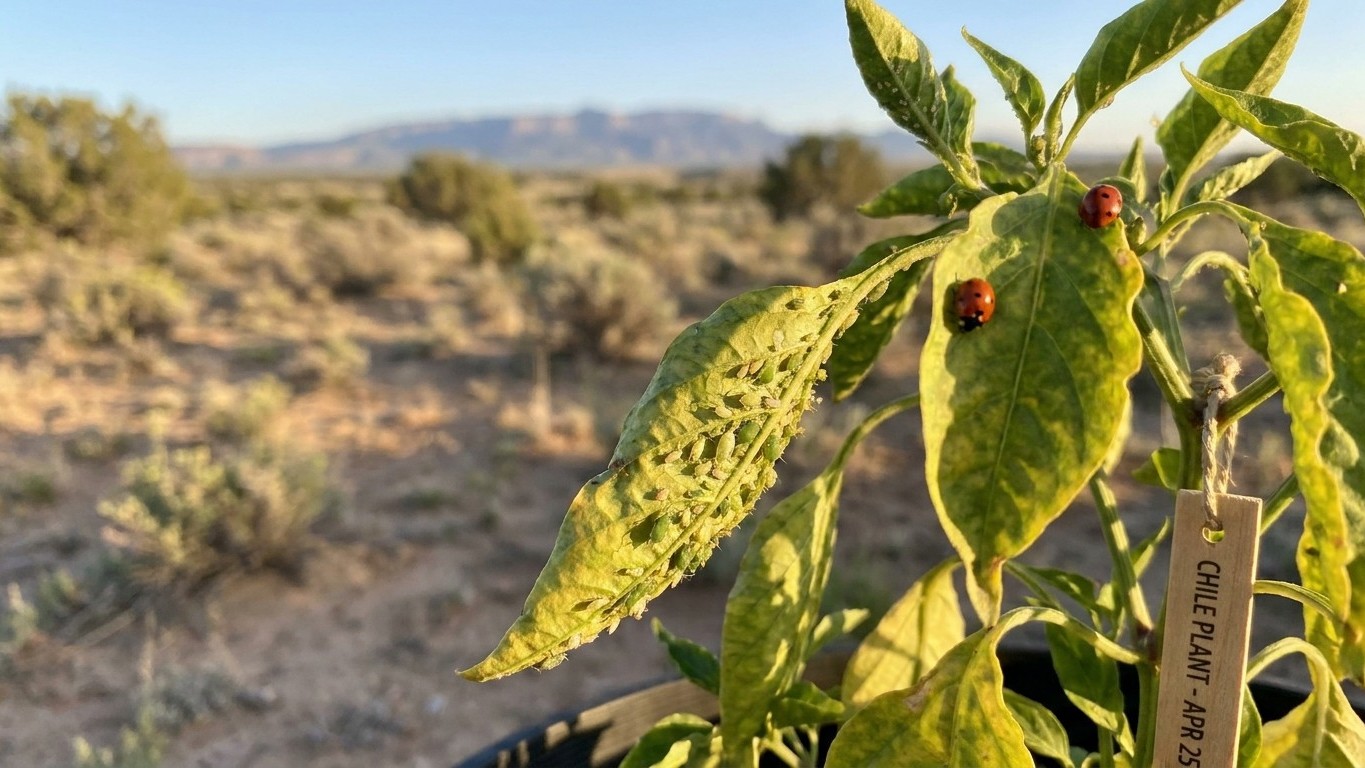

Aphids show up in New Mexico as soon as daytime temperatures hold steady in the 65-75°F range, which happens anywhere from late February in the low desert around Las Cruces to mid-April in higher elevations like Santa Fe and Taos. They stick around through the monsoon season and often produce a second surge in early fall once summer heat breaks. Chile peppers, pecan trees, and backyard roses take the brunt of it, and the fix depends less on a calendar date and more on watching your specific microclimate and catching the first curled leaf before colonies explode.
Timing Aphids by New Mexico’s Elevation Bands

New Mexico isn’t one climate. It’s three or four stacked on top of each other, and that changes everything about when aphids become a problem on your property. The Rio Grande Valley near Las Cruces sits around 3,900 feet and warms up fast, so aphid activity on chile and cotton can start as early as late February in a mild winter. Albuquerque, at roughly 5,300 feet, typically sees its first significant aphid populations in late March or April, once nighttime lows stop dipping below freezing.
Higher country around Santa Fe and Taos, sitting above 7,000 feet, delays the whole process by three to five weeks compared to the southern desert. Gardeners there often don’t see meaningful aphid pressure until May. That gap matters if you’re planning treatment windows or deciding when to release beneficial insects, since buying ladybugs in March for a Santa Fe garden is money wasted on bugs that will starve before their food source arrives.
The second wave tends to hit statewide in September, after monsoon humidity has passed but before the first hard freeze. New Mexico State University’s Cooperative Extension Service has tracked this fall bump on pecan and chile crops for years, tying it to a rebound in soft new growth after plants recover from mid-summer heat stress.
Why Aridity Both Helps and Hurts Aphid Populations
Dry air slows some aphid reproduction compared to humid Gulf Coast states, which is a small mercy for New Mexico growers. Aphids reproduce through parthenogenesis, meaning females clone themselves without mating, and that process runs faster in moderate humidity than in the bone-dry conditions common across most of the state outside monsoon season. That’s the good news.
The bad news is drought stress on plants. A chile plant or pecan tree running short on water pulls nitrogen into its leaves and stems as a survival response, and that concentrated nitrogen is exactly what aphids feed on. Stressed plants in Doña Ana County and the Mesilla Valley, where irrigation scheduling often lags behind crop water needs during dry years, frequently show heavier aphid colonies than well-watered neighbors even in the same field. This is one reason drip irrigation and consistent watering schedules matter as much as any spray program.
Wind is another factor unique to the region. New Mexico’s spring winds, which regularly gust past 30 mph across the eastern plains and the Rio Grande corridor, can physically strip aphid colonies off leaves or blow winged adults miles from their original host. That’s part of why aphid outbreaks in the state can appear almost overnight in a field that looked clean the week before.
The Crops and Plants Aphids Target Most in New Mexico
New Mexico’s identity as the country’s leading chile pepper producer makes aphid pressure on that crop an economic issue, not just a backyard nuisance. Green peach aphids and melon aphids are the two species most commonly found on chile in the Hatch and Mesilla Valleys, and both transmit plant viruses that can cut yields before visible damage even shows up on the leaves.
Pecan orchards, concentrated heavily in Doña Ana County, deal with a different pest complex, including the black pecan aphid and yellow pecan aphid. These species feed on the underside of leaves and, in bad years, cause premature leaf drop that weakens trees heading into the following season. Orchard managers in the region typically scout weekly during peak growing months rather than relying on a fixed spray calendar.
Home gardeners across the state see aphids most often on:
- Roses and other ornamentals, especially new growth in spring
- Tomatoes and peppers in backyard vegetable beds
- Squash and melon vines during summer
- Fruit trees like apple and cherry in northern counties
Alfalfa, a major forage crop in the San Juan Basin and eastern counties, also draws its own aphid species, and infestations there can spread to nearby garden plots when fields are cut and aphids disperse looking for new hosts.
Spotting an Infestation Before It Spreads
Curled or yellowing new leaves are usually the first sign, followed by a sticky residue called honeydew on leaves and anything sitting beneath the plant. That honeydew often draws ants, and a sudden trail of ants climbing a rose bush or pepper plant is frequently the tip-off that aphids are already established higher up. Check the undersides of leaves near the growing tips first, since that’s where colonies concentrate before spreading to older foliage.
What Actually Stops Aphids in New Mexico Conditions
Natural predators do more heavy lifting in New Mexico’s aphid control than most people realize. Ladybugs, lacewing larvae, and parasitic wasps are already present across the state and tend to catch up to aphid populations within a few weeks if they aren’t wiped out by broad-spectrum insecticides first. Planting yarrow, dill, or alyssum near vegetable beds gives these predators a reason to stick around instead of moving on after their first meal.
A strong blast of water from a garden hose knocks aphids off plants effectively, and in New Mexico’s low humidity, wet leaves dry fast enough that fungal disease from the extra moisture is rarely a concern the way it might be in wetter climates. This works best on smaller infestations before colonies get dense enough to regenerate within a day or two.
Insecticidal soap and horticultural oil remain the go-to treatment for home gardeners once populations climb past what water spray can handle. Both work by disrupting the aphid’s outer coating and need direct contact to work, so thorough coverage on leaf undersides matters more than the product itself. Apply in early morning or evening in New Mexico’s summer heat, since midday temperatures above 90°F can cause leaf burn when oils are applied to sun-exposed foliage.
For chile and pecan growers dealing with larger-scale infestations, the EPA’s integrated pest management framework recommends combining cultural controls like proper irrigation and pruning with targeted, timed insecticide applications rather than routine spraying, which helps preserve the beneficial insect populations doing free work in the field. You can review that general approach through the EPA’s introduction to integrated pest management.
Reflective mulch, a technique gaining traction in some New Mexico chile fields, disrupts winged aphids’ ability to locate host plants by scattering light in a way that confuses their navigation. It’s not a complete solution on its own, but growers using it alongside biological controls report noticeably slower colony establishment in early season.
Timing Treatment to New Mexico’s Growing Calendar
The most effective window for any treatment, chemical or biological, falls right at the first sign of colony formation, typically two to three weeks after your regional warm-up begins. Waiting until leaves are visibly curled or honeydew has attracted ants means you’re managing an established population rather than preventing one, and that shifts the math toward repeated treatments instead of a single well-timed intervention.
Late-season aphid flare-ups in September respond well to the same early-detection approach, though growers should factor in pre-harvest intervals on any chile or pecan crop close to picking time. Checking product labels for days-to-harvest restrictions avoids conflicts between pest control and harvest scheduling that can otherwise cost a grower an entire treatment cycle during the busiest weeks of the season.
Related guides
- Aphids in Arizona: When It Shows Up and What Stops It
- Aphids in Utah: When It Shows Up and What Stops It
- Aphids in Northwest Territories: When It Shows Up and What Stops It
- Aphids in Ohio: When It Shows Up and What Stops It
- Corn earworm in New Mexico
- Beet leafhopper in New Mexico
- Spotted cucumber beetle in New Mexico
- Aphids in Arkansas: When It Shows Up and What Stops It
- Aphids in Wyoming: When It Shows Up and What Stops It