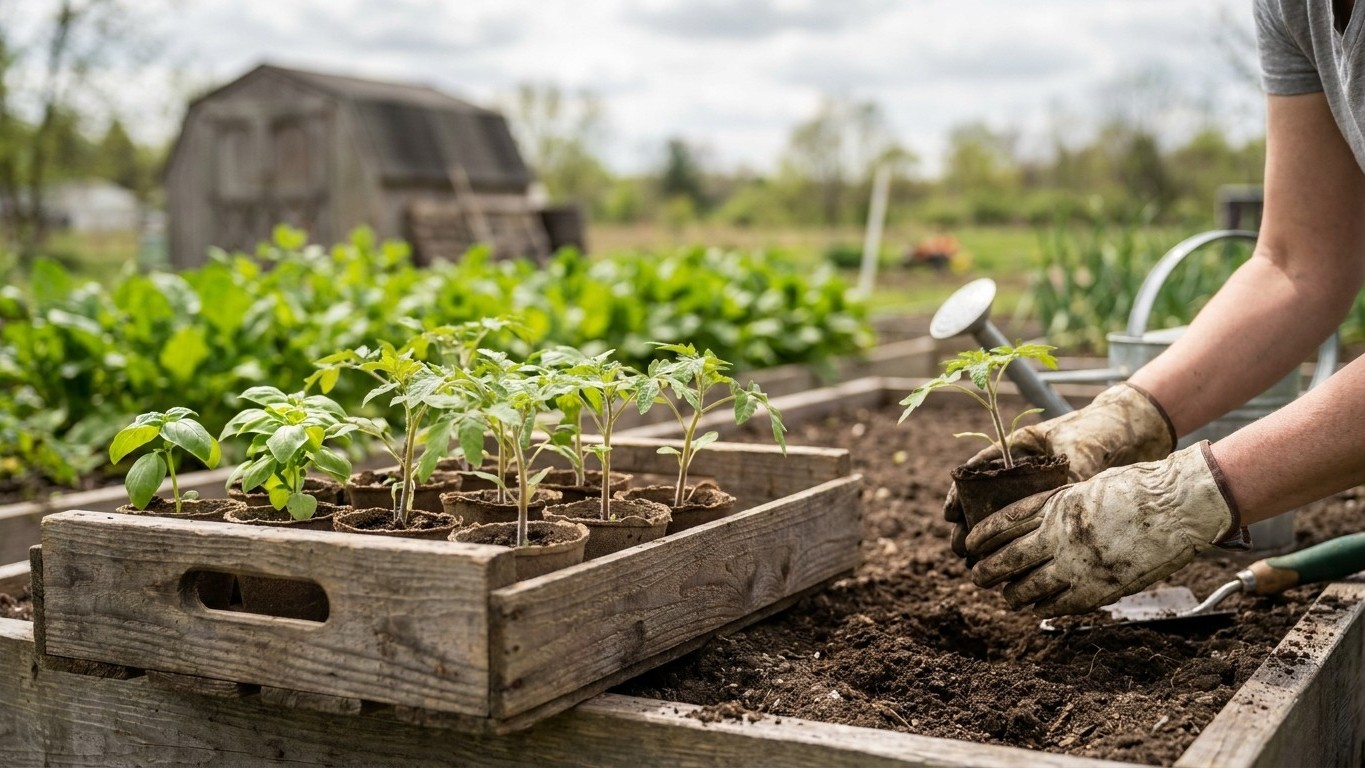

May lands well past the reference frost window for the Albuquerque station (March 31 to April 12), so most of New Mexico’s lower valleys are clear to plant warm-season crops outright: tomatoes, peppers, chile, squash, beans, melons. Higher ground in the north and in the mountains often runs two to three weeks behind that window, so the safe answer changes fast depending on where you garden.
What goes in the ground in May

The decision this month isn’t the calendar, it’s soil temperature. Warm-season crops stall or rot in cold ground even when the air feels pleasant, so check that soil at planting depth has warmed and held steady for several days before committing tomatoes, peppers, or melon seedlings to the bed. In New Mexico’s low desert and middle Rio Grande valley, that threshold is usually met by May, since the reference frost window (March 31 to April 12) has already closed by the time the month starts.
That means direct-sowing beans, squash, corn, and melons is reasonable in those areas, and transplanting tomatoes, peppers, and chile seedlings that were started indoors earlier in spring is standard practice. Chile, obviously, carries outsized weight here: growers in the southern valleys count on May soil warmth to get transplants established before the real heat arrives in June.
Higher elevations tell a different story. Santa Fe, Taos, and the mountain valleys running north often see frost risk linger well into May, sometimes longer at elevation, so warm-season transplants set out too early there face the same cold-soil problems described above. Gardeners in those zones do better holding warm crops under cover a little longer and using the month for cool-season crops instead: lettuce, spinach, peas, and brassica transplants like broccoli and cabbage all still go in comfortably.
| Region | May frost situation | What’s safe to plant |
|---|---|---|
| Low desert (Las Cruces, Deming) | Frost risk essentially over | Tomatoes, peppers, chile, melons, squash, beans |
| Middle Rio Grande valley (Albuquerque, Belen) | Reference window (March 31-April 12) closed | Same warm crops; watch for late cold snaps at the edges of the range |
| Northern valleys and foothills (Santa Fe, Taos) | Frost often lingers into May | Lettuce, spinach, peas, brassica transplants; hold warm crops under cover |
| High mountain areas (Sandia Crest, Angel Fire, Red River) | Frost possible well into the month | Cold-hardy greens and root crops only; warm-season starts stay indoors |
Garlic and onions planted earlier in spring should already be well established by May and don’t need attention beyond routine watering. If you missed that window, it’s not worth forcing garlic in now; wait for fall.
What to start under cover
For most of New Mexico’s warm valleys, the classic use of a seed tray this month is counting forward, not back: starting fall brassicas and other cool-season crops indoors or in a shaded cold frame so they’re ready to transplant once the punishing mid-summer heat breaks in late August or September. Count backward from the first fall frost window at the reference station (October 29 to November 9): most broccoli and cabbage varieties need roughly eight weeks from seed to transplant-ready size, so starting them under cover in May, tucked away from direct sun, gives them a head start before they go into the ground later in summer.
In the higher, colder pockets of the state where warm-season transplants haven’t gone outside yet, May is still prime time to start those seedlings under cover if you haven’t already: peppers and eggplant in particular need more lead time than tomatoes and benefit from extra weeks indoors before the ground warms enough to receive them.
Two mistakes show up every year. Starting seedlings too early leaves them rootbound and leggy by the time conditions are right outside, stunting them right when they need to be putting energy into new growth. Starting too late, especially for fall brassicas in a state where the growing window narrows fast once heat sets in, means the transplants never size up before frost or before summer heat forces an early bolt. Match the sowing date to the actual transplant window for your elevation, not a generic seed packet instruction written for a different climate.
What is ready to pick
Spring greens sown early in the season are usually at peak by May in the lower valleys: lettuce, spinach, arugula, and radishes should all be pulling if they went in several weeks earlier. Check lettuce and spinach daily once temperatures climb, since both bolt fast in New Mexico’s dry heat and turn bitter within days of sending up a flower stalk.
Asparagus beds established in prior seasons hit their harvest stride in May across most of the state; cut spears while they’re still tight and firm, before the tips loosen and start to feather. Rhubarb, where it’s grown (mostly in the cooler northern counties), is usually ready to pull as well.
Peas planted in early spring should be filling pods by now in the valleys, and it’s worth picking them promptly, since pods left too long on the vine turn starchy and the plant slows production. If you’re storing winter squash, potatoes, or onions from a prior harvest, this is a good month to check the stash: soft spots, sprouting eyes, or a sweetish smell mean it’s time to use or discard that item before it spreads to the rest of the stored crop.
The jobs that matter this month
Mulching earns its keep in May more than almost any other month in New Mexico. Soil moisture disappears fast once daytime temperatures climb and the wind picks up, and a two-to-three-inch layer of mulch around transplants slows that evaporation dramatically, buying time between waterings and protecting shallow roots from the heat building in bare soil.
Staking and caging tomatoes and peppers now, before they sprawl, saves real effort later. A cage or stake set after the plant has already flopped means fighting tangled stems and risking broken branches; set the support at transplant time instead.
Watering rhythm matters as much as volume here. Deep, infrequent watering that reaches root depth trains plants to send roots down rather than staying shallow and dependent on daily surface moisture, a habit that pays off once summer heat arrives in earnest.
Succession sowing of quick crops like radishes, lettuce, and bush beans keeps the harvest coming rather than arriving all at once and then stopping; sow a new short row every couple of weeks rather than the whole bed at once.
Pest scouting matters too. Squash bugs and aphids build populations fast in warming weather, and checking the undersides of leaves weekly catches an infestation while a few egg clusters can still be squashed by hand, long before it becomes a spray-everything situation.
What not to do in May
The most common mistake is planting warm-season crops into soil that’s still cold because the air felt warm on a given afternoon. New Mexico’s spring days swing wide between warm sun and cold nights, and a single 80-degree afternoon doesn’t mean the soil four inches down has caught up. Check soil temperature directly rather than trusting how the air feels on your skin.
Uncovering row covers or cold frames too early after a mild stretch is the second classic error, especially at elevation where a warm week can be followed by a hard cold snap. Keep protection in place a little longer than instinct suggests in the mountain and northern valley zones, where the reference frost window doesn’t apply directly and frost often lingers past it.
Nitrogen timing trips up a lot of tomato and pepper growers. Heavy nitrogen feeding once plants are established pushes lush green growth at the expense of flowering and fruit set, so ease off nitrogen-heavy fertilizer once plants are growing well and lean toward phosphorus and potassium instead to support blossoms.
Wind is the quieter problem. May in New Mexico brings some of the year’s strongest, driest winds, and young transplants lose moisture through their leaves faster than their roots can replace it. A simple windbreak, even a row of stakes with burlap or shade cloth, makes a measurable difference in transplant survival during a windy stretch.
Checking this against your own county
Everything above is a starting point built around one reference station, not a guarantee for your specific yard. New Mexico’s elevation swings from low desert around 3,000 feet to mountain valleys well above 8,000 feet, and that difference alone can shift frost timing by several weeks in either direction. Southern counties run warmer and earlier across the board; northern and high-elevation counties run later and colder, sometimes considerably so.
For a planting calendar built around your actual county and elevation, the New Mexico State University Cooperative Extension Service is the reliable source. Local extension offices also track soil temperature reports and pest pressure specific to your area, both of which matter more than a state-wide average.
Common questions
Is it safe to plant tomatoes outside in May in New Mexico?
In the low desert and middle Rio Grande valley, yes, since the reference frost window (March 31 to April 12) has already closed. At higher elevations and in the northern mountain valleys, frost risk often lingers into May, so it’s worth checking local conditions before setting out tomato transplants there.
What USDA hardiness zone is New Mexico in?
New Mexico spans USDA Plant Hardiness Zones 4b through 9a, based on the USDA Plant Hardiness Zone Map (2023 update, built on 1991-2020 climate normals). That’s a wide range built on one variable, the average annual extreme minimum temperature, so a zone number alone doesn’t replace checking your specific elevation and local frost history.
Can I still start seeds indoors in May for a fall garden?
Yes, this is one of the best uses of the month. Starting fall brassicas like broccoli and cabbage under cover in May, counting back from the first fall frost window at the reference station (October 29 to November 9), gives them time to size up before transplanting once the worst of summer heat passes.
Why does my soil feel warm but my transplants aren’t thriving?
Surface warmth from sun on bare soil doesn’t always reflect the temperature a few inches down, where roots actually sit. Check soil temperature at planting depth with a simple soil thermometer rather than judging by how the surface feels, especially in early May before the ground has fully caught up with the air.