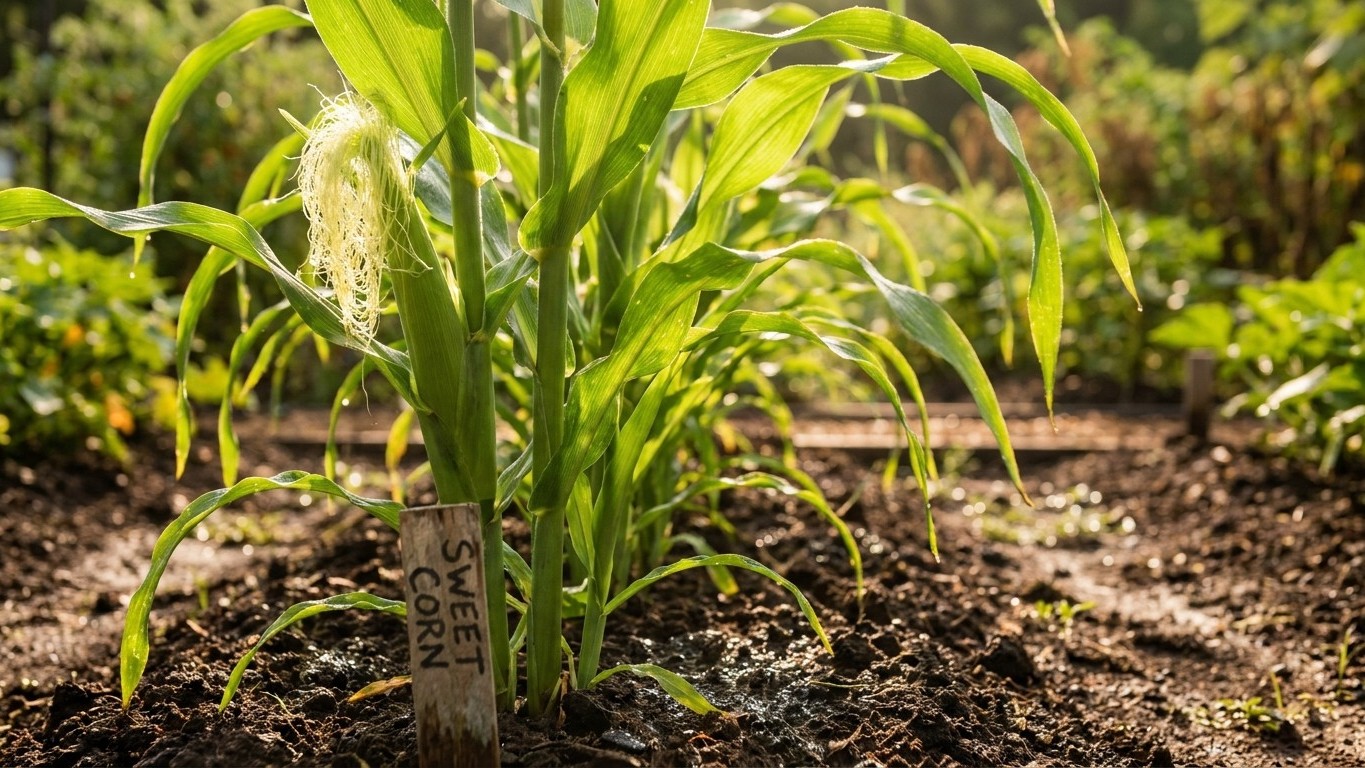

Sweet corn can ripen in Newfoundland and Labrador, but only in a good year and only with a short-season variety. The soil needs to hold above 60 F before you plant, and that threshold arrives well after the last spring frost. Once planted, the crop needs 60 to 90 days of growth before the first fall frost shuts things down. Here, that math is tight rather than comfortable.
The short answer
Start with the frost dates themselves. At the reference station in St. John’s, the average last spring frost falls on May 30, and the average first fall frost falls on October 17. Both are mean dates from Environment and Climate Change Canada’s 1981-2010 climate normals, not guarantees. In one year out of two, the spring frost actually lingers past May 30, and in one year out of two the fall frost also arrives later than October 17 or earlier, depending on how the season swings. Treat both numbers as the midpoint of a range, not a promise.
Now add the detail that changes everything for corn: soil temperature is not the same thing as air temperature, and it lags behind it. Sweet corn seed needs soil above 60 F to germinate reliably, and that threshold is reached some time after the last frost date, not on it. No specific soil-warming date is published for this territory, so the practical move is to check the soil directly with a thermometer rather than counting days from the frost date and hoping.
Once the soil clears 60 F, the clock for the crop itself starts: 60 to 90 days from planting to maturity, depending on the variety. Stretch the frost-to-frost window here (May 30 to October 17) and you get roughly 140 days on paper. That sounds generous until you subtract the weeks the soil spends warming up before planting can even begin, and until you account for a growing season with essentially no real heat behind it.
That last point matters more here than almost anywhere else covered in this series. The average number of days per year that reach 90 F at the St. John’s reference station is 0.0. Zero. Sweet corn is a warm-season crop that accumulates growth fastest on hot days, and this territory simply doesn’t produce them. A variety rated for 70 days elsewhere may take longer to actually mature here, because the heat that drives that rating never really shows up. The short answer, then, is a qualified yes: a short-season variety can ripen, provided the soil is genuinely warm before you plant and provided the season runs close to its average length rather than short.
Does a late variety fit here?
The 60-to-90-day range on a seed packet isn’t one number, it’s two very different bets. Whether either one works here depends on how much room is actually left once soil warming and a realistic frost date are both accounted for.
A 60-day variety
A variety rated at 60 days has the best odds in this climate. Once the soil clears 60 F, likely well into the local planting season rather than right at the May 30 frost average, a 60-day crop still has a wide cushion before the October 17 average first fall frost. Even allowing for slower growth on a cool summer with no days above 90 F, there’s enough slack in the calendar for this window to work in most years. This is the type of variety that makes sweet corn realistic here at all.
A 90-day variety
A 90-day variety is a different story, and it does not reliably fit. Push planting to whenever the soil finally clears 60 F, run the clock 90 days forward, and you land close to the average fall frost date with little or no margin. Add the fact that a cool summer with zero days above 90 F will likely slow real-world maturity beyond the rated 90 days, and the picture gets worse, not better. Because the fall frost date is also just an average, half of all years bring frost before October 17, not after. A 90-day type asks this climate for exactly the kind of margin it doesn’t reliably have. If ripening is the goal, a shorter-season type is the safer bet here.
| Variety length | Fits the window here? | Main risk |
|---|---|---|
| 60 days | Yes, in most years | Soil slow to warm in a poor spring |
| 90 days | Not reliably | Frost or a cool summer arriving before harvest |
When it’s time to check for ripeness rather than guess by the calendar, look for three signs together, not just one: silks that have turned dry and brown, husks that are still green and moist, and milky juice when a kernel is punctured. Any one of those signs alone can mislead; all three together mean the ear is ready.
What goes wrong here
- Soil sown too cold. Planting on the calendar rather than by soil temperature is the most common failure in this climate. Seed put into soil still under 60 F germinates poorly or rots outright before it ever sprouts, especially since the May 30 frost average is not the same day the soil actually warms. The fix is simple: check soil temperature directly with a thermometer before planting, and wait for it to hold above 60 F rather than counting days from the last frost.
- A variety too late for the season. A 90-day type asks for a stretch of warm growing days this climate doesn’t reliably supply, particularly with zero average days above 90 F pushing real maturity past the rated timeline. The remedy is choosing a variety at the shorter end of the 60-to-90-day range and treating the October 17 average frost date as a deadline that could arrive earlier, not later.
- Sweetness lost to timing, not weather. This one has nothing to do with soil or frost. Standard (su), sugary enhanced (se) and supersweet (sh2) types cross-pollinate if they tassel at the same time, and the result is starchy, disappointing ears regardless of how well the season went. No isolation distance is published for this; the fix is timing, not spacing. Stagger plantings so different types don’t tassel together, and keep each type in its own block of three or more rows rather than mixing them in a single row.
Common questions
Is May 30 a safe date to plant sweet corn?
No. It’s the average last spring frost, meaning frost arrives later than that in roughly half of all years. It also isn’t the date soil reaches 60 F, which comes afterward. Check soil temperature directly rather than planting by that date alone.
Why does a “60-day” variety sometimes take longer to ripen here?
Days-to-maturity ratings assume typical warm-season growing conditions. This territory averages zero days a year above 90 F, so growth accumulates more slowly than the rating expects, and actual maturity can run past the number on the packet.
Can I grow a supersweet and a standard sweet corn in the same garden?
Only if they don’t tassel at the same time. Cross-pollination between su, se and sh2 types ruins sweetness in both. Plant each type in its own block of three or more rows and stagger the timing so tasseling doesn’t overlap.
How do I know an ear is actually ripe rather than close?
Check for three signs together: dry, brown silks, husks that are still green and moist, and milky (not clear, not thick) juice from a punctured kernel. One sign alone isn’t enough to confirm ripeness.