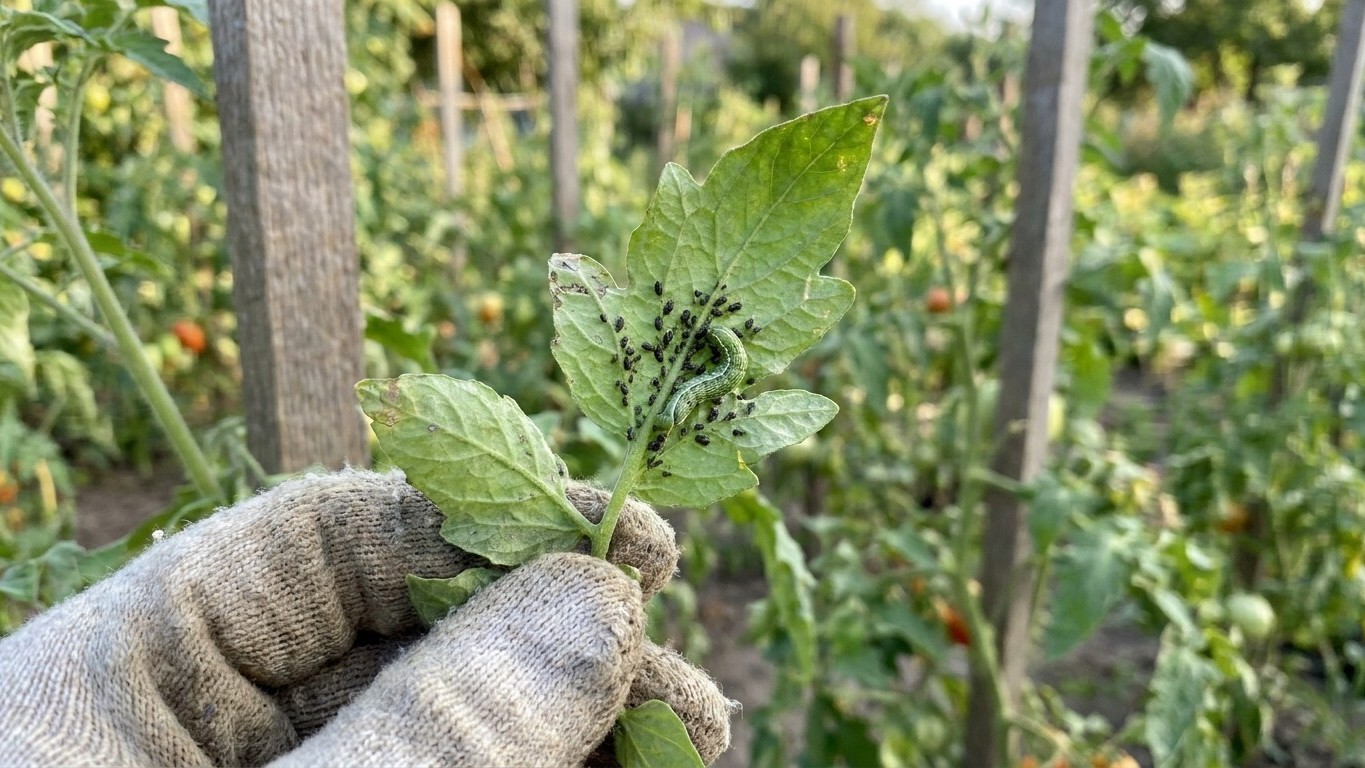

Tomato pests fall into two groups that need opposite responses: sap-suckers like aphids and spider mites that weaken the plant slowly, and chewers like hornworms and cutworms that can do visible damage in a single night. Identifying which one you have decides whether you handpick, spray, or just wait it out. Start by checking the undersides of leaves and the base of the stem every time you water, since that’s where most of these insects hide.
Why this matters
A tomato plant under pest pressure puts its energy into recovering leaf tissue instead of building fruit. Left unchecked, an aphid colony or a spider mite outbreak can cut yield noticeably before you see any obvious wilting, because the damage happens cell by cell on leaves you rarely inspect closely. By the time whole leaves are yellowing, the population has usually already peaked.
Chewing pests work on a different timeline. A single tomato hornworm can strip a mature branch of foliage in a couple of days, and a cutworm can sever a young transplant at the soil line overnight, undoing weeks of growth in one feeding session. The plant that survives an untreated pest problem often produces smaller fruit, ripens later, and is more vulnerable to disease because damaged leaf tissue and open wounds give fungal and bacterial pathogens an easy entry point, which is one reason pest damage and disease symptoms so often show up together.
When to do it
Pest scouting isn’t a one-time job, it tracks the plant through its stages. Right after transplanting, the biggest risk is Cutworms: The Seedling Felled at Soil Level Overnight, so check young plants at the base every morning for the first couple of weeks if you’ve read through how deep and how far apart to plant tomatoes and just put transplants in the ground.
Once the plant is established and putting on leaf growth, Aphids on Tomatoes, Whiteflies: The Cloud That Rises When You Brush the Plant, spider mites and Thrips on Tomatoes become the main concern. This is the stage to start a weekly habit of flipping a few leaves over on each plant, focusing on new growth at the tips, since sap-suckers prefer tender tissue. When the first flowers open, watch more closely for Flea Beetles shot-holes and any sign of hornworm droppings, which look like loose dark green or black pellets on the leaves below where the caterpillar is feeding.
Once fruit sets, the priority shifts again. Fruit-boring pests target the green fruit itself, so scouting should include looking directly at the fruit surface for small entry holes, not just the foliage, and it’s also worth checking ripening fruit for Stink Bugs: Pale Cloudy Patches Under the Skin of a Ripe Tomato. The moment you see chewed fruit or fresh entry holes is the moment to act, since a worm already inside a tomato cannot be treated, only removed along with the fruit.
How to do it

Effective pest control on tomatoes almost always starts with the least aggressive option and escalates only if that fails. For most home gardens, that means:
- Handpicking large, visible pests like hornworms and dropping them into soapy water
- Spraying off aphids and spider mites with a hard stream of water before reaching for anything else
- Using insecticidal soap or horticultural oil on soft-bodied insects, applied to leaf undersides where they cluster
- Reserving stronger products like Bacillus thuringiensis (Bt) for confirmed caterpillar damage
- Removing badly infested leaves or entire plants only as a last resort
Aphids
Small colonies can be crushed by hand or hosed off. Heavier infestations respond well to insecticidal soap sprayed directly onto the clusters, since it works on contact and has to actually touch the insect. Reapply every few days until new colonies stop appearing, and check nearby plants, since aphids move fast between them.
Tomato Hornworms
These are big enough to handpick, and that’s usually all that’s needed for a home garden. Look below any patch of stripped stems for droppings, then scan upward, since the caterpillar’s coloring hides it well against green foliage. If handpicking isn’t keeping pace, Bt sprayed on foliage targets caterpillars specifically without harming bees or other beneficial insects.
Whiteflies
Yellow sticky traps hung near the plants catch adults and give you an early read on population size before damage shows. For active infestations, insecticidal soap or horticultural oil applied to leaf undersides breaks down their waxy coating. Whiteflies also spread more easily between plants that are crowded, so airflow helps as much as any spray.
Spider Mites
These thrive in hot, dry conditions and often show up during a stretch of stressed, under-watered plants. A strong water spray on leaf undersides knocks populations down fast and disrupts the webbing. Horticultural oil is the next step if water alone isn’t enough, applied thoroughly to the underside of every leaf since mites hide in the webbing itself.
Flea Beetles
Row covers placed over young transplants keep adults off the plant entirely during the vulnerable early weeks, and are the single best fix for this pest. Once plants are larger and flowering, they usually tolerate flea beetle damage without a yield hit, so treatment matters most early on.
Cutworms
A cardboard or foil collar pushed an inch into the soil around each stem at transplanting blocks cutworms completely, since they can’t climb over or burrow under it. For plants already established, checking the soil surface at the base each morning and handpicking any curled caterpillar found there stops further losses.
What goes wrong

The most common mistake is spraying before identifying the actual pest. Broad-spectrum insecticides applied on a schedule, rather than in response to a confirmed problem, kill off the ladybugs, lacewings and parasitic wasps that would otherwise keep aphid and mite populations in check on their own. That single decision often makes the following season’s pest pressure worse, not better.
The mistake that looks like extra care but isn’t is spraying at midday in full sun. Insecticidal soap and horticultural oil can scorch leaf tissue in bright heat, and the treatment ends up doing more visible damage than the pest would have. Early morning or evening application avoids this and also targets pests when they’re least active and easiest to coat thoroughly.
Another frequent error is mistaking pest damage for disease, or the reverse. Yellowing, spotted or curling leaves can come from either cause, and treating a fungal problem with an insecticide, or a pest problem with a fungicide, wastes time while the real issue spreads. If the damage pattern doesn’t match a pest you can actually find on the plant, it’s worth checking how to read tomato disease symptoms before assuming it’s an insect at all.
Doing it differently
Container-grown tomatoes face lighter pest pressure overall, simply because they’re often raised off the ground and away from soil-dwelling pests like cutworms. But containers dry out faster, which makes them more prone to spider mite outbreaks during hot stretches, so consistent watering is as much a pest control measure as any spray.
Greenhouse and high tunnel tomatoes deal with a different balance again. Enclosed, humid conditions favor whiteflies and aphids, which multiply faster without wind and rain to knock populations down naturally, and the same warm, still air also favors the fungal and bacterial issues covered on the tomato diseases page, so good airflow through vents or fans does double duty against both.
Determinate and indeterminate varieties don’t differ much in which pests attack them, but indeterminate plants stay in the garden longer and go through more growth stages, so they need scouting deep into the season rather than just at the start. If you’re growing for a single large harvest rather than a long picking season, it’s worth weighing that against fruit set timing described on the main how to grow tomatoes guide.
Common questions
What’s eating holes in my tomato leaves overnight?
Large ragged holes usually mean a hornworm or another caterpillar feeding at night. Check the plant with a flashlight after dark, or look for droppings on leaves below the damage during the day, since that will point you to the culprit even if you don’t spot it right away.
Are ladybugs on my tomato plant a good sign or a bad one?
Good sign. Ladybugs and their larvae eat aphids in large numbers, and their presence usually means an aphid problem is already being handled naturally. Avoid spraying broad insecticides when you see them, since that kills the predator along with the pest.
Can I still eat tomatoes that had pest damage on the plant?
Yes, as long as the fruit itself wasn’t chewed into or shows no sign of insect entry. Surface leaf damage elsewhere on the plant doesn’t affect fruit safety, though heavily damaged fruit is worth checking closely before eating. For fruit that’s ready regardless, the timing and ripening steps are covered on the tomato harvesting guide.
Why do my tomato pests keep coming back after I spray them?
Most sprays, including insecticidal soap and horticultural oil, only kill on contact and have no lasting residual effect. New pests migrating in from nearby plants or weeds will reinfest within days, so repeat applications and ongoing scouting matter more than any single treatment.