
North Dakota gardens see peppers ripen most reliably when growers work backward from two numbers: an average of just 11.7 days a year hitting 90 F or hotter at the Fargo reference station, and a last spring frost that typically falls between May 4 and May 15. Combine that mild heat load with an 8- to 10-week indoor head start, and pepper varieties from sweet bells to hot jalapeños can mature before the first fall frost.
The short answer

Start with the heat side, because it’s the number this site actually tracks. Fargo’s climate normal puts the average at 11.7 days per year reaching 90 F or higher. That’s a fairly light heat load compared to much of the pepper-growing map, and it matters because pepper flowers abort when daytime highs climb past 90 F for more than a day or two in a row. Fewer scorching days means fewer stretches where blossoms drop before they ever set fruit. It doesn’t mean zero risk. A run of three or four 90-plus days in mid-July, even in a state that averages under a dozen such days a season, can still knock a heavy bloom flush right off the plant.
The other failure point sits at the cool end, and it’s just as real. Pepper flowers also abort when nighttime lows drop below 55 F, and that threshold has nothing to do with how hot the days get. A pepper plant can sail through a mild summer day and still drop its blossoms overnight if the temperature slides into the low 50s before dawn. This is where North Dakota gardeners need to do their own homework, because this site carries daytime heat data by county and reference station, but it does not carry summer night minima. Latitude won’t tell you what your yard does at 2 a.m. in late June or early September; neither will the coldest month of the year, which measures a completely different season. The only reliable read is a min-max thermometer left in the pepper bed itself, checked through the growing season, especially in the shoulder weeks right after transplant and again as fall approaches.
Put those two thresholds together and the practical target for most North Dakota gardens is the stretch where nights stay reliably above 55 F and days stay mostly below 90 F. In a state where big heat days are rare but cool nights are a real possibility even in summer, that middle window is usually wider than gardeners expect, but it’s not guaranteed by the calendar alone. Watching your own thermometer, not the almanac, is what separates a pepper patch that sets fruit from one that just grows leaves.
When to start seed here
The math for pepper seed-starting in North Dakota runs backward from the transplant date, not forward from a fixed calendar day. Utah State University Extension recommends starting pepper seed 8 to 10 weeks before transplanting outdoors, and transplanting only after both the last frost has passed and the soil has warmed to 60 F. Here’s how that arithmetic plays out for a North Dakota garden.
- Find your local frost date. The Fargo reference station shows a last spring frost window of May 4 to May 15, drawn from NOAA’s 1991-2020 climate normals. That’s an airport-station figure, and suburban and rural gardens typically see their last frost land later, often by one to two weeks, sometimes more at higher elevation. So a rural garden near that reference station might reasonably plan on a last frost closer to the third or fourth week of May rather than the first two weeks.
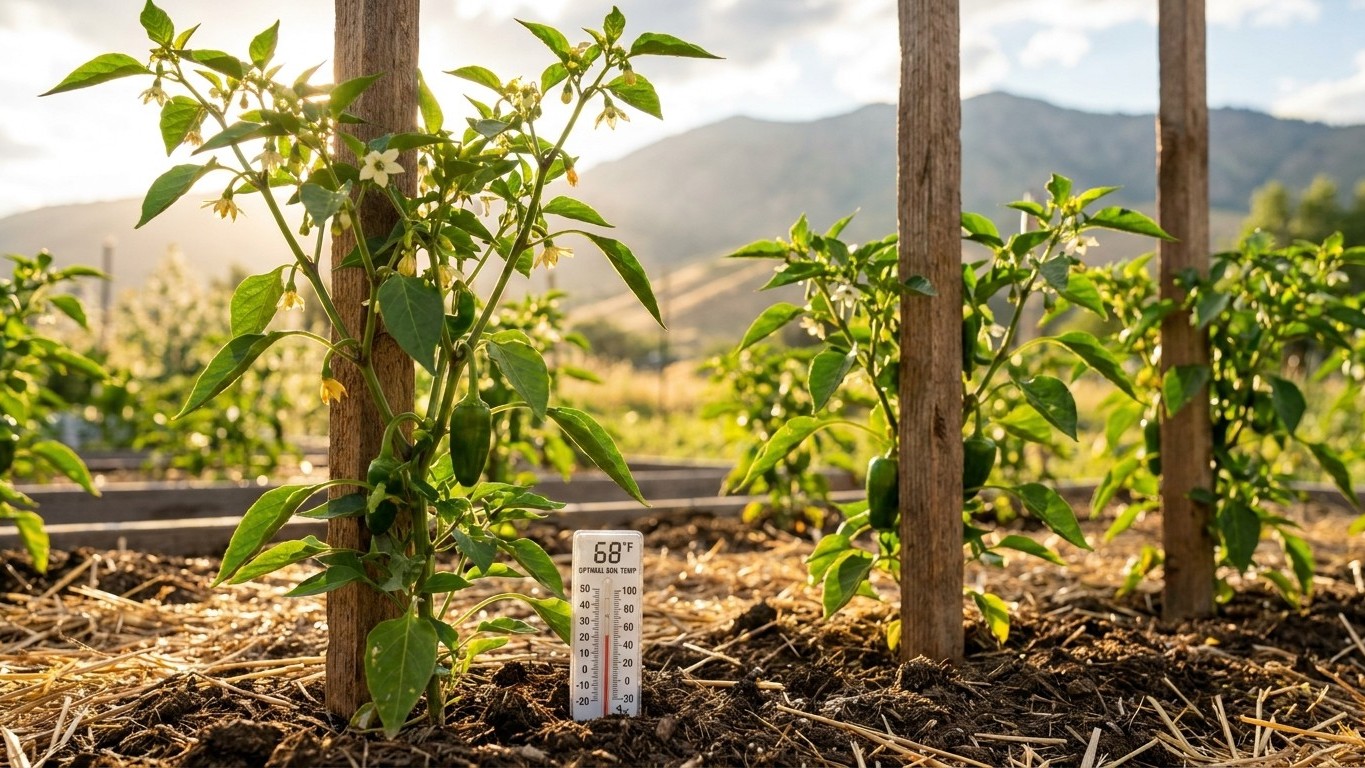
- Wait for 60 F soil, not just frost-free air. Cold soil stalls pepper roots even after the air feels safe. Check soil temperature at a 4-inch depth with a simple probe thermometer rather than guessing from the calendar, since a cool, wet spring can push that 60 F mark well past the last frost date.
- Set the transplant date at whichever comes later. If frost risk clears in mid-May but the soil doesn’t hit 60 F until the very end of May, the soil temperature is the limiting factor, not the frost date. Peppers set out into cold soil sit and sulk instead of growing.
- Count back 8 to 10 weeks for the indoor sowing date. If a rural North Dakota garden lands on a realistic transplant date in the third week of May, counting back 8 weeks lands seed-starting in the last week of March; counting back the full 10 weeks pushes it to the second week of March. Gardeners with a shorter, more sheltered growing spot can lean toward the 8-week end; those wanting sturdier, more mature transplants for a cooler site can lean toward 10 weeks.
- Recheck against your own microclimate every spring. A single frost-date range from one airport station won’t match every yard in the state. Keep a simple log of your own last frost and soil-warming date year to year, and adjust the seed-starting count from that instead of a fixed date on the wall calendar.
What goes wrong here
- Blossom drop in a hot spell. Even with only 11.7 average days a year at or above 90 F, a short heat spike during flowering can strip a plant of blooms with no fruit to show for it. The remedy is timing the crop so peak flowering doesn’t land during North Dakota’s hottest stretch, usually mid- to late July, and providing afternoon shade cloth during any sudden heat run so flowers aren’t cooking in direct sun during the hottest hours.
- Blossom drop from a cool night. Because pepper flowers also abort below 55 F, a cold snap in late spring or early September, well within a normal North Dakota growing season, can wipe out a bloom flush just as easily as a heat wave. Since this site doesn’t track summer night minima, the fix is monitoring your own garden with a thermometer and covering plants with row cover or moving containers into a garage overnight when a cool night is forecast during bloom.
- Sunscald on exposed fruit. Pepper fruit that develops without enough leaf cover can blister and turn papery white or tan on the side facing direct sun, especially once a plant loses foliage to disease or heavy pruning. Keeping the plant’s natural leaf canopy intact, and avoiding aggressive pruning mid-season, gives fruit the shade cover it needs to finish ripening without scald damage.
- Blossom-end rot on developing fruit. A sunken, leathery patch at the blossom end of the fruit usually traces back to uneven watering rather than a soil calcium shortage outright, since calcium can’t move to the fruit if the plant goes through dry-then-soaked cycles. Consistent, even watering, especially during the weeks fruit is sizing up, prevents most cases without needing a special amendment.
Common questions
How many frost-free days does a North Dakota pepper garden actually get?
The reference station data used here covers frost timing, not the full frost-free count, and shows a last spring frost window of May 4 to May 15 at the Fargo airport station. Rural and suburban gardens should expect that date later, often by one to two weeks, and should track their own fall frost separately since it isn’t part of the published figures used here.
Can I skip the indoor seed-starting step and direct-sow peppers in North Dakota?
Utah State University Extension’s 8- to 10-week indoor timeline exists because peppers are slow to germinate and slow to reach flowering size. Direct-sowing in a short-season northern state like North Dakota generally doesn’t leave enough time between safe soil temperatures and the first fall frost for fruit to mature, so an indoor head start is the practical approach here.
Does 11.7 days above 90 F mean heat isn’t a real risk for North Dakota peppers?
It means the average heat load is light compared to hotter regions, but an average isn’t a guarantee for any single season. A cluster of hot days landing right during peak flowering can still cause blossom drop, so it’s worth watching the forecast during bloom rather than assuming the season-long average protects every week.
What should I do if I don’t know my own summer night temperatures?
Since this site doesn’t carry night minimum data, the most reliable option is placing a simple min-max thermometer in the pepper bed and checking it through the growing season, particularly in the weeks right after transplant and again as the plants approach their final harvest window in early fall.