
In North Dakota, pumpkin seed goes into the ground once the soil has warmed to 65 F, typically from the last week of May through mid-June, so that flowering falls before early August. That timing gives the 45 to 55 days a pumpkin needs after flowering to ripen before the state’s first fall frost, which arrives between September 25 and October 5. Push sowing later than mid-June and the math stops working in your favor.
The short answer
North Dakota’s growing season is bookended by two hard numbers from NOAA’s climate normals: the last spring frost falls between May 4 and May 15, and the first fall frost returns between September 25 and October 5. Everything about pumpkin timing here gets built backward from that fall date, because a pumpkin flower needs 45 to 55 days after it opens, not after the seed goes in, to finish a ripe fruit.
Run the arithmetic against the earlier end of the frost window, September 25, and 55 days back lands you at August 1. Run it against the later end, October 5, with the shorter 45-day maturation, and you land at August 21. That gives a flowering window of roughly August 1 to August 21 as the last stretch during which a pumpkin flower can still open and reasonably finish coloring before frost shuts the season down.
Flowers that open after that window are gambling. A fruit set in late August, even a small one, may still be green and hard-skinned when the first freeze hits. That’s the piece growers miss most often: they count days from the seed packet, not from the day the actual flower opened on the vine. A vine can look perfectly healthy in July and still be running behind schedule if its first female flowers didn’t open until the second half of August.
Because the fall frost date itself is a range and not a single day, treat August 21 as the outer edge, not the target. Aiming for flowers open by early August, rather than the third week, builds in a cushion for a year when frost arrives on the early side of the window, or when a particular garden sits in a low spot that cools faster than the reference station used for these normals.
That reference point matters. The frost dates above come from an airport weather station, and airport sites tend to run warmer than the rural and suburban yards around them. A garden in a river valley, a low-lying field, or anywhere without the airport’s open exposure can see frost one to two weeks earlier than the official window suggests. Check your own county’s frost history before locking in a date, especially if your land is not flat and open like an airfield.
When to sow here
The mistake most gardeners make is treating the last spring frost date as the sowing date. It isn’t. Pumpkin seed wants soil at 65 F, and soil warms on its own clock, weeks slower than the air above it. Here’s how the sequence actually plays out in North Dakota:
- Let the frost window pass first. The last spring frost falls between May 4 and May 15 at the reference station, later in low-lying or rural gardens. Treat that date as the earliest possible marker, not the finish line.
- Wait for the soil, not the calendar. Bare soil in North Dakota commonly needs additional weeks after that last frost before it holds steady at 65 F. Cold nights well into May keep the top few inches of soil sluggish even after the air itself has stopped freezing.
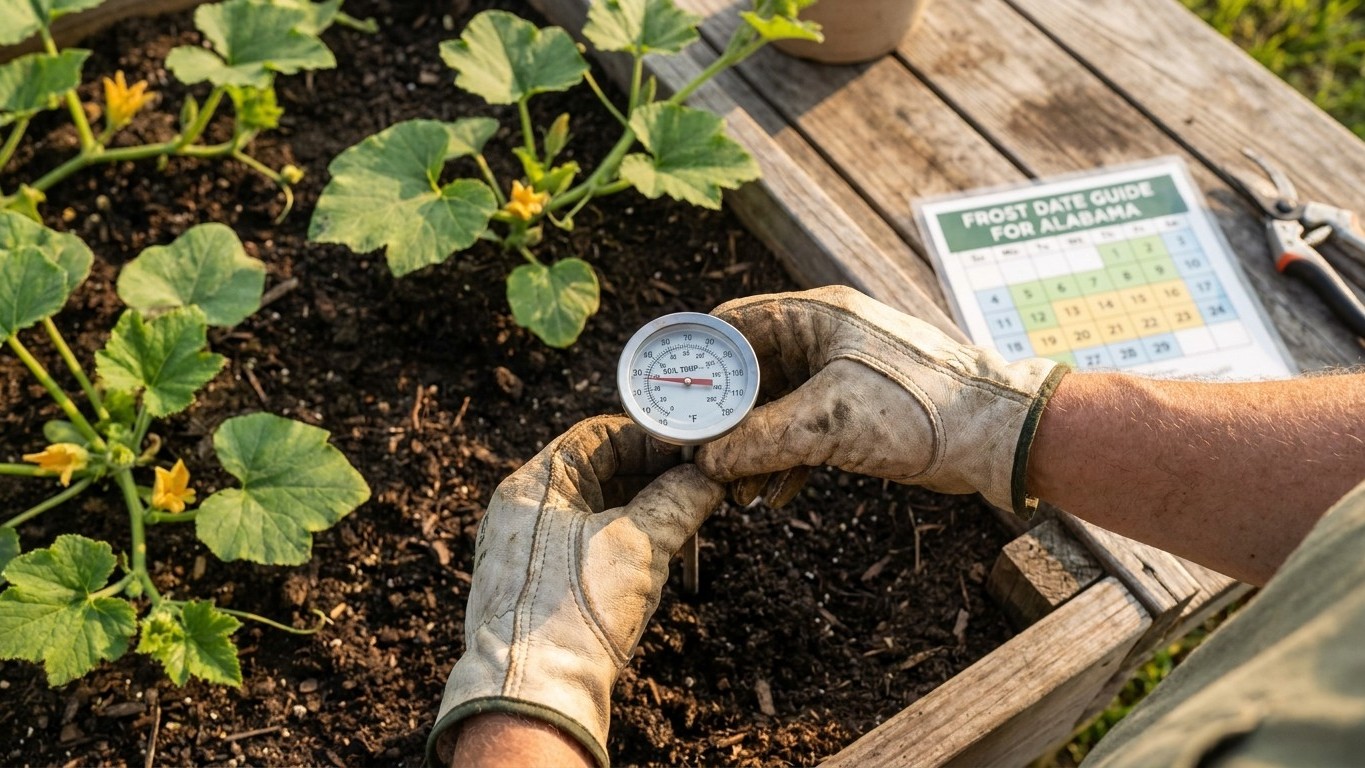
- Use a soil thermometer instead of guessing. Push a probe thermometer two inches deep in the early morning for several days running. Once it reads 65 F consistently, not just on a single warm afternoon, the seed can go in.
- Row covers can move that date up. Clear plastic or fabric row covers trap daytime heat and warm the soil underneath faster than bare, exposed ground. In practical terms, a row cover buys roughly two weeks, letting a grower sow that much earlier than they otherwise could while still hitting the 65 F mark.
- Land the sowing window in late May to mid-June. For most North Dakota gardens without season-extension tools, that puts direct sowing somewhere between the last week of May and the middle of June. With row covers, the front end of that window can shift earlier.
- Count forward, then check backward. Once seed is in, tracking roughly when flowers open lets a grower confirm they’re still inside the August 1 to August 21 flowering window from the section above. If flowering is running late, that’s the signal to consider row covers or cold frames the following season, not a wait-and-see approach this season.
What goes wrong here
- A late flower that never colors. When the first strong flush of female flowers doesn’t open until early September, the fruit simply doesn’t get its 45 to 55 days before frost. The fix is upstream: sow as early as the soil allows, use row covers to push that date earlier, and choose shorter-vine types that tend to flower sooner. Names like Baby Bear, Jack Be Little, Small Sugar, Autumn Gold, Cinderella, Prizewinner, Lumina, Casperita, and Connecticut Field all show up in North Dakota gardens, though no specific days-to-maturity figures for them are published here.
- A fruit caught by frost while still on the vine. Even a well-timed pumpkin can get surprised by an early frost inside that September 25 to October 5 window. The remedy is to harvest immediately once frost is forecast, cutting the fruit with the stem attached and moving it somewhere it will not freeze, rather than leaving it out for one more day of color development.
- A vine that collapses before the skin hardens. Powdery mildew, squash vine borer damage, or simple late-season stress can kill the foliage weeks before the fruit is ready. Without leaves feeding it, the pumpkin stalls with a soft, immature rind. Cutting back on watering once fruit is set and keeping the vine as healthy as possible into September gives the skin time to cure naturally before the vine gives out.
- Pest pressure eating into the season’s already tight window. Squash bugs and cucumber beetles both slow vines down at exactly the wrong time of year in North Dakota. Rather than repeat the identification and control details here, see this site’s dedicated pages on squash bugs in North Dakota and cucumber beetles in North Dakota for the specifics on each pest.
Common questions
Can I still sow pumpkins in North Dakota if I missed mid-June?
It gets risky. Every week past mid-June pushes flowering closer to the August 21 outer edge of the safe window, and a cool or early-frost year can catch fruit still green. Row covers and choosing a shorter-vine variety are the two levers available at that point.
Does 65 F soil mean the last frost has passed?
No. The last spring frost in North Dakota falls between May 4 and May 15, but soil takes additional weeks beyond that to warm to 65 F on its own. Sowing by the frost date alone, without checking soil temperature, is a common way to lose seed to rot in cold ground.
How should I store pumpkins after harvest?
The available guidance says only to keep them somewhere they will not freeze; no specific storage temperature or keeping-time figure is published here, so treat any freeze-free, dry spot as the baseline and check on fruit condition regularly.
Why does my county’s frost date seem different from the official window?
The September 25 to October 5 and May 4 to May 15 windows come from an airport weather station, which tends to run warmer than surrounding rural and low-lying land. Gardens off that exposed, open ground can see frost arrive one to two weeks earlier in fall and linger one to two weeks later in spring, so local county records are worth checking directly.