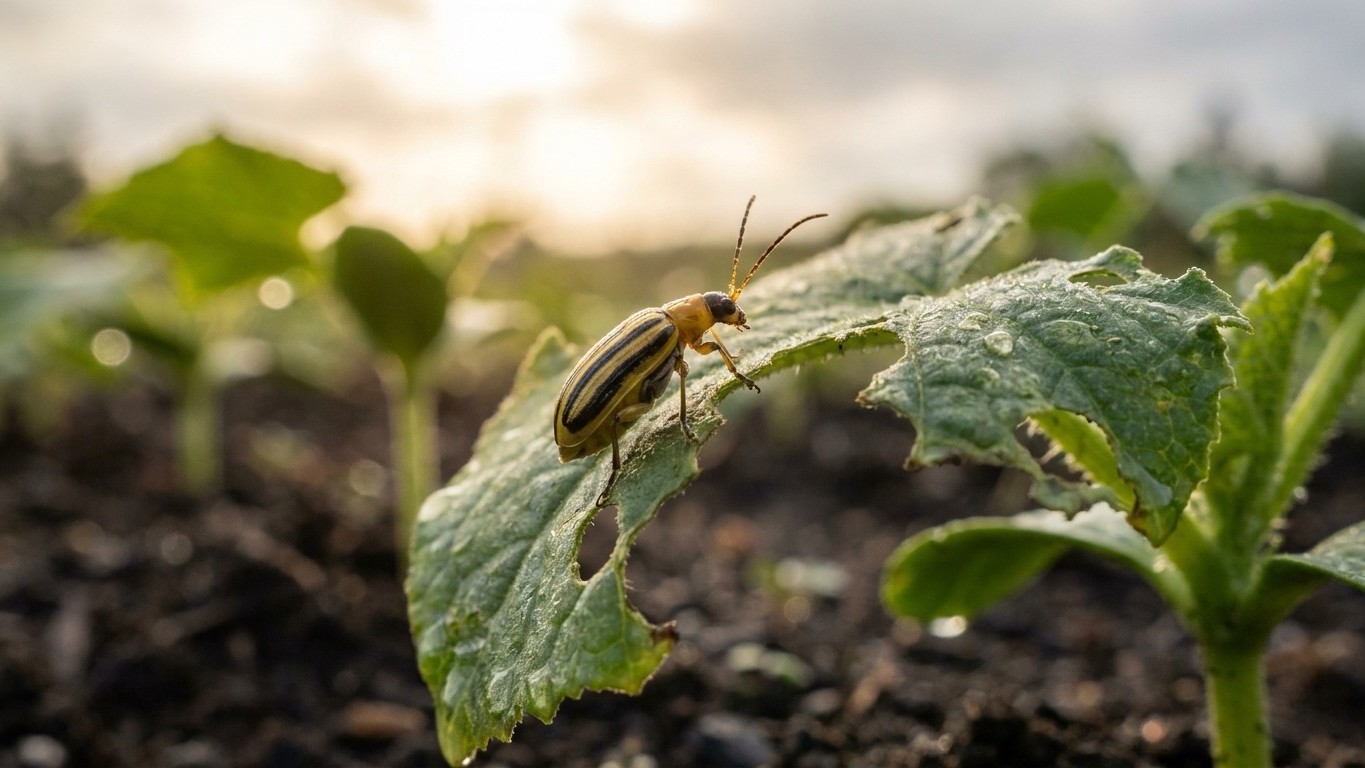

Striped cucumber beetles show up in Nova Scotia gardens right around the time cucurbit seedlings go into the ground, typically the first two weeks of June once soil temperatures climb past 55°F. That timing lines up almost exactly with when overwintered adults finish their dormancy and start searching for food. If your zucchini or cucumber plants look chewed or wilted within days of transplanting, this beetle is the most likely suspect in most Maritime gardens.
When Striped Cucumber Beetles Actually Appear

Nova Scotia’s growing season runs short compared to most of the U.S., and that compresses the beetle’s activity window into a tighter stretch than gardeners in Ohio or Pennsylvania deal with. Adults overwinter in leaf litter, hedgerows, and soil debris near where cucurbits grew the previous year. They don’t fly far when they emerge. A beetle that spent winter under a pile of old squash vines twenty feet from this year’s garden bed is often the first one you’ll spot.
Emergence depends on soil warming, not a calendar date. A cold, wet spring pushes the first sightings into mid-June. A warm April and May can bring beetles out by the last week of May. Once active, adults feed on young leaves, stems, and blossoms for several weeks before mating and laying eggs at the base of host plants. In the Maritime climate, this species typically completes just one generation per year, sometimes a partial second generation if the fall stays mild. That’s a real difference from warmer U.S. growing regions, where two full generations are common and beetle pressure builds through the entire summer.
Larvae hatch from eggs laid in soil cracks near stems and burrow down to feed on roots and the below-ground portion of the stem. This root-feeding stage does real damage but goes unnoticed by most gardeners because it happens underground. By the time a plant collapses in July, the larval damage already happened weeks earlier.
Why This Beetle Causes More Trouble Than Its Size Suggests
A quarter-inch beetle doesn’t sound like a threat, but the striped cucumber beetle carries two problems that outweigh its actual feeding damage. The first is bacterial wilt, caused by the bacterium Erwinia tracheiphila, which the beetle transmits through its feces and mouthparts as it chews on leaves and stems. Once a plant is infected, there’s no cure. Vines wilt during the day, sometimes recover overnight, then wilt again and never come back. Cucumbers and muskmelons are highly susceptible; squash and pumpkins tend to tolerate infection better.
Bacterial wilt pressure in Nova Scotia runs lower than in the U.S. Midwest, where the disease is a routine summer headache for commercial growers. Cooler, shorter summers slow bacterial reproduction inside the plant and reduce the beetle’s overall population density. That doesn’t mean the risk is zero, though. Home gardeners in the Annapolis Valley and along the South Shore still report wilt losses most years, particularly on cucumber varieties without resistance bred in.
The second problem is cucumber mosaic virus, which the beetle can also spread, though less efficiently than aphids do. Mosaic-infected plants show mottled, yellow-green leaves and stunted, misshapen fruit. Between wilt and mosaic, a beetle population that looks minor in early June can wipe out a cucumber patch by mid-July if nothing interrupts the cycle.
Spotting the Damage Early
The adult beetle is easy to identify: yellow-to-black body, about a quarter-inch long, with three bold black stripes running down its back. It moves fast and drops off the leaf the moment you get close, which makes hand-picking frustrating but not impossible if you work in early morning when beetles are sluggish from cool temperatures.
Feeding damage shows up as small, ragged holes in cotyledons and young true leaves, often concentrated at the plant’s growing tip. Seedlings take the worst hit because they have so little leaf tissue to spare. A mature squash plant can shrug off moderate beetle feeding; a two-week-old cucumber seedling can be defoliated to nothing within days. That’s why the first two to three weeks after transplanting or direct-seeding matter more than any other stretch of the season.
Check the base of stems and the soil surface right around them for tiny yellow eggs or thin white larvae. Wilting that starts on one or two leaves and spreads through the whole vine over several days, rather than an entire plant collapsing overnight from drought, points toward bacterial wilt rather than simple water stress. A quick test: cut a wilted stem and press the cut ends together, then slowly pull apart. Bacterial wilt often produces thin, sticky strands of ooze between the two halves.
What Actually Stops the Beetle
Timing and Physical Barriers
Row covers are the single most effective tool available to home gardeners, and the logic is simple: keep the beetle off the plant during the vulnerable seedling stage, and most of the wilt and mosaic risk disappears with it. Lightweight floating row cover, installed immediately after transplanting or seeding and sealed at the edges with soil or garden staples, blocks adult beetles from reaching the plant entirely. The catch is timing removal correctly. Cucurbits need pollinators to set fruit, so covers have to come off once flowering begins, usually three to five weeks after planting depending on the variety and how warm the season runs. That window, right around flowering, is when beetle risk needs a different strategy.
Delayed planting can help in gardens with a history of heavy beetle pressure. Beetles emerge based on soil temperature, and a slightly later planting date means seedlings avoid the peak emergence period entirely, sometimes cutting exposure by half. This works better for squash and pumpkin, which have a longer window before frost, than for cucumbers grown for fresh eating, where gardeners want an early harvest.
Trap Crops and Cultural Controls
Striped cucumber beetles show a strong preference for certain cucurbit varieties, particularly Blue Hubbard squash, over others. Planting a small border of Blue Hubbard around the perimeter of a cucumber or melon patch pulls beetles toward the trap crop and away from the main planting. Gardeners using this method typically treat the trap plants directly with an insecticide or simply accept some damage on the sacrificial border, since the goal is protecting the harvest crop, not the trap itself.
Crop rotation matters more than most gardeners assume. Since adults overwinter in debris near where cucurbits grew, planting this year’s squash or cucumbers in the same bed as last year gives emerging beetles a shorter commute to a fresh food source. Moving cucurbit plantings to a different part of the garden each year, even by just twenty or thirty feet, reduces the odds that overwintering beetles find the new planting quickly.
Clearing plant debris in fall rather than leaving old vines to overwinter in place removes some of the shelter beetles rely on. This is a modest reduction, not elimination, since beetles also overwinter in nearby hedgerows and woodlots, but every reduction in local overwintering population helps the following spring.
Direct Control When Numbers Spike
Hand-picking works on a small scale, especially in cool early mornings when beetles move slowly. Drop them into soapy water rather than trying to crush them, since they’re quick to fly off if disturbed.
Kaolin clay, applied as a spray coating to leaves and stems, creates a physical barrier that beetles find unappealing to feed on or lay eggs in. It’s an option gardeners using organic methods often turn to since it doesn’t rely on toxicity.
For heavier infestations, pyrethrin-based insecticides labeled for cucumber beetle on vegetable crops offer a fast knockdown, though they also affect pollinators and should go on in early morning or evening when bees aren’t active, and never on open blossoms. Reading and following the label rate and pre-harvest interval matters here, since cucurbits are harvested frequently and repeatedly through the season.
Neem oil, applied as a preventive spray before beetle pressure builds, offers milder control with less pollinator risk, though it needs more frequent reapplication than synthetic options and works better as a deterrent than a rescue treatment once beetles are already established in numbers.
Building a Realistic Nova Scotia Timeline
Late May through early June is when row covers should already be in place over newly transplanted or seeded cucurbits, ahead of the first beetle emergence rather than reacting to it. Mid-June through early July is the highest-risk window for both direct feeding damage and disease transmission, right as covers come off for pollination. By late July, adult beetle numbers in most Nova Scotia gardens taper off noticeably, and the second-generation risk that plagues warmer U.S. regions rarely materializes here except in unusually warm, extended falls.
Squash varieties bred with some tolerance to bacterial wilt, combined with row covers during the seedling stage and a Blue Hubbard trap crop at the garden’s edge, cover most of what a home gardener needs without turning pest management into a full-time job. The beetle itself is manageable. It’s the wilt it carries that turns a minor pest into a season-ending problem if the early weeks get no protection at all.
Related guides
- Striped cucumber beetle in New Brunswick: When It Shows Up and What Stops It
- Striped cucumber beetle in Ohio: When It Shows Up and What Stops It
- Striped cucumber beetle in Ontario: When It Shows Up and What Stops It
- Striped cucumber beetle in Minnesota: When It Shows Up and What Stops It
- Striped cucumber beetle in Maine: When It Shows Up and What Stops It