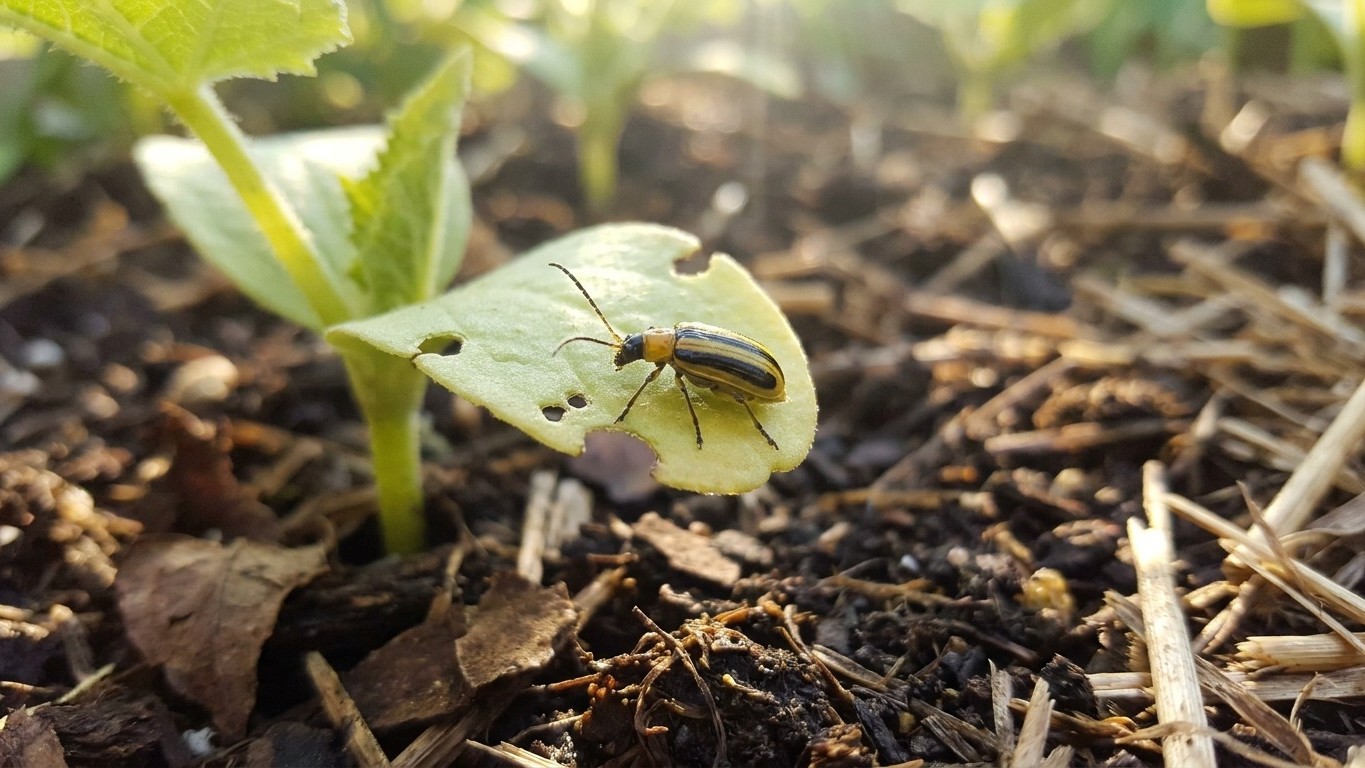

Striped cucumber beetles emerge in Minnesota once soil temperatures climb into the mid-50s, typically between mid-May in the southern counties and early June farther north. Row covers installed before that window, paired with trap crops and a strict scouting schedule through early bloom, remain the most reliable way to keep populations from wrecking young cucumbers, squash, and melon plants.
When Striped Cucumber Beetles Show Up in Minnesota

Minnesota’s growing season runs shorter than states to the south, and that shapes the beetle’s whole calendar. Adults overwinter in leaf litter, fence rows, and wood edges near last year’s garden beds. They wait out the cold in a kind of dormancy, then crawl out once the ground warms, well before most gardeners have their transplants in the dirt.
In the Twin Cities metro and southern counties along the Iowa border, that means beetles are often active by the second or third week of May. Farther north, around Duluth or the Iron Range, activity usually holds off until early June. The gap isn’t small. Two to three weeks of difference can mean the beetles arrive right as seedlings put out their first true leaves, or they show up after plants have already toughened up a bit.
Minnesota’s climate limits the striped cucumber beetle to one generation per year in most of the state, unlike warmer regions where two generations can overlap. That single-generation pattern actually works in a gardener’s favor. Knock down the first wave hard enough, and there’s no second surge to worry about before frost. Adults from that one generation feed through summer, then seek shelter again by September as day length shortens and temperatures drop.
Why Early Spring Matters More Than Midsummer
The riskiest stretch for cucurbit crops isn’t July, it’s the two to three weeks right after seedlings emerge or transplants go into the ground. Cotyledons and first true leaves are soft, small, and easy to strip. A handful of beetles can girdle a stem or shred a seedling to nothing in a couple of days. Established plants with several mature leaves tolerate feeding far better, which is why timing protection to the vulnerable window matters more than blanket spraying all season.
Identifying the Pest and the Damage It Causes
The striped cucumber beetle (Acalymma vittatum) measures about a quarter inch long, with a yellow-to-orange body and three bold black stripes running lengthwise down its wing covers. It’s often confused with the spotted cucumber beetle, which carries black dots instead of stripes and tends to be a secondary pest in Minnesota gardens rather than the primary threat.
Adults feed on leaves, stems, flowers, and fruit rinds of cucumbers, squash, melons, and pumpkins, chewing small round holes and sometimes scarring the fruit surface itself. But the leaf damage, while unsightly, usually isn’t the biggest problem. The real threat is bacterial wilt, caused by the bacterium Erwinia tracheiphila, which the beetles carry in their gut and transmit through feeding wounds. Once a plant is infected, there’s no cure. Vines wilt from the tips inward, and within a week or two the whole plant can collapse, even though it was green and thriving days earlier.
Cucumbers and muskmelons are highly susceptible to bacterial wilt. Squash and pumpkins are more resistant, which is a detail worth knowing before deciding where to focus protective measures in a mixed garden. Below ground, cucumber beetle larvae feed on roots and can tunnel into stems near the soil line, which weakens plants even when adult feeding above ground looks minor.
What Actually Stops Striped Cucumber Beetles
No single method wipes this pest out completely. What works is stacking a few tactics so the beetles never get a clean shot at seedlings during that vulnerable early window.
Row Covers, Timed Right
Floating row covers laid over cucurbit beds at planting, and sealed tight along the edges with soil or stakes, physically block adult beetles from reaching plants. The catch is timing removal. Cucumbers, squash, and melons need pollinators once they flower, so covers have to come off right as blooms open. Leave them on too long and yields suffer from lack of pollination; take them off too early and beetles move in before plants can handle the pressure.
Trap Crops That Pull Beetles Away
Blue Hubbard squash is one of the more effective trap crops for cucurbit beetles across the Midwest. Planted a week or two before the main crop and positioned around the garden perimeter, it draws beetles away from cucumbers and melons because they find it more attractive. Gardeners running this strategy often treat the trap crop itself with an insecticide or simply pull and destroy heavily infested plants, concentrating the pest problem in a small, manageable spot instead of letting it spread across the whole bed.
Delayed Planting and Transplants Over Direct Seed
Pushing planting dates back by a week or two, once the earliest wave of overwintered beetles has already searched an empty garden and moved on, can reduce pressure. Starting cucurbits as transplants indoors and setting out larger, sturdier plants also helps them shrug off feeding that would have killed a tender seedling. Bigger plants recover from beetle damage faster and are less likely to die from bacterial wilt transmission simply because they have more leaf area to spare.
Crop Rotation and Sanitation
Since adults overwinter in garden debris and nearby field edges, clearing old cucurbit vines and leaf litter each fall removes some of the shelter beetles depend on. Rotating cucurbit plantings to a different part of the yard each year, rather than putting cucumbers in the same raised bed every season, makes it harder for emerging beetles to find host plants immediately.
Biological and Least-Toxic Options
Beneficial nematodes applied to soil around plant bases can target beetle larvae before they mature into next year’s adults, though results vary with soil moisture and application timing. Kaolin clay sprays coat leaves in a fine particle film that beetles find unappealing to feed on and lay eggs in, and it washes off before harvest. For heavier infestations, spinosad-based sprays applied in the evening (to avoid harming bees during active foraging hours) offer a targeted option with lower impact on pollinators than broad-spectrum insecticides.
Resistant Varieties
Some cucumber varieties bred for reduced cucurbitacin content are less attractive to beetles, since cucurbitacins are the compounds that draw beetles in the first place. Seed catalogs and university extension trial results list cultivars with lower beetle attraction, and choosing one of these for a garden with a known history of heavy pressure can cut down on the need for other interventions.
Monitoring and Timing Your Defense
Checking plants every two to three days from emergence through early flowering catches problems while they’re still manageable. Look under leaves and near the soil line at the base of stems, since beetles often hide there during the hottest part of the day. Yellow sticky traps placed near cucurbit beds can also give an early warning that adults have arrived in the area, even before feeding damage becomes obvious on the plants themselves.
A useful threshold many Midwest growers use: if scouting turns up an average of one beetle per plant on seedlings with fewer than five true leaves, it’s time to act, whether that means adding row covers, applying kaolin clay, or spot-treating with spinosad. Once plants reach five or more leaves and start flowering, they can typically tolerate beetle numbers two to three times higher without significant yield loss, though bacterial wilt risk never fully disappears as long as beetles are feeding.
Minnesota gardeners dealing with a bad beetle year one season often see lighter pressure the next, particularly if sanitation and rotation practices were tightened up in the meantime. The single-generation life cycle in this climate means every fall cleanup and every year of rotation chips away at the local population feeding into next spring’s emergence.
Related guides
- Striped cucumber beetle in Iowa: When It Shows Up and What Stops It
- Striped cucumber beetle in New Brunswick: When It Shows Up and What Stops It
- Striped cucumber beetle in Newfoundland and Labrador: When It Shows Up and What Stops It
- Spotted wing drosophila in Minnesota
- Swede midge in Minnesota
- Striped cucumber beetle in Nova Scotia: When It Shows Up and What Stops It
- Striped cucumber beetle in Prince Edward Island: When It Shows Up and What Stops It