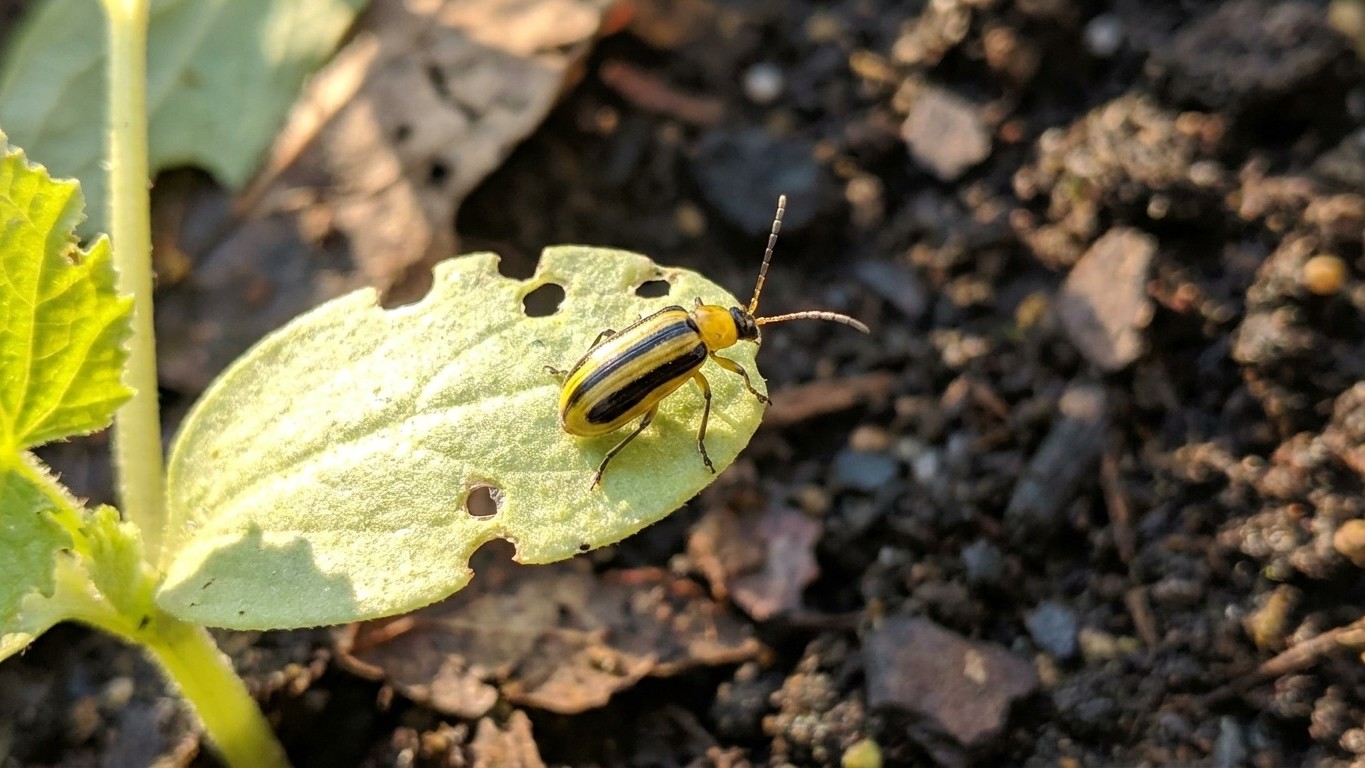

Striped cucumber beetles show up in Ontario as soon as soil temperatures climb past roughly 55°F, which usually lands somewhere between mid-May and early June depending on the region. That timing lines up almost exactly with cucumber, squash, and melon seedlings pushing through the soil, and that’s not a coincidence. The beetles overwinter as adults in leaf litter and field edges, then move straight into the nearest cucurbit patch the moment it’s warm enough to fly. Stopping them means acting before the seedlings even have their second leaf, not after the damage is visible.
When Striped Cucumber Beetles Appear in Ontario

Adult beetles spend winter tucked into soil clumps, grass margins, and windbreaks near last year’s cucurbit fields. Southern Ontario growers, from the Niagara Peninsula to the Windsor-Essex region, typically see the first beetles emerge earlier than growers in the Ottawa Valley or up toward Georgian Bay, sometimes by two to three weeks. The trigger isn’t a calendar date. It’s soil warmth. Once the top few inches of soil hit that mid-50s mark, beetles crawl out and start searching for host plants using scent cues from cucurbit leaves.
Here’s the part that catches a lot of home gardeners off guard: beetles can arrive within 48 hours of seedlings emerging, sometimes chewing through cotyledons before the plant has a real leaf. That’s a narrow window. A backyard grower who checks plants once a week might miss the entire opening act and only notice trouble once the damage is already extensive.
In most of Ontario, there’s one generation per year, though warmer seasons in the far south can produce a partial second generation by late summer. That second wave tends to be smaller and less destructive, mostly because by then plants are bigger and better able to tolerate some feeding.
Why This Beetle Causes More Trouble Than Its Size Suggests
The beetle itself is small, about 1/5 inch long, with three black stripes running down a yellow back. On its own, feeding damage looks manageable: some chewed leaf edges, a few scarred cotyledons. The real threat is what the beetle carries.
Striped cucumber beetles are the primary vector for bacterial wilt, caused by the pathogen Erwinia tracheiphila. The bacteria live in the beetle’s gut and get deposited into feeding wounds on leaves and stems. Once inside the plant’s vascular system, the bacteria multiply and clog the tissue that carries water, and the plant wilts and dies within one to two weeks of infection, sometimes faster in hot weather. Cucumbers and muskmelons are the most susceptible; squash and pumpkins have more natural resistance to the wilt itself but can still suffer from beetle feeding directly.
There’s a second complication: cucumber beetles also spread squash mosaic virus, which stunts growth and mottles leaves without necessarily killing the plant outright. A grower dealing with both problems at once can lose an entire planting of cucumbers in a single season, which is why extension programs treat this beetle as an economic pest rather than a cosmetic one.
Spotting an Infestation Before It Spreads
Adult beetles feed on cotyledons, young leaves, flowers, and even the surface of fruit rinds, leaving small round or irregular holes. Look closely at seedlings in the first two weeks after emergence. Beetles often cluster on the undersides of leaves or hide near the soil line at the base of the stem, especially during the hottest part of the day.
Yellow sticky traps placed at plant height, a few inches above the soil, give a reliable early warning. Checking traps every two to three days during the emergence window (mid-May through mid-June in most of Ontario) catches the population before it builds. Extension guidelines generally suggest that finding one beetle per plant on seedlings, or five beetles per plant on larger established plants, is enough to justify treatment. Waiting for visible defoliation means waiting too long, particularly with bacterial wilt in the mix.
Larvae are a separate concern that’s easy to overlook. They live in the soil and feed on roots and the base of stems, which weakens the plant’s ability to take up water even before wilt symptoms show. Digging around the base of a struggling plant sometimes reveals thin, white, worm-like larvae rather than any adult beetles at all, which explains why a plant can decline even after adults seem to have moved on.
Which Plants Are Most at Risk
Not every cucurbit is equally attractive. Cucumbers and muskmelons draw the heaviest feeding and carry the highest bacterial wilt risk. Squash and pumpkins get chewed but tolerate it better. Watermelon tends to be the least preferred host in most Ontario gardens, though beetles will still feed on it if nothing better is nearby.
What Actually Stops Striped Cucumber Beetles
Row covers remain the single most effective tool for home gardens. Floating row cover placed over seedlings immediately at transplant or seeding, and sealed tightly at the edges with soil or clips, physically blocks beetles from reaching the plants during that critical first two to three weeks. The catch is timing removal correctly: covers need to come off once flowers start opening, since cucurbits depend on bees for pollination and a sealed cover keeps pollinators out along with the pests.
Trap cropping works well for larger gardens and small farms. Blue Hubbard squash is disproportionately attractive to striped cucumber beetles compared to other cucurbits, so planting a border row of it around the main crop draws beetles away from cucumbers and melons. Treating just the trap crop with an insecticide, rather than spraying the entire planting, cuts chemical use significantly while still protecting the main harvest.
Crop rotation matters more than most gardeners assume. Since adults overwinter near last year’s cucurbit patch, planting this year’s cucumbers or squash in the same spot practically guarantees an early, concentrated infestation. Moving cucurbits to the opposite side of the yard or a different field section, even 50 to 100 feet away, forces beetles to search harder and delays the buildup.
For direct control once thresholds are hit, a few approaches have decent track records:
- Kaolin clay applications create a physical barrier and feeding deterrent on leaves and fruit, reformulated after rain
- Spinosad-based products offer control with lower toxicity to bees when applied in early morning or evening, outside pollinator activity hours
- Pyrethrin sprays knock down adult populations quickly but break down fast in sunlight, requiring repeat applications
- Removing and destroying crop debris in fall reduces the overwintering sites right on the property
Beneficial insects offer limited help here. Some parasitic wasps and predatory insects will feed on cucumber beetle eggs and larvae, but none provide the kind of reliable population control that row covers or trap crops do. Relying on natural predators alone tends to disappoint gardeners who’ve had success with that approach against other pests.
Straw or plastic mulch around plant bases has shown mixed results in Ontario trials. Reflective mulch can disorient beetles searching by sight and scent, reducing landing rates somewhat, though it’s not a standalone solution the way row covers are.
A Realistic Timeline for Ontario Gardeners
Late April into early May is the setup window: clear last year’s cucurbit debris, plan rotation, order or locate row cover material. Mid-May through early June is peak vigilance, when seedlings need daily or every-other-day checks and row covers should already be in place before beetles arrive rather than after. By late June, once plants are flowering and covers come off, sticky trap monitoring should continue for another two to three weeks to catch any beetles moving in from neighboring properties or wooded edges.
One detail that surprises a lot of Ontario gardeners: a mild winter followed by an early spring doesn’t just mean beetles arrive sooner, it often means a larger overwintering population survives in the first place, since fewer beetles die off during a shorter, warmer cold season. That’s worth factoring into how aggressively row covers and trap crops get deployed the following spring, particularly after a winter with fewer hard freezes than usual.
Related guides
- Striped cucumber beetle in Manitoba: When It Shows Up and What Stops It
- Striped cucumber beetle in Quebec: When It Shows Up and What Stops It
- Striped cucumber beetle in Prince Edward Island: When It Shows Up and What Stops It
- Striped cucumber beetle in South Carolina: When It Shows Up and What Stops It
- Striped cucumber beetle in Maine: When It Shows Up and What Stops It
- Striped cucumber beetle in Massachusetts: When It Shows Up and What Stops It