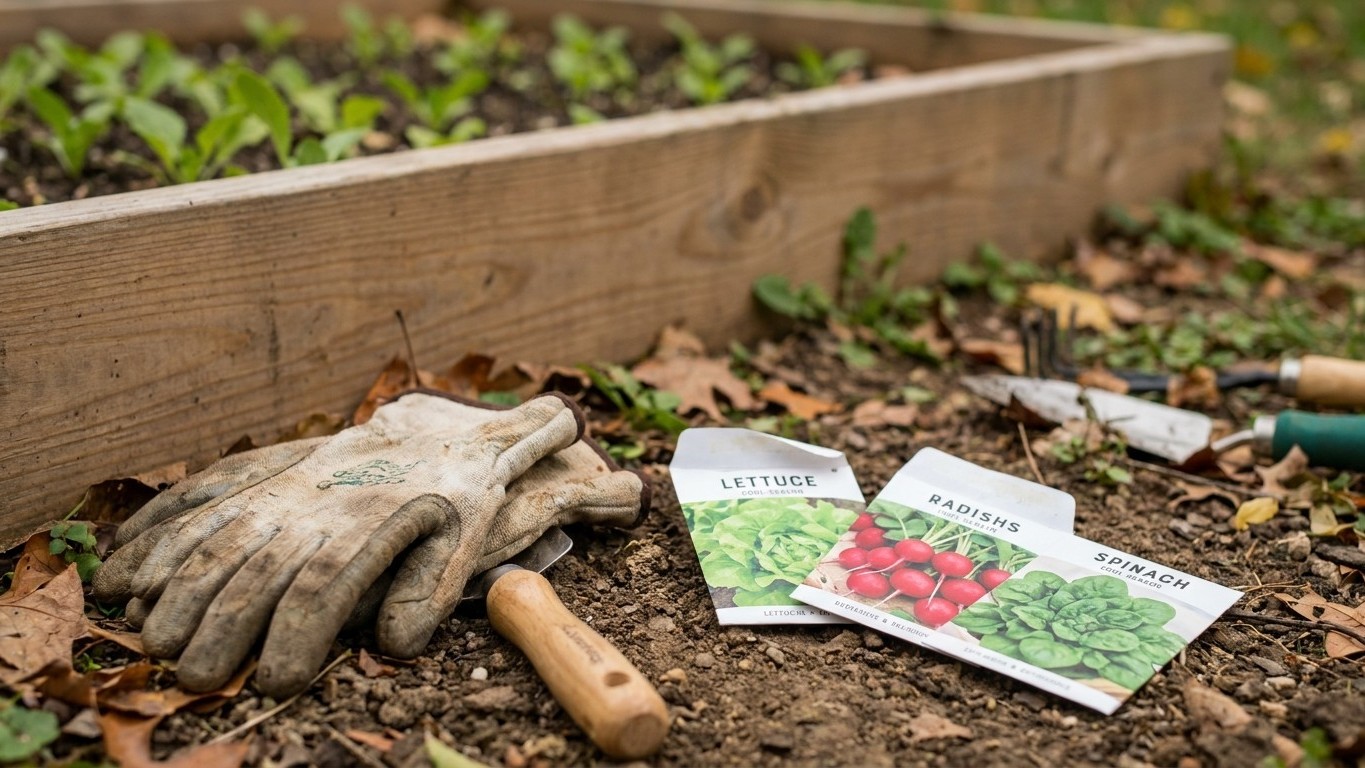

You’ve still got a few weeks before frost, and that’s enough to get one more real harvest out of this yard. Spinach, lettuce, arugula, radishes, turnips for greens — all of it germinates fine in September soil and sizes up fast, but only if it goes in now rather than the last week of the month. Push a soil thermometer into the bed you want to use and check the temperature before you drop a single seed.
What goes in the ground in September

September sits in the narrow stretch between summer’s last plantings and the first fall frost, so the decision is less about the calendar date and more about how many weeks a crop actually needs. Quick-maturing greens are the safe bet: spinach, loose-leaf lettuce, mesclun mixes, arugula, radishes, turnips for greens, and mustard all germinate well in warm early-fall soil and can size up before the ground turns cold. Anything that needs a long finish, like full-head cabbage or broccoli from seed, is a gamble this late unless it was already started as a transplant back in August.
Garlic and shallots don’t go in the ground yet in most of the state, but September is the month to get their bed ready: clear the spot, work in compost, and let it sit so the cloves have loose, fertile soil waiting for them when planting time arrives next month. For that timing, see What to Plant in Ohio in October.
Bare ground left over from spent squash or bean rows shouldn’t sit empty all winter. Direct-sown cover crops, cereal rye, oats, or crimson clover, can still go into cleared beds this month and will hold the soil through winter instead of losing it to wind and rain. If a cold snap threatens a young planting of greens, a low tunnel or cold frame buys real time. Row cover over direct-sown greens can push the harvest window later than an open bed would allow, which matters more with every week that passes. For a fuller rundown of what else fits this window, the Ohio planting calendar lays out the whole season crop by crop.
- Spinach, lettuce, mesclun and arugula: sow now for a fall salad crop
- Radishes and turnips: fast enough to mature even from a mid-month sowing
- Garlic and shallot beds: prepare the soil now, plant the cloves next month
- Cereal rye, oats or crimson clover: sow on cleared ground to protect it over winter
What to start under cover
Counting backward from the first fall frost window is the only reliable way to plan a September sowing, because a fixed date on the calendar doesn’t account for how much daylight is left. OSU Extension’s frost figure for Columbus runs October 5 to October 15, which gives a crop sown early in the month meaningfully more runway than one sown at the end of it. Do the arithmetic in weeks, not days: a quick green that needs several weeks to reach picking size should be under cover or in the ground within the first half of September, leaving a cushion before frost instead of racing it.
Two ways to get the timing wrong
Starting too early under cover, especially in a cold frame that still bakes in leftover late-summer heat, produces the same leggy, stressed seedlings that plague an early spring start indoors. The fix is simple: vent the frame during warm afternoons and don’t rush a sowing into hot, sealed soil just because the calendar says September.
Starting too late is the more common mistake. Daylight drops fast through the month, and growth slows well below what a seed packet’s days-to-maturity number promises, since that figure is usually measured under long summer days. A crop sown in the last week of September is working with both a shrinking frost window and shrinking daylight at the same time, so treat any packet’s days-to-maturity as a minimum, not a guarantee, once autumn sets in.
What is ready to pick
Tomatoes still coming in
Tomatoes set out mid-May to late May, once soil had warmed past OSU Extension’s last frost window for Columbus (May 5 to May 15), are hitting their stride by September. The margin each cultivar carries before the first fall frost shows how much production is left in the plant.
| Variety | First ripe | Margin before frost |
|---|---|---|
| Sun Gold | late July | 72 days |
| Sakura | late July | 74 days |
| Juliet | late July | 69 days |
| Cherokee Purple | early August | 57 days |
| Brandywine | mid August | 51 days |
| Amish Paste | late August | 44 days |
Every one of these is still bearing fruit through September, which is exactly why the plant should be kept picked. A tomato plant that’s allowed to hold ripe fruit slows down on setting new fruit, so clearing the vine every couple of days keeps production going right up to frost.
Everything else still producing
Summer squash, cucumbers, and pole beans planted earlier in the season are usually still coming in and need checking every day or two, since all three go from tender to overgrown within a couple of days of missed picking. Peppers and eggplant keep ripening as long as the plant is healthy. Any potatoes or onions already cured and put into storage should be checked over for soft spots or sprouting, since one going-off tuber in a bin spreads rot to its neighbors fast.
The jobs that matter this month

Soil, beds and cover
Beds emptied of spent bean vines or squash plants shouldn’t sit bare all winter. Getting a cover crop seeded now, while soil is still warm enough to germinate it, is the difference between a bed that holds its structure and one that washes and compacts over winter. This is also the month to pull a soil sample and get it tested, since amendments applied now have all winter to work into the soil ahead of spring planting.
Watering and pests
As days shorten and cool, plants need less frequent watering but still need it deep when they get it, especially newly sown fall greens whose roots haven’t gone down far yet. Keep scouting brassica seedlings for cabbage worms and squash vines for the borer’s telltale sawdust-like frass at the base of the stem; both pests are still active into early fall in Ohio and a few days of inattention can wipe out a fall planting.
Ordering and cleanup
Garlic and spring bulb stock sells out from catalogs well before local planting time, so ordering now, even though the cloves won’t go in until next month, avoids losing the variety you actually want. Clean and dry hand tools before they go into storage for the season, and check stakes, cages and fencing for anything that needs repair before it’s buried under a fall harvest of sprawling vines.
What not to do in September
The most common September mistake is starting warm-season transplants because a stretch of warm weather made it feel like there’s still a full season ahead. Even the fastest tomato cultivars on the list above, Sun Gold at 57 days from transplant or Sakura at 55, are counted from a mid-May to late-May transplant date, not from a September sowing. By early September, only a few weeks remain before OSU Extension’s Columbus frost window opens on October 5, and by the last week of the month that gap can shrink to two weeks or less. That’s nowhere near enough time for a tomato, pepper, or squash to go from seed to harvest, whatever the packet says the plant is capable of in ideal conditions.
The second mistake is pulling row cover or opening up a cold frame too early after a mild stretch, right before a cold snap moves back in. Fall protection only works if it stays in place through the swings, not just during the cold nights everyone remembers to cover for. Check a forecast before uncovering anything, not just the current afternoon’s weather.
The third is feeding nitrogen to trees, shrubs, or perennial plantings this late. A dose of nitrogen in September pushes soft new growth that has no time to harden off before frost, and that tender growth is what gets damaged first. Save the feeding for early spring and let woody plants slow down naturally as the days shorten.
Checking this against your own county
Every figure above is measured at or near Columbus, and OSU Extension is clear that the rest of the state doesn’t share a single planting window. Lake Erie’s shoreline counties run milder and later into fall than inland areas at the same latitude, and higher elevations in the southeast and northeast can see frost weeks before Columbus does. The USDA’s 2023 hardiness map puts the state anywhere from zone 5b to 6b depending on location, which is a wide enough spread to shift a fall frost date by two weeks or more in either direction.
Before committing a bed to a September sowing, check the Ohio planting calendar and OSU Extension’s own county-level resources at extension.osu.edu for a frost estimate closer to home. If August’s plantings are still catching up, What to Plant in Ohio in August covers what should already be in the ground by now.
Common questions
Can I still start tomatoes from seed in September in Ohio?
No. Even the fastest cultivars need close to two months from transplant to first fruit, and a September seed start would need to grow, transplant, and ripen fruit all within the few remaining weeks before frost. Wait for next spring and count forward from OSU Extension’s last frost window instead.
Is it too late to plant garlic in September?
Garlic isn’t typically planted this early in most of Ohio. September is the month to prep the bed, work in compost, and clear weeds, with the actual cloves going in the following month once soil temperatures drop further.
What can I direct sow this late and still get a harvest?
Spinach, loose-leaf lettuce, mesclun, arugula, radishes, and turnip greens are the safest bets, since all of them mature quickly enough to beat the first fall frost even from a sowing partway through the month. Sow earlier in September rather than later, since growth slows as daylight shortens.
Should I cover my fall greens at night already?
Not yet in most of the state, since September temperatures are usually well above frost. Hold row cover in reserve for the first real cold snap, and don’t leave it off through a cold night just because the afternoon before felt mild.