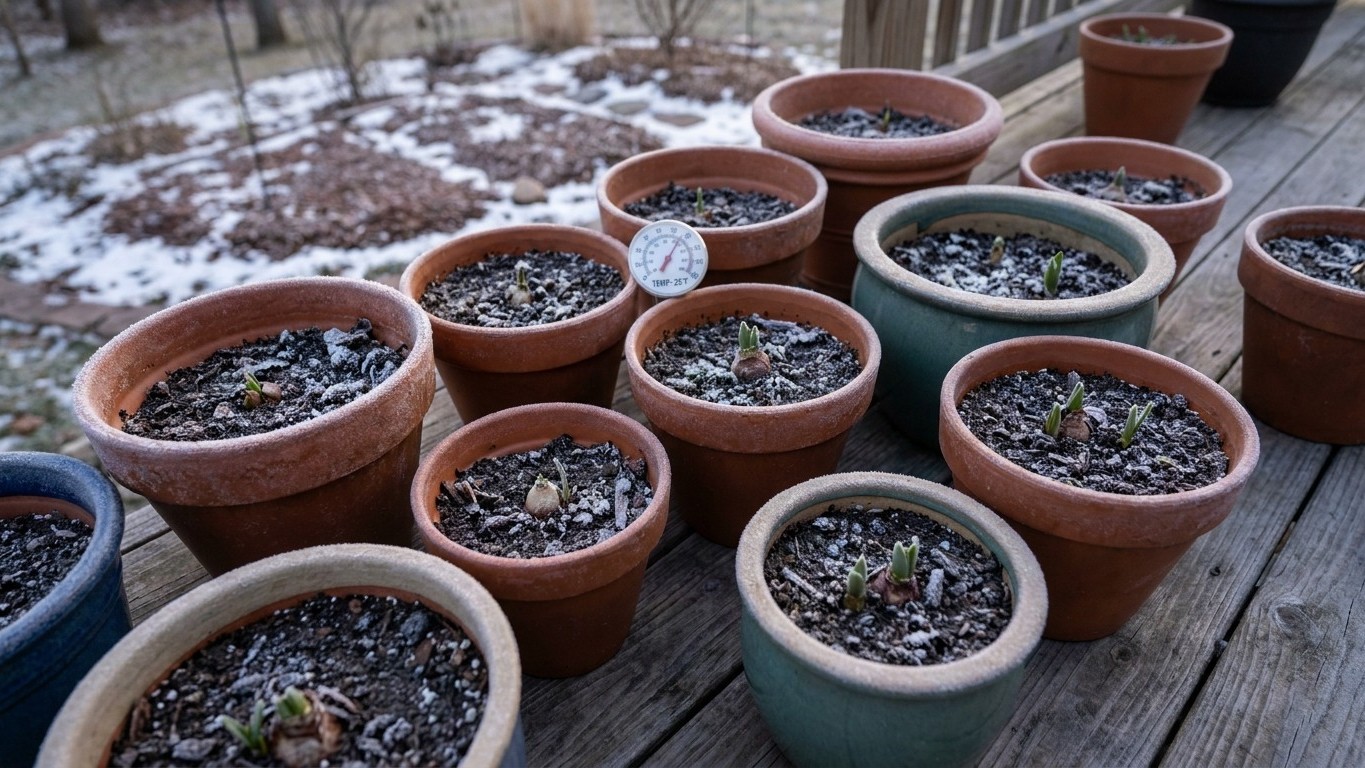

Container-grown spring bulbs survive an Oklahoma winter when the pot holds bulbs rated at least two zones hardier than the ground needs, or when the pot moves indoors before a hard freeze. Oklahoma’s problem isn’t a shortage of winter chill. It’s that a pot freezes through in a way garden soil never does, and that changes which bulbs are safe to leave outside.
Why this matters in Oklahoma

The coldest month at the Oklahoma City reference station averages a daily minimum of 27°F, according to NOAA’s 1991-2020 Climate Normals. That figure sits well under the 45°F threshold a tulip or daffodil bulb needs to break dormancy properly, and it holds for weeks, not days, across a typical Oklahoma winter. In a garden bed, that’s exactly what a bulb wants: a long, cold, buried rest before spring growth starts. So forcing bulbs indoors because the ground never gets cold enough, the problem gardeners face in places like South Florida or coastal Texas, isn’t really Oklahoma’s story.
Containers flip that logic. A pot has no thermal mass to speak of compared to open ground. Garden soil freezes at the surface and stays insulated a few inches down, which is exactly why a bulb planted 6 inches deep survives temperatures that would kill it sitting on a porch in a terra cotta pot. A container tracks air temperature almost directly. When that 27°F average minimum hits, the soil inside a pot can freeze solid, roots included, while the same bulb three feet away in a garden bed stays protected.
This is where the USDA Plant Hardiness Zone Map (2023 edition, built on 1991-2020 normals) matters. Oklahoma spans zone 6a to 8a, a wide range that stretches from the cold Panhandle down toward the milder Red River counties in the south. A bulb rated hardy to zone 7 in the ground is not automatically safe in a zone 7 container. The pot behaves more like an exposed zone 5 environment, since it lacks the ground’s buffering. That gap, not a lack of winter chill, is the real risk for container bulbs here.
The practical takeaway: check the hardiness rating printed on the bulb package, then plan for a pot two zones colder than that rating, or plan to move the container before temperatures drop. Skipping that step is the single most common reason a container of daffodils looks fine in December and turns to mush by February.
How to do it here
Growing Spring Bulbs in Containers in Oklahoma comes down to matching the bulb’s cold requirement to a spot the gardener can actually verify with a thermometer, not a guess about how cold the porch gets. Here’s the sequence that works with this state’s winter pattern.
- Check the bulb’s hardiness rating against your local zone. If you’re in the Oklahoma City area, treat container plantings as needing zone 5 hardiness or colder, even though the ground rating says zone 7, because the pot loses the ground’s insulation.
- Decide between two paths: leaving the potted bulb outside all winter (only for bulbs hardy enough to handle that exposure) or giving it an artificial cold period indoors, known as forcing, for bulbs that aren’t going to survive an exposed pot.
- For forcing, count on 12 to 14 weeks below 45°F. An unheated garage that never drops below freezing works well, since it stays cold enough to trigger dormancy without killing the bulb outright. A refrigerator crisper drawer works too, but keep it away from any ripening fruit; fruit releases ethylene gas, and ethylene damages the flower bud forming inside the bulb before it ever gets a chance to bloom.
- Check the storage spot’s temperature directly. A cheap thermometer left in the garage or fridge drawer for a few days tells you more than any assumption about “cold enough.” If it’s swinging above 50°F on sunny afternoons, the clock on those 12 to 14 weeks effectively resets.
- For bulbs left in outdoor containers, cluster the pots together against a wall, and pile mulch or straw around and over them, 4 to 6 inches deep. Clustering alone can raise the effective temperature around the pots by several degrees because the pots buffer each other.
- Alternatively, sink the pot. Digging a hole and burying the container up to its rim in a garden bed borrows the ground’s insulation without permanently planting the bulb, and it’s easy to lift back out in spring.
- Keep the soil barely moist during the cold period, not dry, not saturated. Bulbs in bone-dry soil can desiccate; bulbs sitting in wet, cold soil are the most common rot case gardeners report.
- Bring the container into bright, indirect light gradually once the cold period ends, rather than moving it straight into full sun or a heated room. A slow transition over several days lets the stem elongate before the flower opens.
Which bulbs are worth it
Not every spring bulb is a good candidate for a pot, and the reason usually comes down to two things: how long a cold spell the bulb demands, and how tall and top-heavy the flowering stem gets. A bulb with a short cold requirement forces faster and tolerates the shallower chill a container can realistically deliver. A tall bulb with a heavy flower head is fighting gravity in a lightweight pot with limited soil to anchor roots.
It’s also worth remembering that many hybrid tulips in Oklahoma are essentially a one-season purchase whether they’re in a container or the ground; they rarely rebloom with the same vigor after their first year regardless of the site. That makes forcing them in a pot a low-risk decision. You weren’t getting a repeat performance anyway.
- Crocus forces reliably and needs a shorter cold period than most spring bulbs.
- Daffodils and narcissus (standard and miniature types) handle container life well and tend to stand upright without support.
- Hyacinth forces predictably and its shorter stem holds up in a pot.
- Muscari (grape hyacinth) is compact, forces fast, and rarely topples.
- Paperwhite narcissus needs no cold period at all, making it the easiest one-season container bulb available.
- Allium demands a long chill and produces a tall, top-heavy flower head that a container struggles to support.
- Large trumpet or Darwin hybrid tulips grow tall stems that lean or snap in wind once the flower opens in a lightweight pot.
- Fritillaria has a long, finicky cold requirement and doesn’t tolerate the temperature swings a container is prone to.
What goes wrong, and when you can still fix it
Leaves but no flower
This means the cold period ran short. The flower bud tucked inside the bulb needs the full 12 to 14 weeks below 45°F to finish forming before the plant switches into growth mode; cut that short and the bulb has enough energy to push up leaves but nothing to open into a bloom. There’s no fix for the bulb this season. If you want to try again, replant it with a full, verified cold period next fall.
Flower on a stem too short to see
This happens when the bulb gets moved into warmth and bright light too fast after its cold period ends. The stem needs a slower transition to elongate properly before the flower fully opens; skip that step and the plant blooms low and stunted, sometimes barely clearing the soil line. This bloom won’t recover once it’s underway. Next time, give the pot several days in cool, indirect light before moving it to a warmer, brighter spot.
Rot in the pot
Soft, mushy bulbs almost always trace back to drainage. A container without enough drainage holes, or soil that stayed soggy through a cold, dormant stretch, gives fungal and bacterial rot the conditions it needs to take hold. This one isn’t salvageable this season; a rotted bulb won’t recover once the tissue has broken down. The fix is preventive: drainage holes, a well-draining potting mix, and watering just enough to keep the soil barely moist during dormancy, never wet.